The strange “gravitational hole” in Antarctica had been baffling scientists for 70 million years, and now an explanation has finally been found
· 2 min read
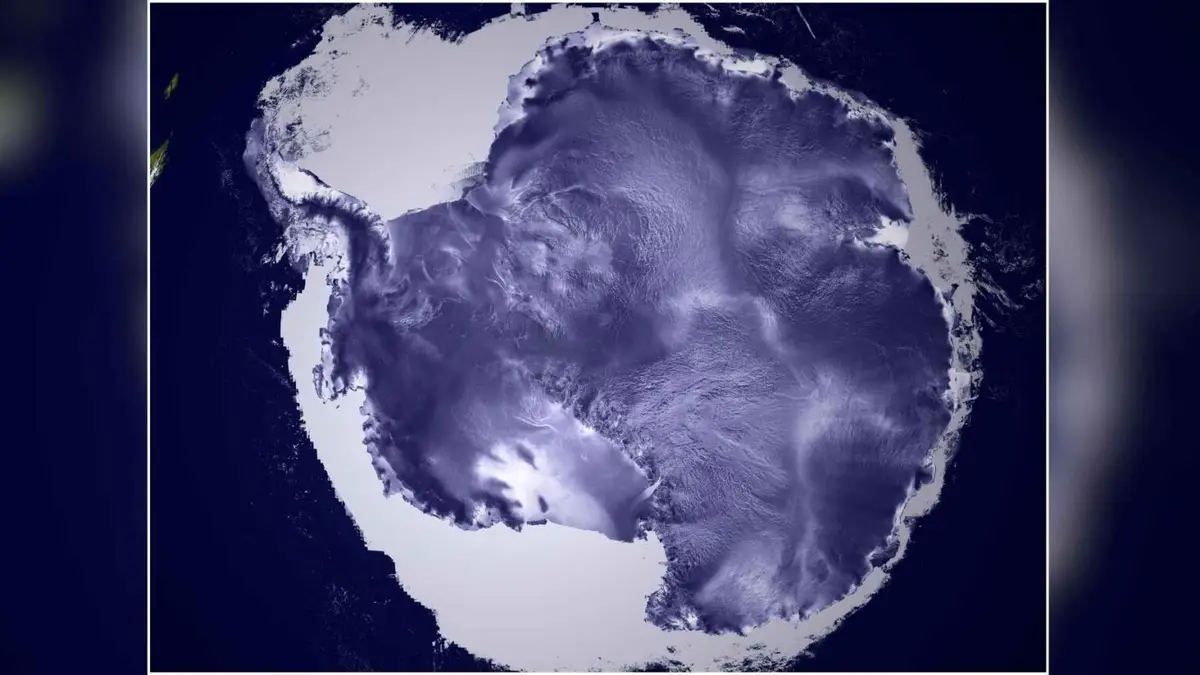
Gravity feels like the one thing in daily life that never changes. But beneath Antarctica, it tells a much stranger story. A new study says the continent’s so-called “gravity hole” was built over at least 70 million years by extremely slow rock movements deep inside Earth’s mantle.
Known scientifically as the Antarctic Geoid Low, it is a vast region where gravity is slightly weaker once the effects of Earth’s rotation are taken into account. It is not a literal hole in the ice or ground, but a signal that the planet’s mass is unevenly distributed far below the surface.
So what does that mean in plain English? In practical terms, weaker gravity can leave the ocean surface around Antarctica sitting a bit lower relative to Earth’s center, because water shifts toward places where the pull is stronger.
That may sound abstract, but it could help scientists better understand how sea level and ice sheet growth connect over geologic time.
What researchers found
To reconstruct the anomaly’s history, geophysicists Petar Glišović and Alessandro Forte combined seismic tomography with physics-based computer modeling. Forte compared the process to a “CT scan of the whole Earth,” except earthquake waves did the work that X-rays do in a hospital. The resulting gravity map closely matched satellite measurements, which gave the team added confidence in the model.
Their results show the gravity low has been around for at least 70 million years, but it went through a major shift between about 50 and 30 million years ago.

The study also found that, at its present location, the anomaly grew by about 30% over the past 35 million years as buoyant material rose higher through the mantle. That timing overlaps with a crucial climate turning point, including the onset of widespread Antarctic glaciation around 34 million years ago.
Why the finding matters
Here is the important nuance. The authors do not claim this gravity anomaly alone created Antarctica’s ice sheets. But they do suggest that mantle-driven changes in gravity and relative sea level may have helped shape the conditions that allowed ice to expand.
For the most part, that idea still needs targeted testing, and the paper is clear that the climate and sea level impacts remain speculative for now. Still, the work opens a fascinating door into how events deep inside the planet may have influenced one of Earth’s most important frozen landscapes. Deep below the ice, the planet is still shaping Antarctica’s story.
The study was published in Scientific Reports.
Glossary for this story
- Ice sheets
- Vast, thick masses of glacial ice covering huge land areas, today found only in Greenland and Antarctica. Their melting adds water to the oceans and raises sea levels.
Adrian Villellas
Writer at ECOnewsAdrián Villellas is a computer engineer and entrepreneur in the fields of digital marketing and advertising technology. He has led projects in data analysis, sustainable advertising, and solutions for new audiences. He also contributes to scientific initiatives related to astronomy and space observation. He writes for science, technology, and environmental media outlets, where he makes complex topics and innovative advances accessible to a broad audience.
More from Adrian VillellasComments · 0
Rules ›No comments yet. Be the first to share your view.