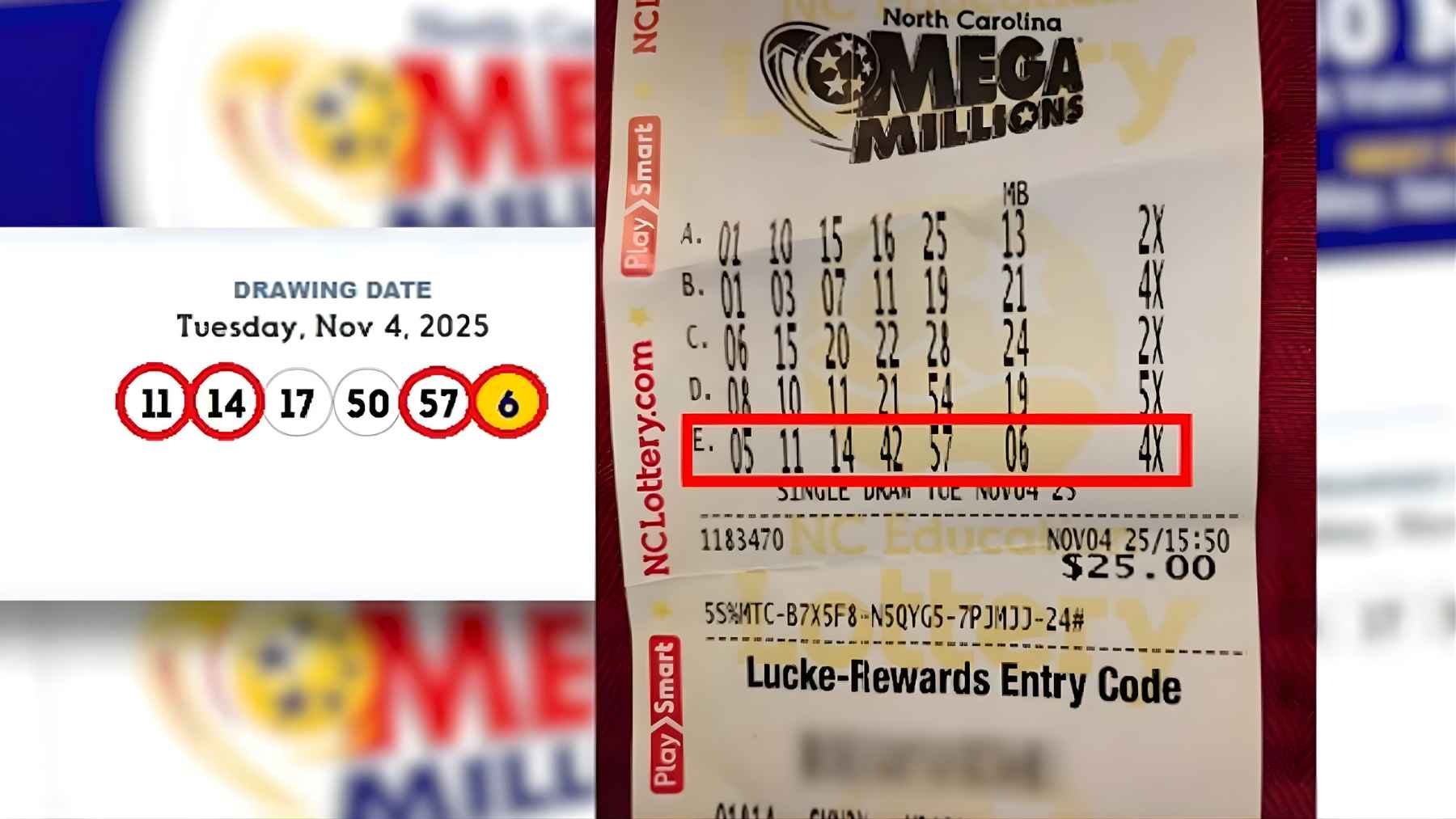
Winning the lottery is supposed to be simple. You check your ticket, claim your prize, and maybe treat the family to dinner. For Carl McCain of Timberlake, that happy moment turned into a slow and confusing battle over an $800 check.
McCain matched four numbers in the Mega Millions drawing and thought his small stroke of luck would help with bills. Instead, his lottery winnings were sent away to cover a government debt tied to his Social Security number that he says is not his. How do you fight a bill you have never even seen?
A small win that came with a big shock
Because of the size of the prize, McCain drove from Timberlake to the North Carolina Education Lottery office in Raleigh. He filled out the paperwork, handed over his ticket, and instead of a check received documents explaining that prizes after taxes can be used to pay debts to state or local agencies and that records showed he owed money to Lenoir County and Wayne County.
McCain says he immediately questioned how that could be true since he had never been to either county. He contacted both and first gave his full name and date of birth, and officials told him he had no outstanding debts, but when he provided his Social Security number they said another man’s name was showing up with the same number.
An identity mix up years in the making
McCain says this was the first time he had heard anything about another person being linked to his Social Security number. He asked for more details but was told that information could not be released to him, so all he could do was wait while officials in both counties said they would look into the problem.
According to Lenoir County, the debt attached to his number dates back more than ten years and may be a case of mistaken identity. As the weeks passed, McCain says he kept calling and was told the investigation was still underway, and since $800 can cover key bills, the delay did not feel small.
Calling in a TV troubleshooter
After more than a month, McCain decided he needed help from someone outside the county offices. He reached out to Diane Wilson, the Troubleshooter at Raleigh television station ABC11, whose consumer reports he had watched for years, and told her he had seen her help viewers get everything from refrigerators to washing machines, saying “I told my wife we had to call Diane Wilson.”
Wilson contacted the North Carolina Education Lottery, which confirmed that McCain’s winnings had been processed and sent to Lenoir County under the debt collection rules, and she also spoke with county representatives who said they had been investigating the issue for more than a month.
Shortly after those conversations, McCain says Lenoir County removed his Social Security number from its database, and within days he received a check for his Mega Millions prize minus taxes. He later told Wilson “I was glad you stepped in and came to my rescue.”
What this case says about debt systems and data errors
The rule that allows lottery winnings to be used for unpaid debts is meant to help government agencies collect money, but this case shows what can happen when those systems depend on records that may be wrong, especially when a Social Security number is linked to the wrong person. In practical terms a win can turn into a stressful dispute while everyday bills and plans are stuck in the middle.
Most people never think about how many databases hold their personal details until there is a problem, yet a mix up like the one McCain faced can sit unnoticed for years.
McCain now has his prize money and says he is still trying his luck with lottery tickets, and his experience is a reminder for other players to watch their own records and speak up quickly if something does not look right, since persistence and a push from local media can sometimes make the difference.
The official report was published on ABC11.