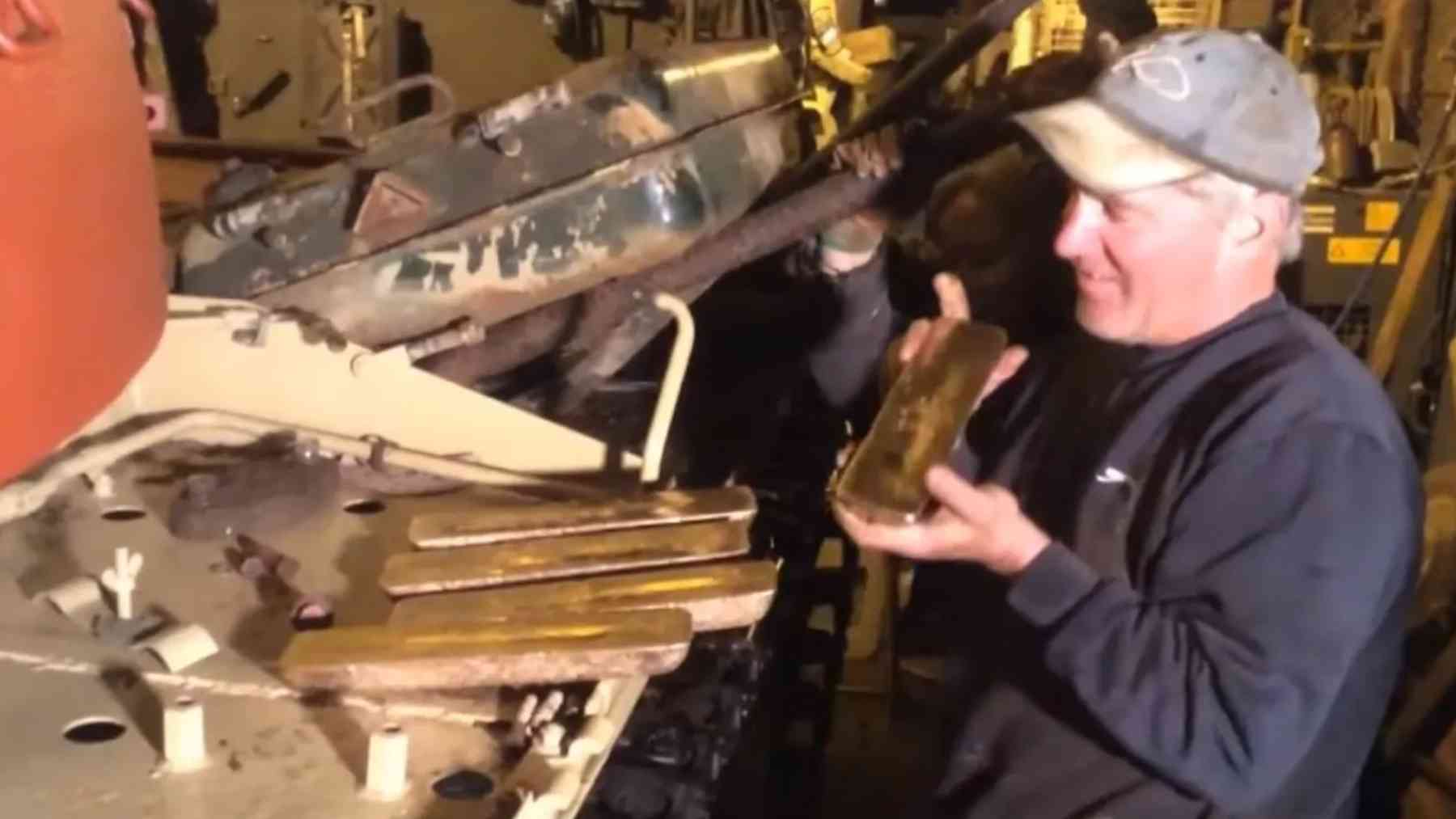
When British collector Nick Mead bought an old Iraqi Army Type 69 tank on eBay, he expected rust, grease, and maintenance headaches. Instead, he and a mechanic opened the diesel tank and found five gold bars worth about 2.5 million euros, likely hidden there since the 1990 invasion of Kuwait.
The story sounds like the plot of an action movie. Yet it quietly points to a bigger question that concerns all of us who wear jewelry, invest in gold, or use electronics. Where did that gold really come from, and what did it do to the planet before it ever reached a fuel tank or a wedding ring?
From battlefield loot to environmental clue
According to recent coverage, Mead discovered the bars in the ex‑Iraqi Type 69, a Chinese copy of the Soviet T‑55. Stunned, he turned the bullion over to British authorities, who are still working to trace the original owners. He later admitted he regrets not receiving any finder’s fee, noting that “gold has a fingerprint” and that investigators can often pinpoint where it was mined.
Those fingerprints do not only tell a story about war and plunder. They also point back to riverbeds in the Amazon, informal mines in West Africa, and remote camps where diesel generators roar all night and mercury fumes hang in the air.
Gold’s dirty environmental trail
A large share of the world’s gold still comes from artisanal and small‑scale mining. These are the small operations where miners use simple tools and often rely on mercury to pull tiny flecks of gold from sediment. Researchers have shown that this style of mining is the single biggest human source of mercury pollution, releasing on the order of one thousand tons of mercury into the environment each year.
Recent fieldwork in Ghana paints a troubling picture. A joint study by Pure Earth and the country’s Environmental Protection Authority found soil mercury levels many times higher than World Health Organization safety thresholds in some mining communities. Arsenic levels were also far above guideline values, and health workers are already seeing kidney problems and mercury exposure in local children.
The Amazon tells a similar story. Satellite monitoring shows that illegal gold mining has stripped roughly 140,000 hectares of Peruvian rainforest since the mid‑1980s, with activity now spreading into new regions and contaminating more than two hundred rivers and streams with mercury. For the Indigenous families who fish those waters, gold’s shine often arrives as poisoned river food and mounting health risks.
A climate bill hidden in every bar
Mercury is only part of the picture. Gold is also surprisingly carbon‑heavy. A global analysis of industrial gold mining estimates that the sector emits more than 100 million tons of CO2 equivalent each year.
A recent study in the Brazilian Amazon went a step further and tracked both mercury and climate pollution from artisanal mining sites. The researchers found that producing a single kilogram of gold in these operations can generate between 10 and 30 tons of CO2 equivalent, depending on the technique and machinery used. Much of that comes from burning diesel in excavators, pumps, and generators, the same fossil fuels that drive up the emissions behind your household electric bill.
The same study compared freshly mined gold with recycled gold and found a striking gap. Gold refined from scrap in modern facilities carried a carbon footprint of about 53 kilograms of CO2 equivalent per kilogram, far lower than either artisanal or large‑scale mining. In plain terms, the greenest gold is the gold already above ground.
Why recycling metal matters more than ever
That brings us back to the tank in the English countryside. A 36‑ton war machine is an unusual kind of scrap metal, yet it shows how metals can have second, third, and fourth lives if someone is willing to recover and reuse them.
Metal recycling is already a powerful climate tool. Using scrap steel instead of virgin ore can cut CO2 emissions by close to 60 percent, and each ton of recycled steel can save roughly 1.5 tons of CO2. The United States Environmental Protection Agency estimates that metal recycling as a whole avoids about 29 million tons of CO2 emissions every year, similar to taking more than six million cars off the road.
In everyday terms, that means the metal in an old car, a retired power line, or a decommissioned tank can help cut pollution if it goes to a recycler instead of a landfill. The same logic applies to the gold tucked inside smartphones, circuit boards, and forgotten jewelry boxes.
What this tank story is really telling us
Most of us will never find a fortune in a fuel tank. What we will do is make choices about the gold we buy and the metal we discard. Asking a jeweler whether a ring uses recycled or certified gold, supporting policies that phase out mercury, and backing stronger traceability rules all push the market toward cleaner metal.
Nick Mead’s discovery is a reminder that every bar of gold carries a hidden history. The less that history involves poisoned rivers, felled forests, and diesel‑choked mine camps, the better for the climate and for the communities who live with the consequences long after the headlines fade.
The study was published on Nature Sustainability.