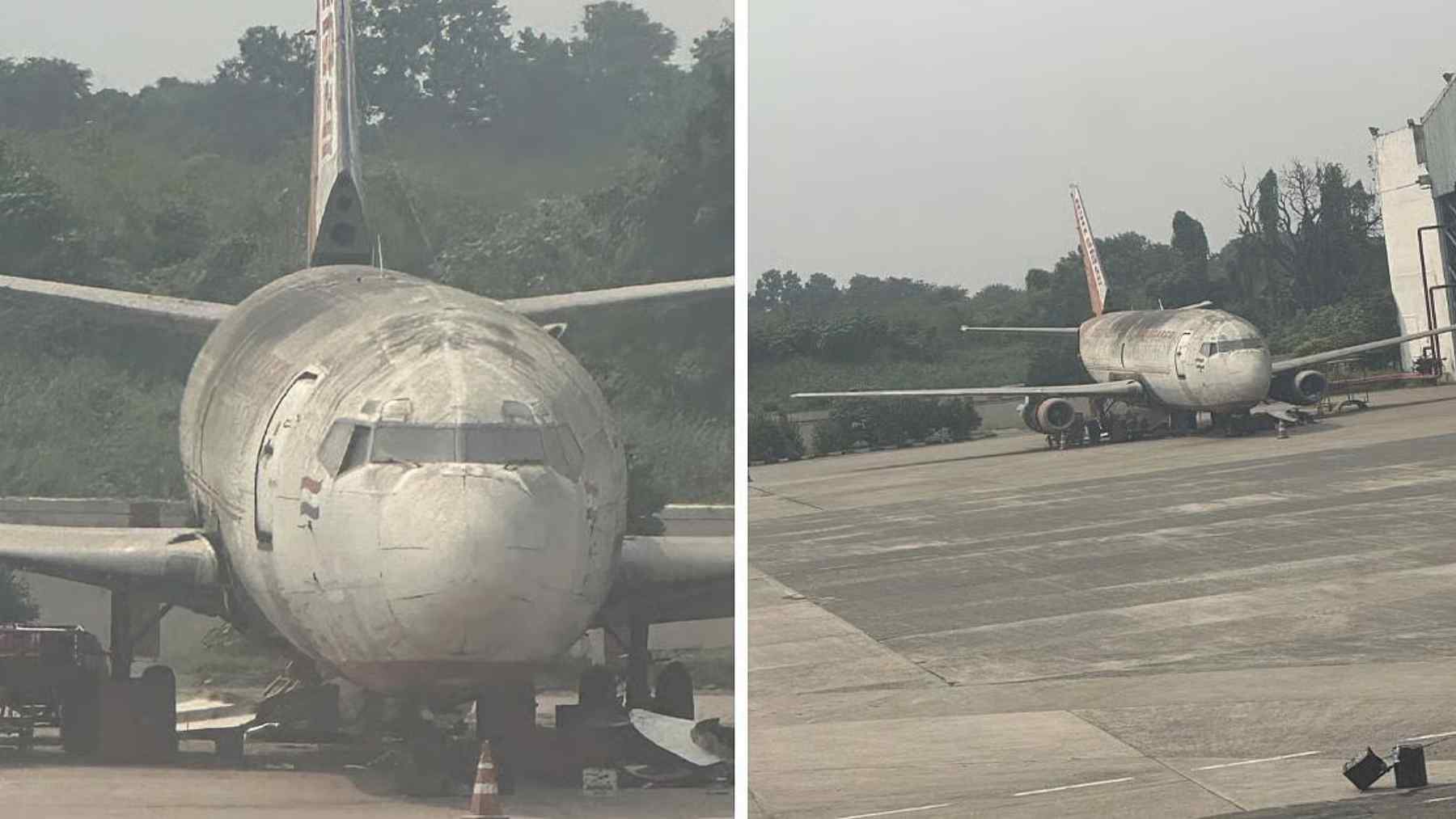
We all misplace our keys or forget an old subscription. But an entire jetliner slipping out of sight for more than a decade is something else. That is exactly what happened to a Boeing 737-200 that belonged to Air India and sat abandoned at Kolkata airport since 2012.
After years in a remote corner of the airfield, the forgotten aircraft has finally been moved and sold, following a request from airport authorities. The story has shocked many in the aviation world and has become a symbol of how messy paperwork and repeated restructurings can erase even something as large as a passenger jet.
A missing jet hiding in plain sight
The Boeing 737-200 spent more than a decade parked at a secluded area of Netaji Subhas Chandra Bose International Airport, away from the main terminals and the eyes of most travelers. The aircraft was retired from service in 2012 and left there at the end of its working life instead of being scrapped or quickly sold, which is the usual path for older jets.
Over time, the aircraft simply faded from the company’s records. When the Indian government sold the airline to Tata Group in 2022, the jet did not appear on the official list of assets that changed hands. In practical terms, that means the new owner bought an airline without realizing a 43-year-old Boeing was still parked in Kolkata under its name.
From workhorse to forgotten freighter
The plane’s story started in 1982, when it was delivered to Indian Airlines and flew domestic routes across India. Later it went to Alliance Air and spent several years serving smaller cities before returning to its original owner.
In 2007 the jet was converted into a freighter, a cargo aircraft that carries mail or packages instead of passengers. It then operated for India Post on mail flights, a low profile but essential job that kept letters and parcels moving around the country.
When it was finally taken out of service and parked in Kolkata, the normal next step would have been dismantling or sale, yet this time that step never came.
Airport alert exposes old paperwork problems
For years, airport authorities continued to bill the airline for parking fees linked to the retired Boeing. The company often pushed back, pointing out that it could not find the aircraft in its own internal records and therefore did not recognize the charges. To a large extent, it looked like a familiar dispute over an unexpected bill, only this time the “extra charge” was tied to a full-sized jet.
Everything changed when Kolkata airport sent a formal request asking the airline to remove the aircraft from its remote parking bay. That message triggered a deeper check inside the company, which eventually confirmed that the aircraft was indeed still owned by the carrier.
The plane was then towed away at the airport’s request and sold, closing the chapter on its silent stay at the edge of the runway.
How does an airline forget a whole airplane
The key to this puzzle lies in the airline’s turbulent history as a state-owned company. Over the years, mergers, restructurings, and shifts in responsibility created layers of paperwork that were not always fully updated. Investigators now believe the Boeing was dropped from several key documents that tracked aircraft, assets, and contracts.
That gap does not only matter on paper. Asset lists feed into tax calculations, insurance premiums, and how much a company is worth when it is sold. If one jet can be left out, experts warn that other items may also have been miscounted or misclassified, even if they were smaller than a Boeing.
At the end of the day, what this case shows is how weak record keeping can shape big financial decisions.
New leadership promises tighter control
Current chief executive Campbell Wilson told staff that the incident was unusual exactly because “it was an aircraft that we did not even know we owned until recently”. He also described how the jet had been forgotten in a remote corner of the airport and “lost from memory” until airport staff raised the alarm.
Under Tata ownership, the airline says it has strengthened governance and digital tracking of its fleet and other assets so that this kind of oversight does not happen again.
For most travelers, the story will likely become one more curious anecdote about aviation, like spotting an old airframe on the far side of a runway and wondering what it is doing there.