Deep under central China, geologists say they have uncovered something remarkable. A newly reported “supergiant” gold deposit beneath the Wangu gold field in Hunan Province may contain more than 1,000 metric tons of gold, worth about 600 billion yuan, or roughly $85.9 billion.
If those numbers hold up, Wangu could rival some of the biggest known gold reserves on Earth. The announcement comes at a moment when gold prices are hitting record highs, investors are nervous about the global economy, and many people wonder whether the world is close to “peak gold,”.
What Geologists Found Beneath Hunan
The Geological Bureau of Hunan Province reports that more than 40 gold-bearing veins have been detected at depths of around 2,000 meters under the Wangu field near Pingjiang County. Based on drilling results and three-dimensional geological models, those veins alone are estimated to hold about 300 metric tons of gold.
Using the same models, geologists project that the ore body could contain over 1,000 metric tons of gold down to roughly 3,000 meters. At current market prices, Chinese officials estimate that the metal in place may be worth about 600 billion yuan, putting Wangu in the same conversation as South Africa’s South Deep mine, which is often cited as holding around 900 metric tons of reserves.
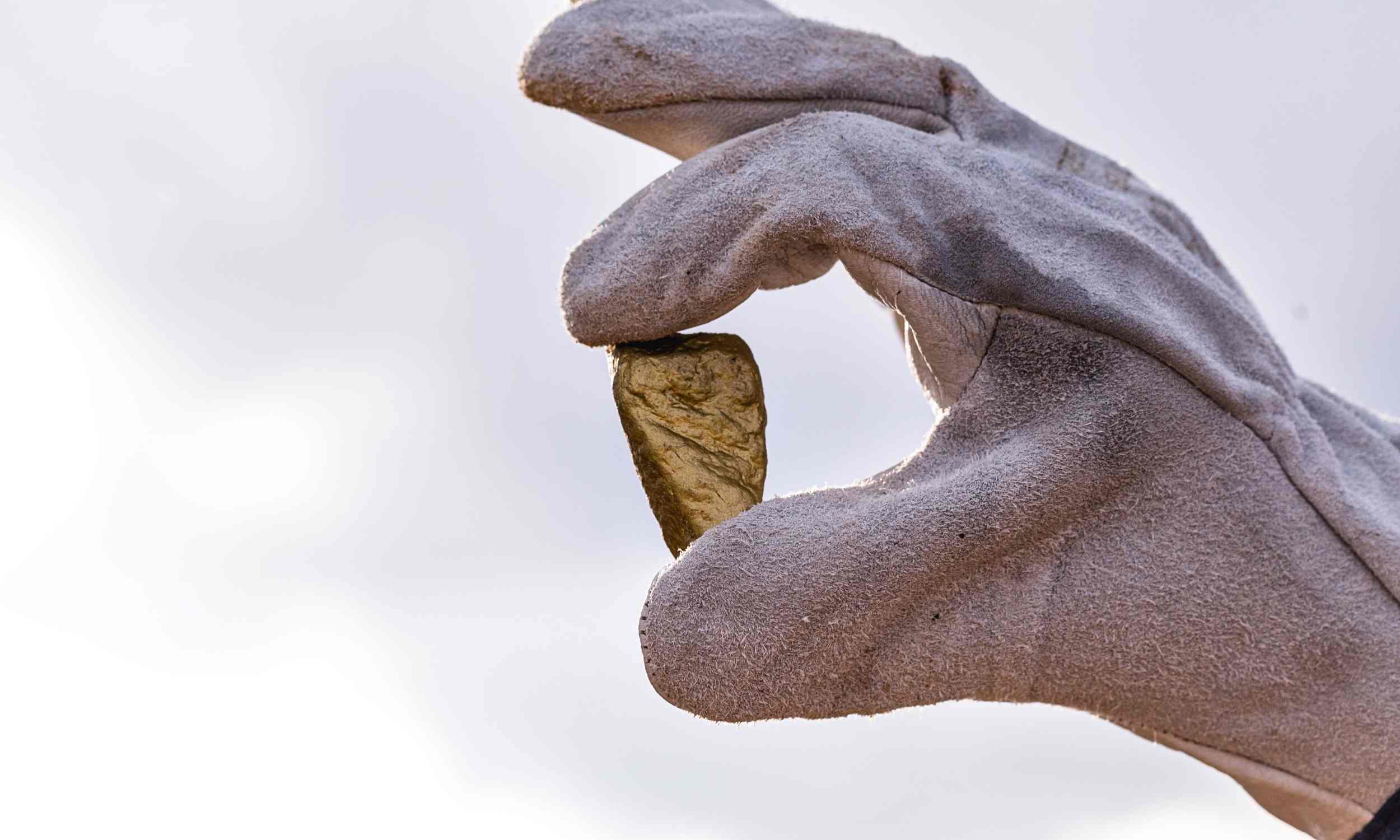
Technicians from the Hunan Province Geological Disaster Survey and Monitoring Institute have been studying long cores of rock pulled up from deep underground, and many of those cores contain specks of visible gold.
Ore prospecting expert Chen Rulin says some samples show up to 138 grams of gold per metric ton of rock, a level far above the eight grams per ton that mining companies usually consider high grade for underground deposits.
Why Some Experts Urge Caution
Not everyone is ready to accept the headline number of 1,000 metric tons. At the World Gold Council, senior market strategist John Reade has described that larger figure as aspirational and says the confirmed 300-metric-ton estimate looks more realistic for now.
Industry analysts also note that Chinese mineral reporting rules differ from international standards commonly used in Canada and Australia.
Turning a deep resource into a proven reserve usually requires years of additional drilling, careful modeling, and independent checks, and a mine that reaches down to 2,000 or even 3,000 meters would face higher costs, heat, and technical challenges than most operations.
Reade estimates that even a very productive mine at Wangu might produce between 15 and 30 tons of gold per year, roughly 1 percent of the world’s annual output of about 3,600 tons. That is a big deal for Hunan and for Chinese miners, but it is unlikely to crash global prices or suddenly make gold jewelry cheap at the mall.
What The Find Says About Gold’s Future
China already dominates the gold sector, with reserves estimated above 2,000 tons in early 2024 and mines that supply around a tenth of global production.
News of the Wangu deposit helped push gold prices even higher as traders looked for safe places to park money during uncertain times, much like families buying coins or bars when they worry about their savings.
At the same time, scientists are still figuring out how large gold deposits form. A 2024 study in the journal Nature Geoscience, led by geologist Chris Voisey at Monash University, suggests that earthquakes can create tiny electric charges in quartz veins, gradually pulling dissolved gold out of hot fluids and helping nuggets grow over long periods of time.
In the lab, researchers at Linköping University in Sweden, including materials scientist Shun Kashiwaya, have gone in the opposite direction and built gold into something almost impossibly thin.
They created a single atom thick form of the metal called goldene that behaves more like a semiconductor and could someday play a role in clean energy and chemical technologies, according to a report from GoldFields.com.
Taken together, these deep Earth discoveries and cutting-edge experiments suggest that our understanding of gold is still evolving. The Wangu deposit may not rewrite the global gold market overnight, but it shows that hidden reserves and new science can still surprise us, whether in a quiet Chinese valley or inside a high-tech materials lab.
The official statement was published on Xinhua.