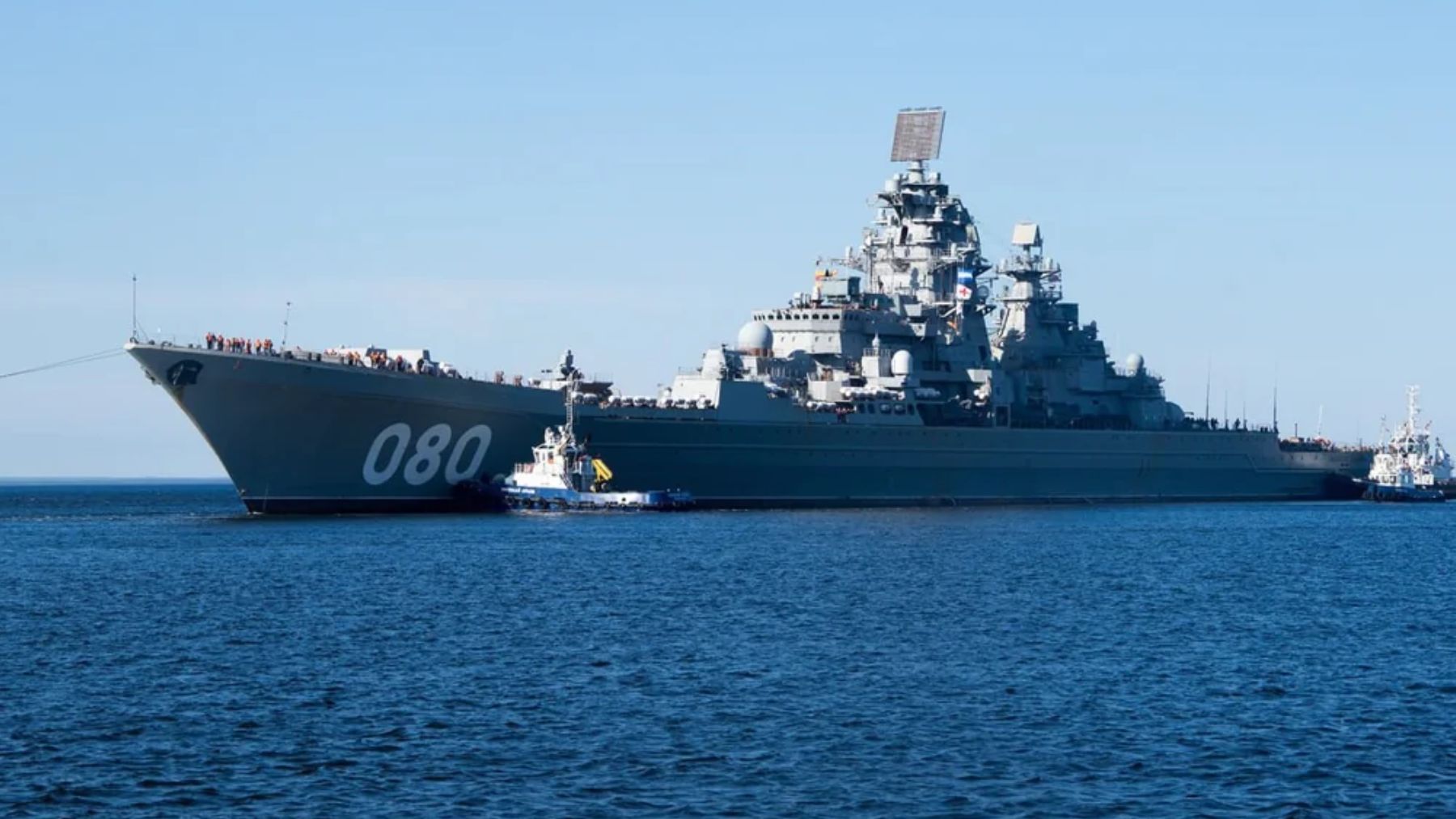
After spending most of the past 28 years tied up in a northern shipyard, the Russian Navy’s nuclear powered cruiser Admiral Nakhimov has finally returned to sea. Defense outlets report that the deeply modernized warship has begun sailing again in the White Sea after its first outings on contractor and factory sea trials.
JSC PO Sevmash chief executive Mikhail A. Budnichenko said the modernized ship has completed the first stage of its factory sea trials, a key step toward full operational service. Budnichenko added that Admiral Nakhimov is already on its third trial cruise and is due back at its base in Severodvinsk on the 25th of the month, with crew and shipyard staff still checking vital systems. For a vessel that could become Russia’s flagship, these careful first outings are drawing close attention far beyond the White Sea.
From frozen pier to fresh wake
Admiral Nakhimov last sailed in 1997 and then sat laid up at Sevmash in northern Russia while Moscow debated its fate and struggled with funding. A modernization contract arrived years later, real work only gathered speed around 2014, and promised return dates slipped again and again as schedules moved from 2018 into the middle of the 2020s.
Factory sea trials are when the shipyard takes a new or refitted warship to sea to check whether engines, steering, electrical systems and basic navigation work as they should. Each run shows how the reactors behave, how the hull handles waves and ice and whether the ship is safe to operate in normal conditions, long before the navy signs off on the ship as ready for combat duty.
What a nuclear cruiser actually is
A nuclear powered cruiser is a very large surface warship that uses onboard reactors instead of fuel oil to drive its engines. In simple terms, that means Admiral Nakhimov can stay at sea for long stretches without refueling, which matters in remote Arctic waters where bases are scarce and the weather punishes support ships.
The cruiser belongs to the Kirov class, a group of Cold War-era giants originally built for the Soviet Navy to threaten NATO carrier groups. Today Admiral Nakhimov is the last survivor of four hulls, since Admiral Ushakov and Admiral Lazarev are being dismantled and stripped of their nuclear fuel, while sister ship Pyotr Velikiy is widely expected to retire instead of getting a similar deep refit because of cost and wear.
A floating magazine with 174 missile cells
The heart of the modernization sits under the deck in the form of vertical launch systems, armored boxes that hold missiles upright until they are fired into the sky. Russian and foreign defense reports indicate that Admiral Nakhimov is being outfitted with around 174 of these launch cells, including 10 universal launch blocks for roughly 80 long-range cruise and anti-ship missiles such as Kalibr and Oniks.
The remaining cells are intended for surface-to-air missiles that shield the ship and nearby vessels from aircraft, drones and incoming weapons, tied into long range Fort M air defense systems and several Pantsyr M close-in mounts that combine guns and missiles.
The original twin 130-millimeter gun has also been replaced by a modern AK 192 M weapon, and taken together these changes mean Admiral Nakhimov is expected to carry more launch cells than many Western and Chinese cruisers or destroyers now at sea.
Why this refit matters now
All of this is happening as Russia’s surface fleet shrinks and its only aircraft carrier, Admiral Kuznetsov, remains stuck in long repairs with an uncertain future. In that context, Admiral Nakhimov looks less like a museum piece and more like a stopgap centerpiece for future Russian task groups, a single ship that can carry long-range strike weapons and strong air defenses while smaller frigates and corvettes handle coastal patrols.
So why does one old ship draw so much attention? For people outside the defense world it can be hard to see why an aging cruiser matters when daily worries focus on bills or the next heat wave.
Yet a vessel packed with modern missiles can change how close foreign navies dare to sail, and for now the completion of the first phase of sea trials after nearly three decades out of service mainly shows that Russia’s long and costly refit is finally delivering a ship it hopes can still matter on the open ocean.