Europe has been preparing for a new war, but it’s not a traditional war. In fact, the battle now is against dependence on non-renewable energy sources, especially natural gas, and against the threat posed by Russia in the energy landscape. To take a decisive step toward energy independence, the continent is investing in innovative projects to transform the future of clean energy. The key to this transformation? Hydrogen, often dubbed “blue oil,” a promising solution to replace fossil fuels.
Europe faces a choice: build pipelines or stay dependent on fossil fuels?
Europe’s transformation begins with a large-scale energy infrastructure, aimed at connecting several countries through an innovative hydrogen network. This massive project is not only a response to the growing demand for cleaner energy alternatives but also an attempt to strengthen the continent’s energy security.
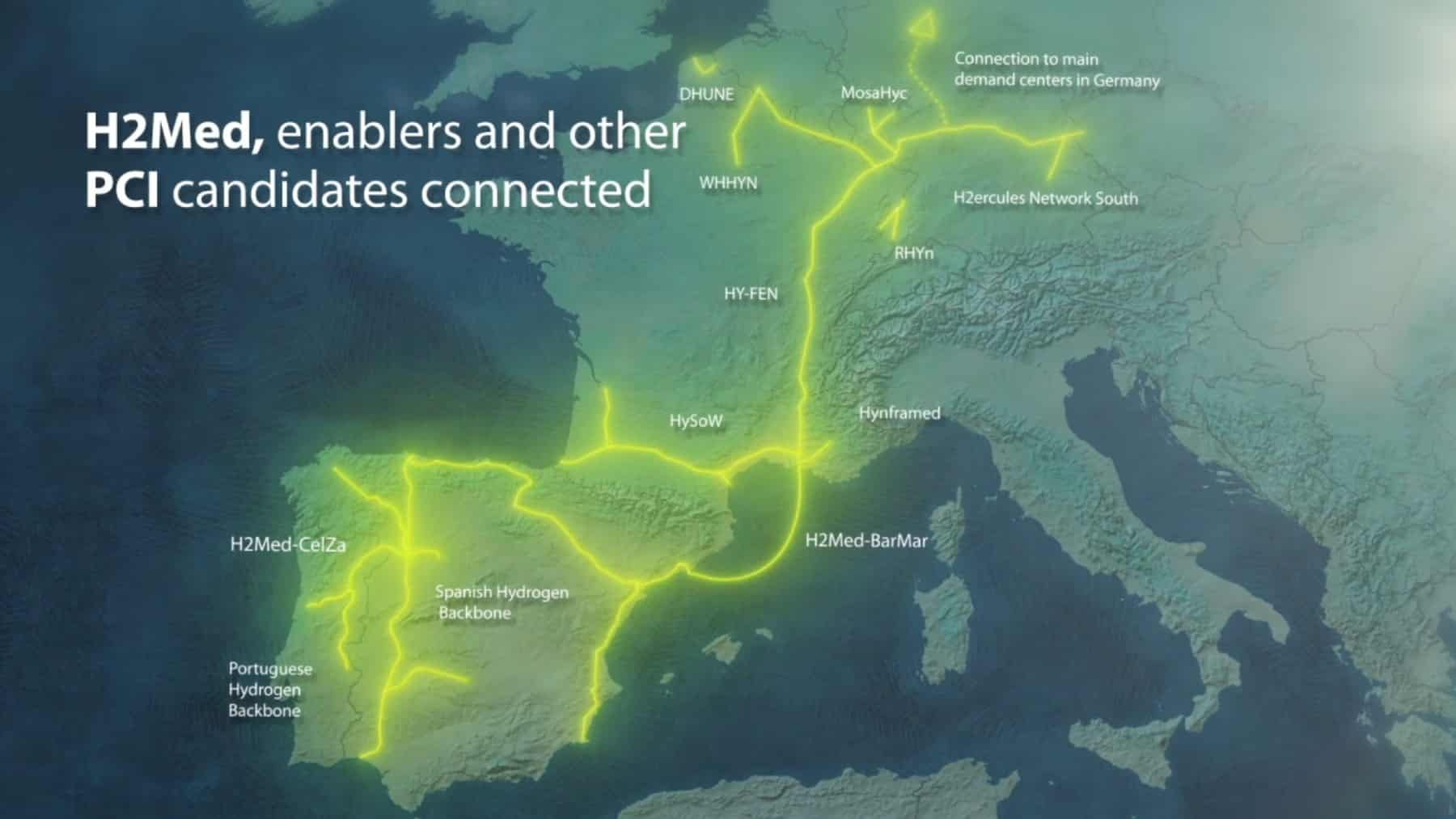
And this is where H2Med comes in, a project connecting the hydrogen networks of the Iberian Peninsula to Northern Europe. H2Med will include two main pipelines: CelZa, a 248 km (approximately 154 miles) interconnection between Portugal and Spain; and BarMar, a 455 km (approximately 283 miles) subsea pipeline connecting Barcelona, Spain, to Marseille, France. Together, these pipelines will form the backbone of a network that aims to transport 2 million tons of hydrogen annually, representing approximately 10% of the European Union’s projected hydrogen consumption by 2030.
Europe’s energy gamble: lead the hydrogen revolution or fall behind?
The impact of H2Med goes beyond Europe’s energy transition. In addition to providing an alternative source of clean energy, the project could become a key factor in the continent’s geopolitical transformation. Key highlights include:
- Hydrogen Export: The Iberian Peninsula, especially Portugal and Spain, has significant potential for renewable hydrogen production, which could be exported starting in 2030. H2Med positions the region as a future hub for clean energy production, meeting both domestic demand and exports to other European countries.
- Connection with North Africa: Partnerships with North African countries also emerge as an important possibility, with African hydrogen potentially being imported into Europe starting in 2040. This energy exchange could further strengthen trade and geopolitical relations between Europe and Africa.
- Alignment with European Union goals: The project aligns with REPowerEU (also known as the largest project in history — drying Africa and sending energy to this continent) and the Zero Emissions Industry Act, both of which focus on increasing renewable hydrogen production to reduce dependence on fossil fuels.
H2Med’s tightrope: navigate political hurdles or stall Europe’s energy future?
Of course, despite the promise, H2Med faces considerable challenges. After all, coordination between countries and the integration of different systems are just some of the barriers to overcome. However, there are significant opportunities that can ensure the project’s long-term success. Among the main challenges and opportunities, we can highlight:
- Transnational Coordination: Collaboration between Portugal, Spain, France, and Germany will be essential to ensure the successful implementation of the project. Synchronizing regulations and timelines will be a determining factor.
- Innovation and Market Development: Creating a matchmaking platform to register new projects and encourage the development of the hydrogen market will be vital to the future of H2Med. Constant technological innovation will be necessary to ensure that infrastructure and processes adapt to changing consumption and production needs.
In any case, H2Med is more than just an infrastructure project. It represents a fundamental step for Europe in its quest for cleaner, more independent energy, capable of reducing dependence on fossil fuels, especially Russian natural gas. If successful, the project will not only strengthen the continent’s energy security but also place Europe at the forefront of the global energy transition, just as this underwater energy revolution is doing on the continent.