With increasing energy consumption around the world and the urgent requirement to decrease reliance on fossil fuels, a grand solution is taking shape from up in the sky. As proposed by China, space-based solar power station (SBSP) can change the design of global energy supply by capturing solar energy from space and sending it to Earth. On a scale and scope in scale comparable to the construction of the Three Gorges Dam in space, this initiative has the potential to revolutionize the future of renewable energy.
Transforming energy: Solar rays from space can outdo oil & nuclear power
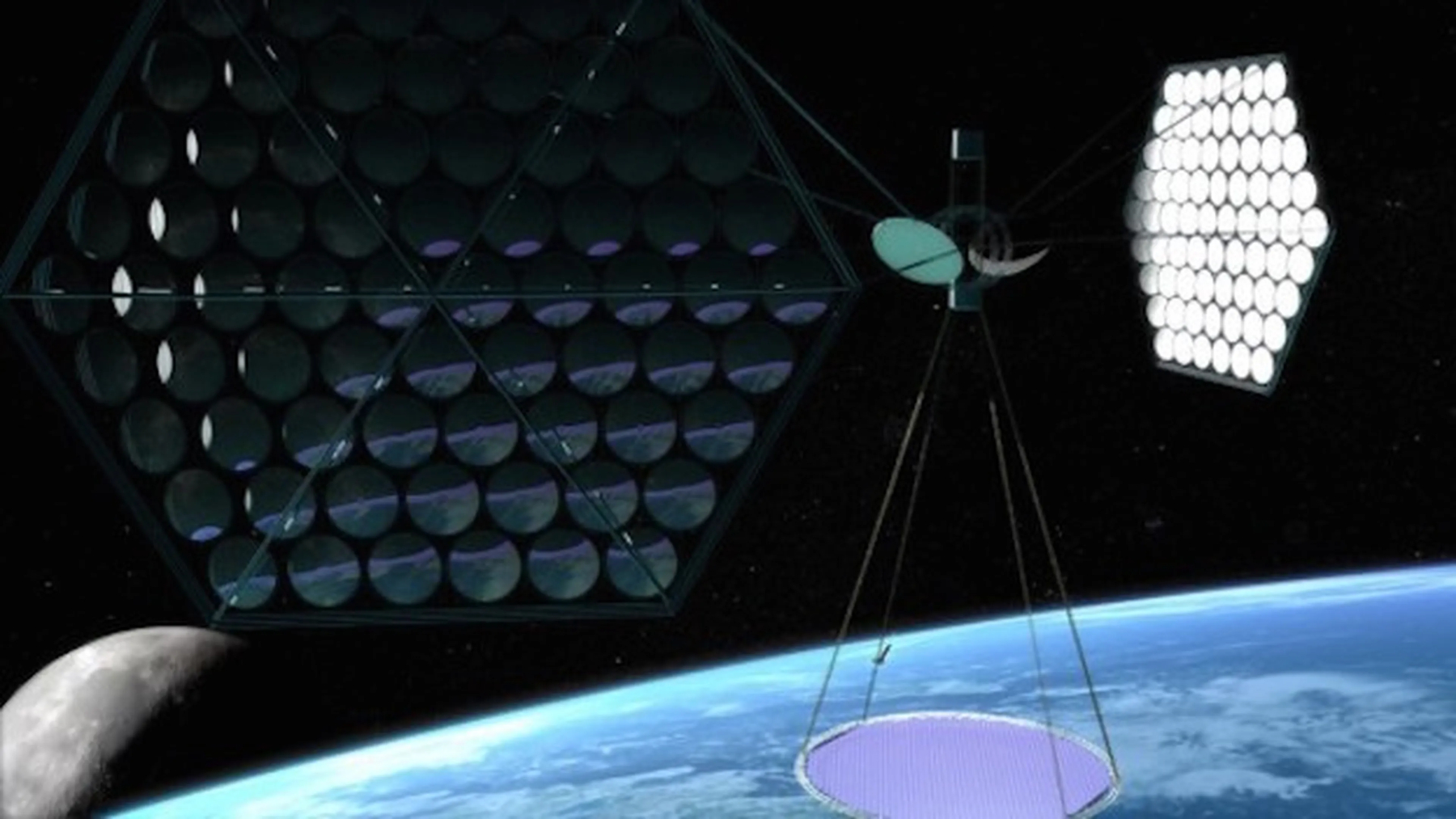
China’s SBSP project involves constructing a colossal solar array, one kilometre wide, stationed in geostationary orbit 36,000 kilometres above the Earth. In contrast to ground-based passive solar collectors, this orbiting one will collect solar energy 24/7, without interruption by weather or by the Earth rotation from day to night.
The collected energy will be converted into microwaves and beamed down to the Earth and ground-based receivers will convert it into electricity. The potential is staggering. Researchers have shown that solar energy in space is, at a minimum, 10 times more energetic than on the ground because atmospheric effects are not present.
If it succeeds, China’s solar power station has the potential to generate as much power as an entire year’s worth extraction of oil. By 2050, if the fully operational system becomes a fully mature system, the output of the system is likely to be on par with a nuclear power reactor, which is scalable and replenishable energy resource.
Outside Earthly frontiers: Space-created solar panels transform renewable energy
Space-based solar panels are unconstrained by earthly limitations, for example, by atmospheric weather or solar position. In contrast to terrestrial systems that can be limited by the day only and by clouds, orbital arrays are able to capture solar energy from the moment of day to the next.
This uninterrupted supply ensures consistent and reliable energy generation. Lack of atmospheric perturbation permits significantly higher energy conversion rates in space. Also, the technology uses up no more land than conventional solar farms, open habitats and agricultural lands.
By 2050, the amounts of energy collected could greatly decrease the dependence on fossil fuels, as well as providing solutions to chronic power shortages worldwide. Space coverage presents us with an infinite range of scaling potential in solar collection capacity.
This could provide remote and underserved areas with access to clean energy, enhancing global energy equity. In addition, the work would make China the global innovator around renewable energy (just like this one by China which is sweeping the rest of the world off their feet) with the carryover effect of motivating other countries to rapidly develop and utilize SBSP technology.
Wireless power transmission: A key task for space-created solar power
Despite its promise, the project faces formidable challenges. Among them, the best is the emergence of efficient wireless power transfer. Doppler-based broadband high-frequency microwave emissions from space to Earth depend on highly controlled technology to ensure safety and ecological footprint is minimized. Furthermore, building a 1-km-wide array in orbit is logistically challenging.
Engineers will have to design materials tough enough to withstand aggressive space environments, and design robots for assembly. Financial viability is also a problem because the design of super-heavy rockets, such as China’s Long March-9, usually requires a considerable amount of investment.
In response to these challenges, China aims to demonstrate key technologies aboard its Tiangong space station and perform small-scale demonstrations beginning in 2028. A geostationary orbit prototype will be tested for the energy transmission techniques by 2030, and for full-scale deployment from 2050.
China’s SBSP program is a significant step in the right direction towards a green future. With the potential to generate continuous, efficient, and scalable energy, this project could transform how the world meets its power needs.
Although there are still some challenges, the achievements of China and other countries in the field demonstrate the necessity of innovation in facing energy needs around the globe. There may be no place for the space-based sun closer than we imagine, but this could bring visions of a cleaner and more sustainable world (like these solar panels made from uranium).