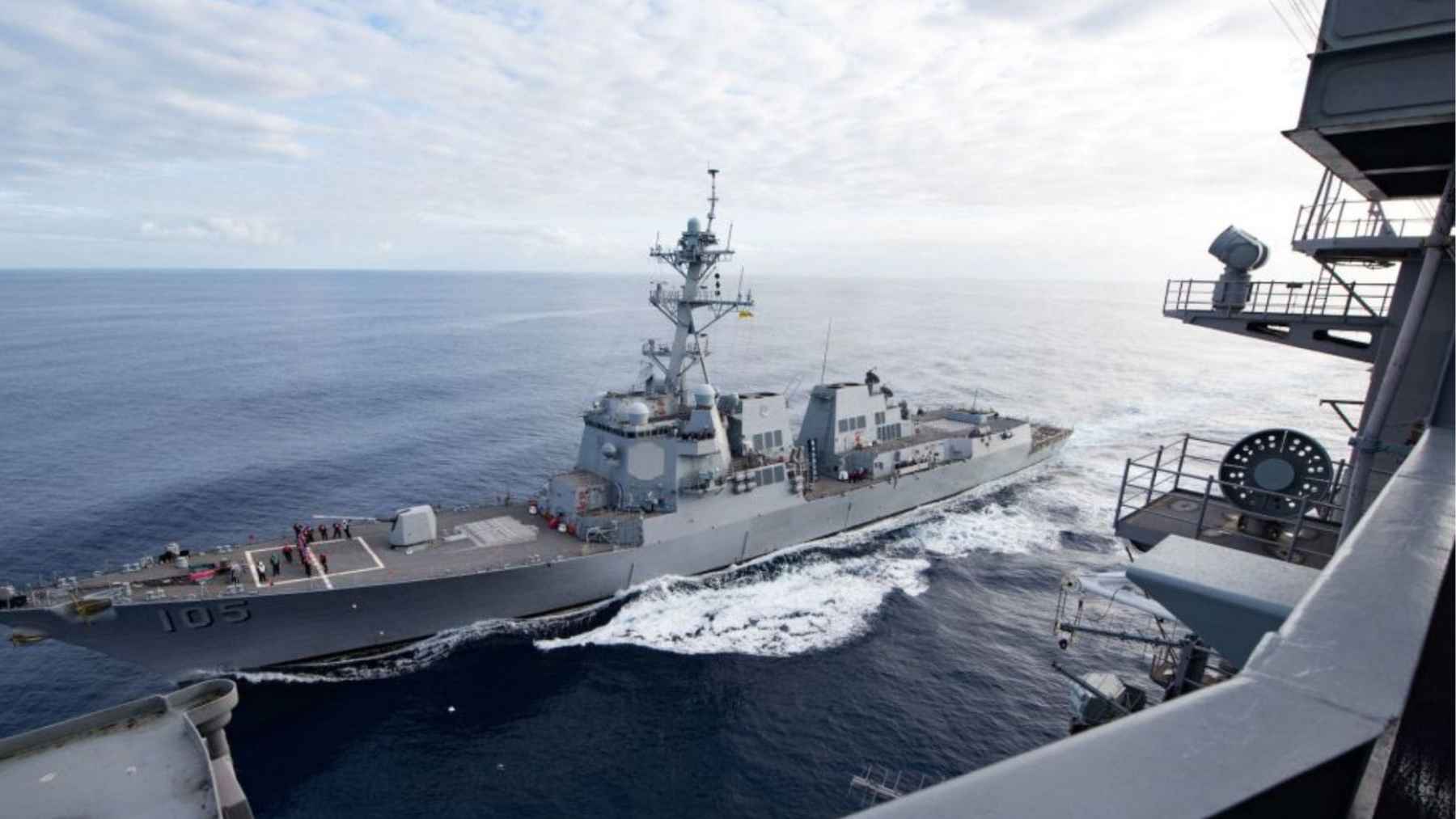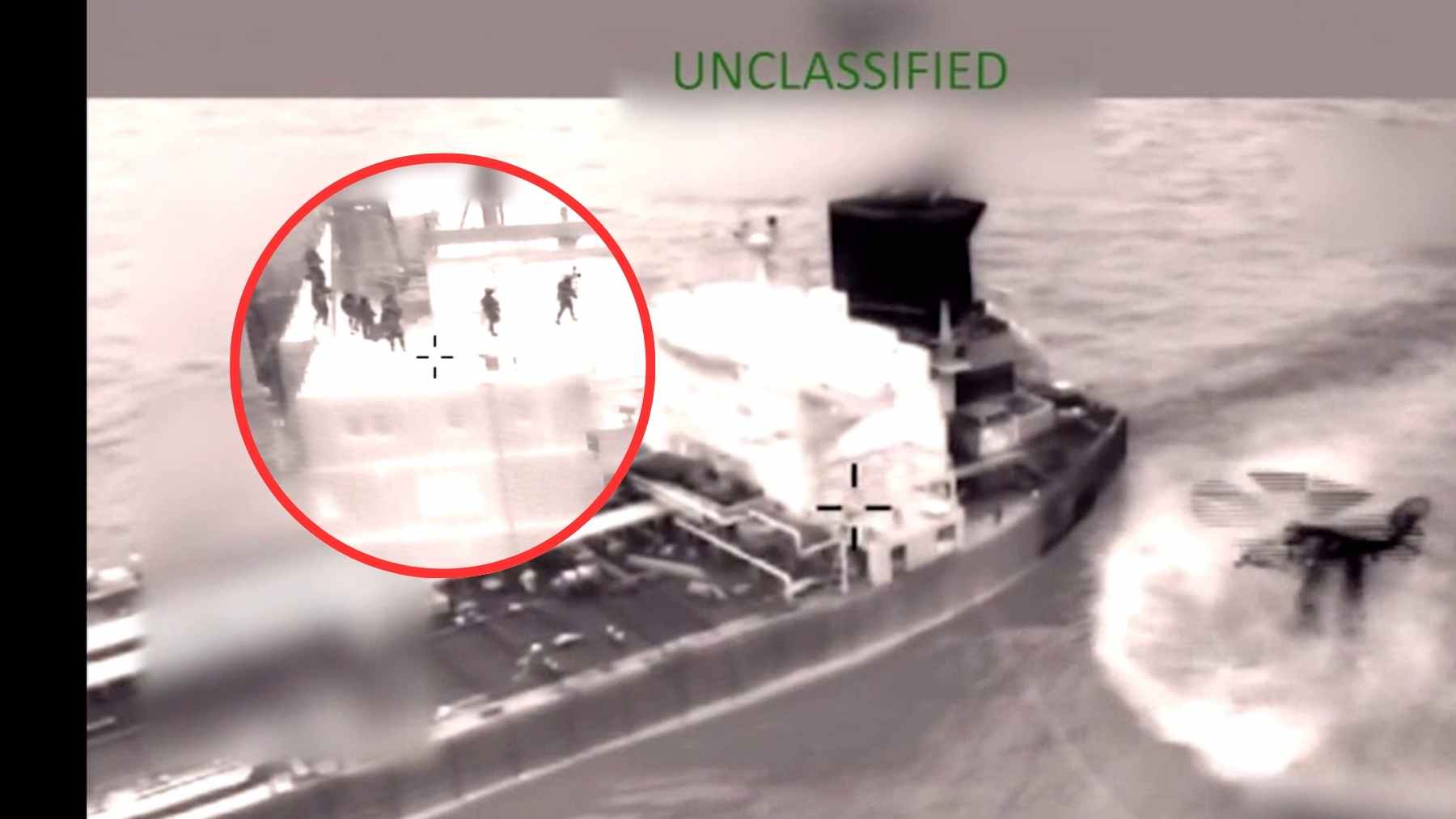
Before dawn on January 9, U.S. Marines slid down ropes onto the oil tanker Olina in the Caribbean Sea. The raid from the aircraft carrier USS Gerald R. Ford was the fifth tanker seizure under Operation Southern Spear, Washington’s campaign against illicit Venezuelan and Russian oil shipments. Beneath the geopolitics sits a story about climate, coral reefs and the growing risks of a shadow oil fleet. In its statement, U.S. Southern Command said that “there is no safe haven for criminals” in the region.
U.S. Southern Command says Marines and sailors took control of the Olina without incident near Trinidad, working with the Coast Guard. The Aframax tanker, previously named Minerva M, has been under sanctions since 2021 and left Venezuela fully loaded with more than 700,000 barrels of crude while falsely flying the flag of Timor Leste and switching off its tracking signal, a pattern officials associate with ghost fleet tankers.
Why should anyone who does not follow sanctions law care about a single intercepted ship. Because Olina is one hull in a rapidly expanding network of aging tankers that environmental groups warn could cause the next big spill in some of the world’s most fragile seas.
Investigations by Greenpeace, the Centre for Research on Energy and Clean Air and the European Parliament describe Russia’s shadow fleet as mostly older, poorly maintained vessels sailing under obscure flags with limited insurance. More than 70 percent of these tankers are over 15 years old, and analysts have already logged over 50 incidents involving the fleet.
When ships like that work their way into the Caribbean, the risk is not just legal. The region’s waters hold dense networks of coral reefs, mangroves and seagrass meadows that nurture fish, buffer storm waves and support coastal tourism. The United Nations Environment Programme notes that spilled oil can smother reefs, coat mangrove roots and seep into sand, killing trees and seagrass.
Those ecosystems are already under pressure. A recent assessment found Caribbean reefs have lost nearly half of their hard coral cover since 1980, mostly because of marine heatwaves, pollution and overfishing. Coral reefs, mangroves and related habitats still deliver billions of dollars each year in fisheries, tourism, shoreline protection and carbon storage. In that context, a major spill from a fully-loaded tanker could mean closed beaches, collapsed fisheries and storm damage to homes and hotels for years.
There is a climate bill hidden in that cargo too. The U.S. Environmental Protection Agency calculates that burning one barrel of crude releases about 0.43 metric tons of carbon dioxide. If all 700,000 barrels aboard the Olina end up being consumed, they would add roughly 300,000 metric tons of CO2 to the atmosphere, comparable to the yearly emissions of tens of thousands of cars.
Studies also show that Venezuela’s extra heavy crude from the Orinoco Belt ranks among the most carbon-intensive oils in the world, with production and processing emissions far higher than cleaner fields in places like Norway.
The irony is that the tanker industry has, to a large extent, become safer over the past fifty years. Data from the International Tanker Owners Pollution Federation show that oil lost in tanker spills has fallen by about 95 percent since the 1970s thanks to stricter rules and double hulls. Shadow fleets threaten to undo part of that progress by putting older, harder-to-trace vessels back at the center of global oil trade.
So the spectacle of Marines fast roping onto a tanker masks a simpler question. Will governments treat these operations only as a sanctions story, or also as a wake up call about maritime safety and climate risk? Many policy experts are urging tighter rules on ship age, transparency of ownership and insurance, along with tougher port inspections and stronger protection for coastal ecosystems.
For Caribbean nations that rely on healthy reefs and beaches, that kind of quiet regulatory work could matter far more than any dramatic raid.In that sense, every seized tanker now tells two stories. One is about power politics on the high seas. The other is about whether fragile tropical waters can stay safe while the world keeps burning oil.
The official statement was published on U.S. Southern Command.