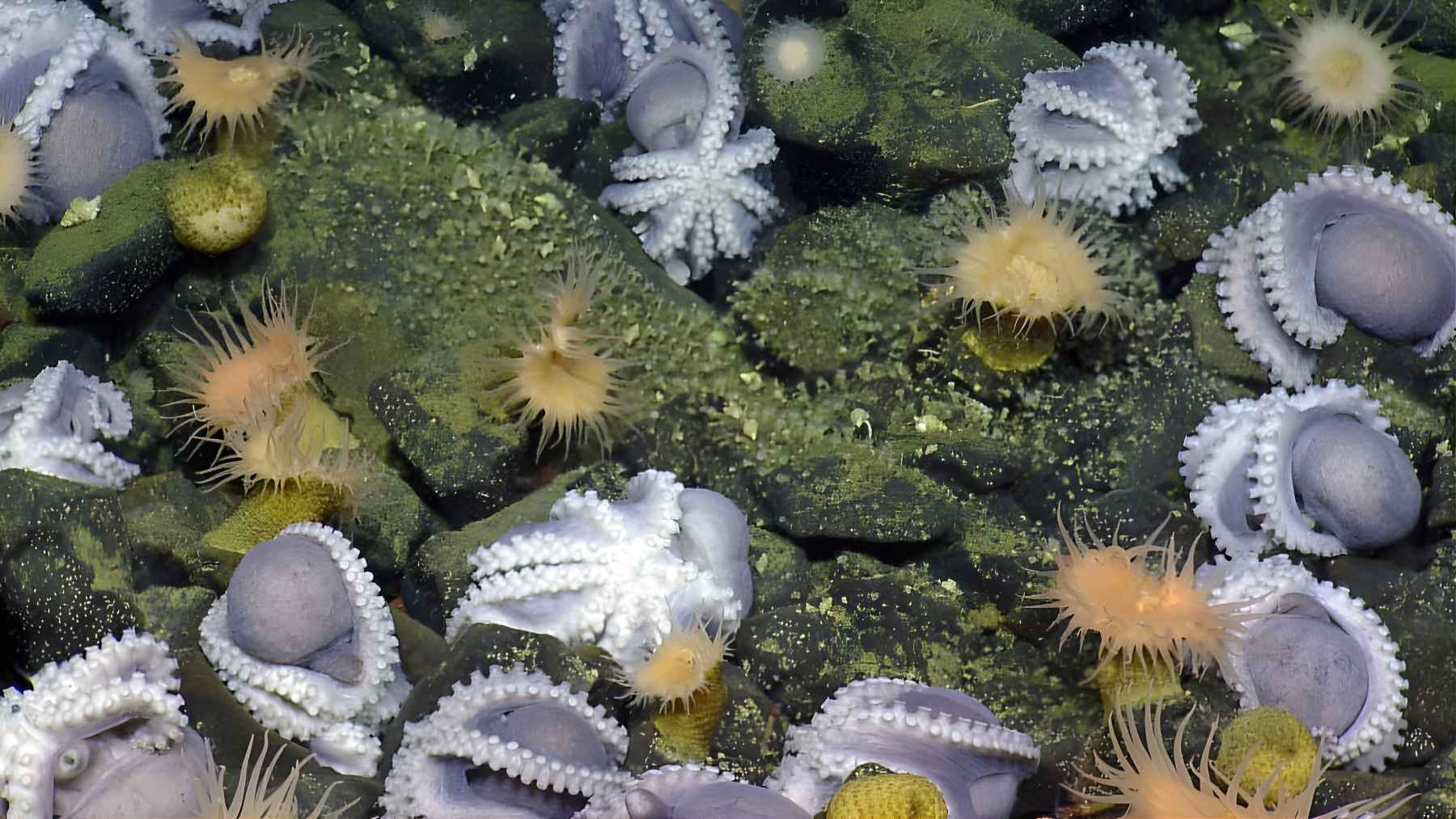
Two miles beneath the Pacific Ocean near an extinct volcano off California, the seafloor turns into a crowded neighborhood of octopus moms. At a site nicknamed the Octopus Garden, researchers counted over 6,000 animals in one area and estimate up to 20,000 in total.
The hilltop they share covers about 333 hectares, roughly the size of 233 soccer fields. What pulls so many solitary animals together is heat from hidden springs that helps their eggs hatch years faster than in the surrounding cold deep sea.
A deep sea nursery the size of 233 soccer fields
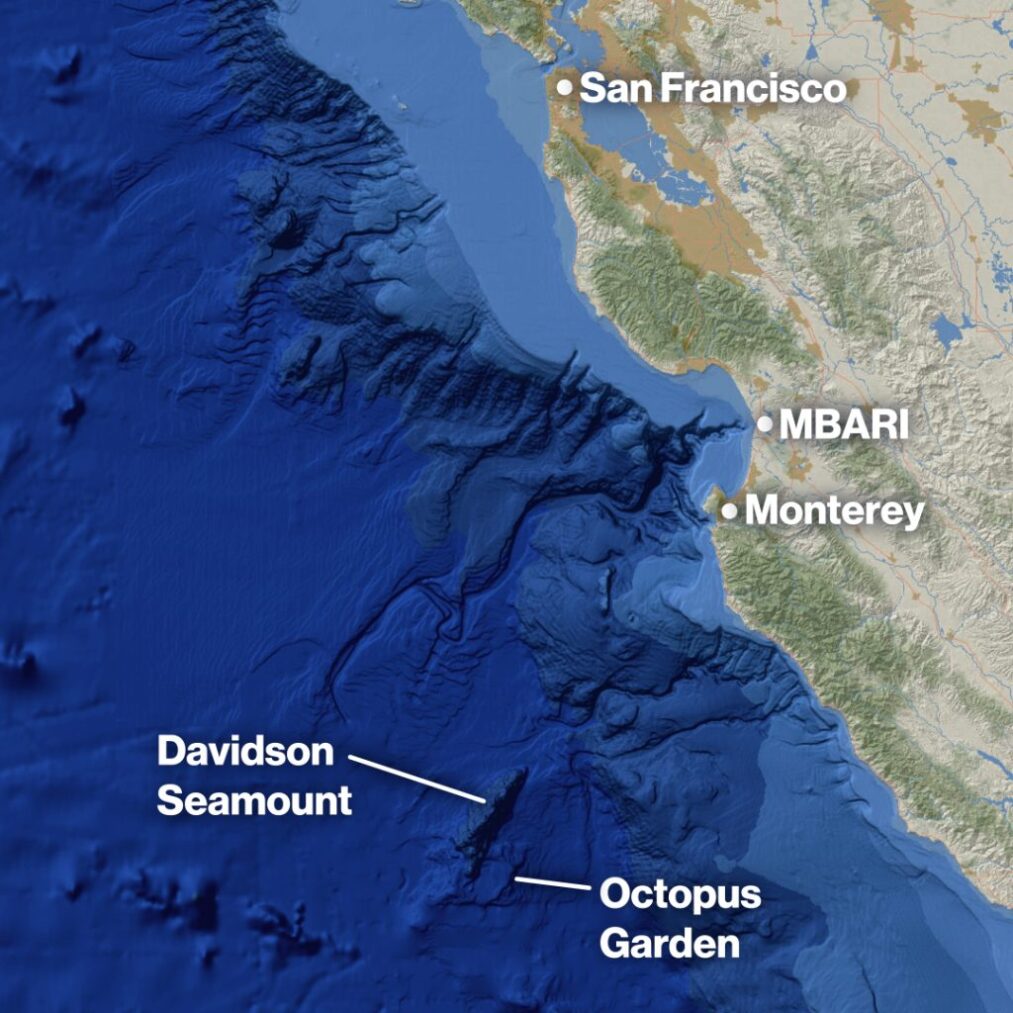
The Octopus Garden lies about 10,500 feet below the surface near the base of Davidson Seamount, an ancient underwater volcano southwest of Monterey Bay. Early dives saw shimmering water and pale octopuses tucked into cracks, triggering a detailed survey of the hill.
Visual mosaics revealed thousands of pearl octopuses, a deep-sea species about the size of a grapefruit with a pale purple hue. Smaller groupings of octopus had turned up before at Octopolis and Octlantis, but nothing close to this vast, tightly-packed nursery.
Why the octopuses crowd around an underwater volcano
In the surrounding deep sea, water hovers near 35 degrees Fahrenheit, which slows octopus metabolism and embryo growth. Inside the nest crevices, sensors recorded water close to 51 degrees, warmed by hydrothermal springs that seep gently from the volcanic rock.
To understand the pattern, a team led by Jim Barry at MBARI worked with Monterey Bay National Marine Sanctuary and researchers from the University of Alaska Fairbanks. Their remotely operated vehicle Doc Ricketts mapped the hill, tracked temperatures, and filmed the nests, letting the team “observe the Octopus Garden in tremendous detail,” Barry said.
Hot nests that speed up baby octopus development
At near freezing temperatures, biologists would expect pearl octopus eggs to take five to eight years or longer to hatch. Time lapse cameras instead showed that mothers brooding in the warm crevices guarded their clutches for less than two years before tiny hatchlings began to swim away.
That shorter incubation window matters on several fronts. It reduces the years when predators can pick off vulnerable embryos, and it makes it more likely that fasting mothers survive until hatching, after which their bodies and any leftovers feed fishes, worms, and other scavengers on the otherwise sparse seafloor.
A rare window into a hidden ocean world
The nursery lies within a protected marine sanctuary, which helps shield it from fishing gear, future mining plans, and other human pressures now creeping into the deep. Similar warm spring nurseries have been reported off Costa Rica, hinting that more of these hidden hotspots may be scattered along volcanic ridges.
Scientists still do not know how pearl octopuses locate such small patches of warm rock, how far the hatchlings drift, or how many volcano flanks hide comparable breeding grounds.
The main study has been published in Science Advances.