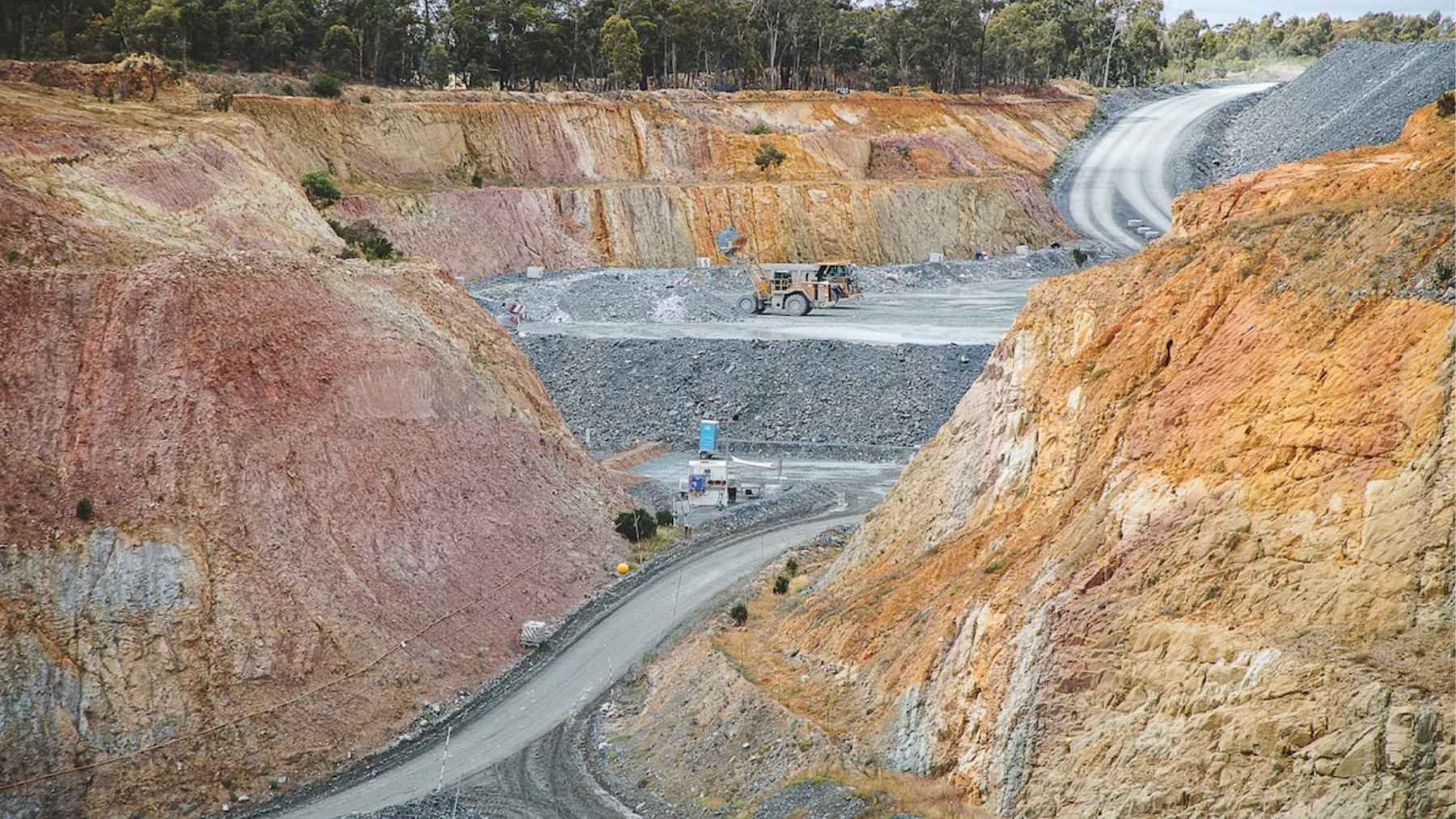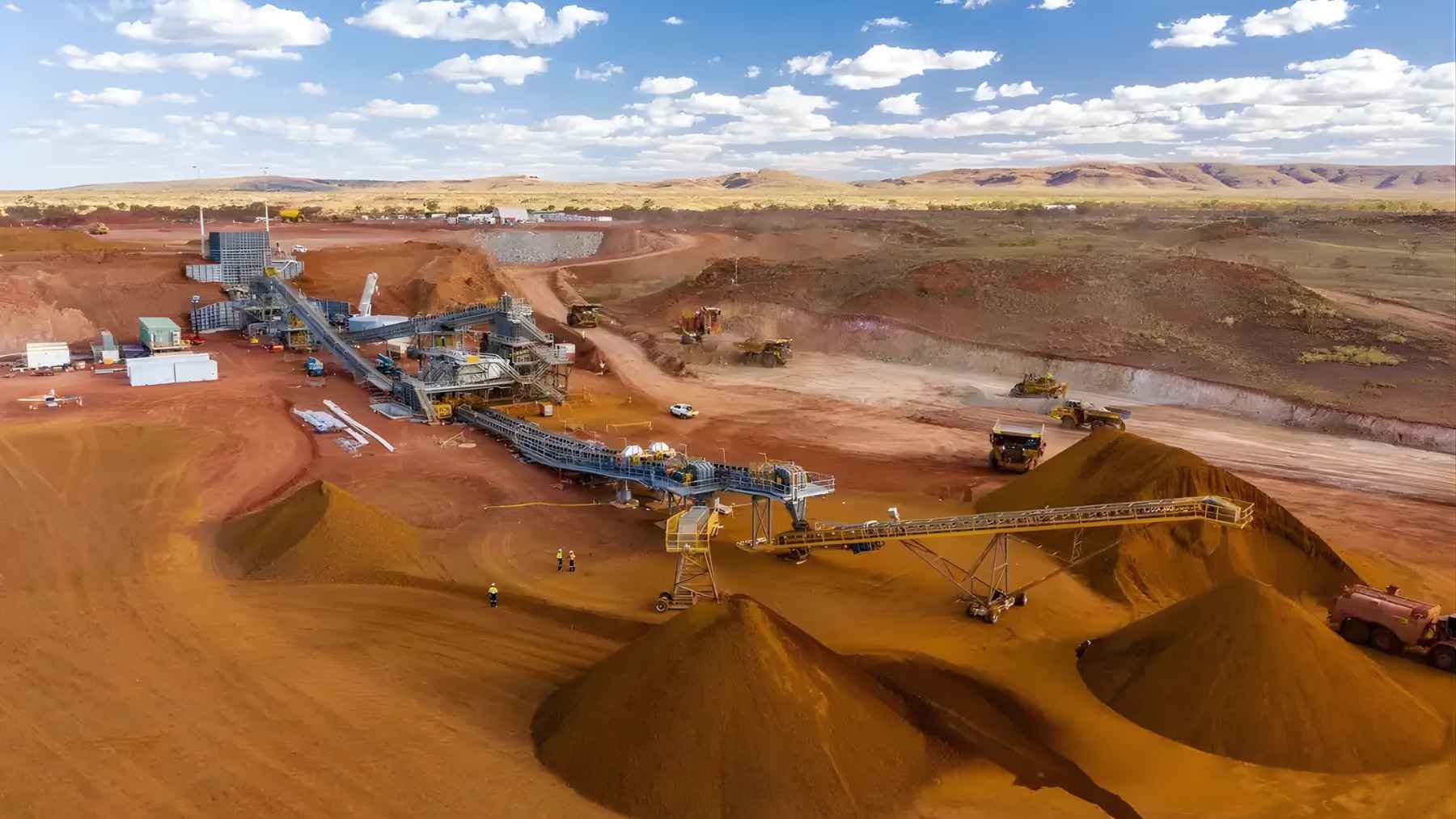
Deep under the red rock of Western Australia, scientists have confirmed that the Hamersley Province holds what appears to be the largest known iron ore reserve on Earth, about 55 billion metric tons of high grade ore. At today’s prices, that metal mountain is valued at more than $6.5 trillion, turning a familiar mining region into a once in a generation geological and economic story.
At first glance, it sounds like a simple jackpot. In reality, this discovery is also forcing researchers to rewrite a chapter of Earth’s deep history. A team led by geologist Liam Courtney Davies used a new uranium and lead isotope technique on iron-oxide minerals and found that these giant ore bodies formed between roughly 1.4 and 1.1 billion years ago, not 2.2 billion years ago as long assumed.
That billion year shift matters. The new age lines up with a period when ancient supercontinents were breaking apart and new ones were assembling, a time of intense tectonic stress, heat and fluid circulation inside the crust.
The researchers say the energy from this “epic geological activity” likely helped transform earlier banded iron formations that sat near 30 percent iron into ores that now exceed 60 percent in some zones.
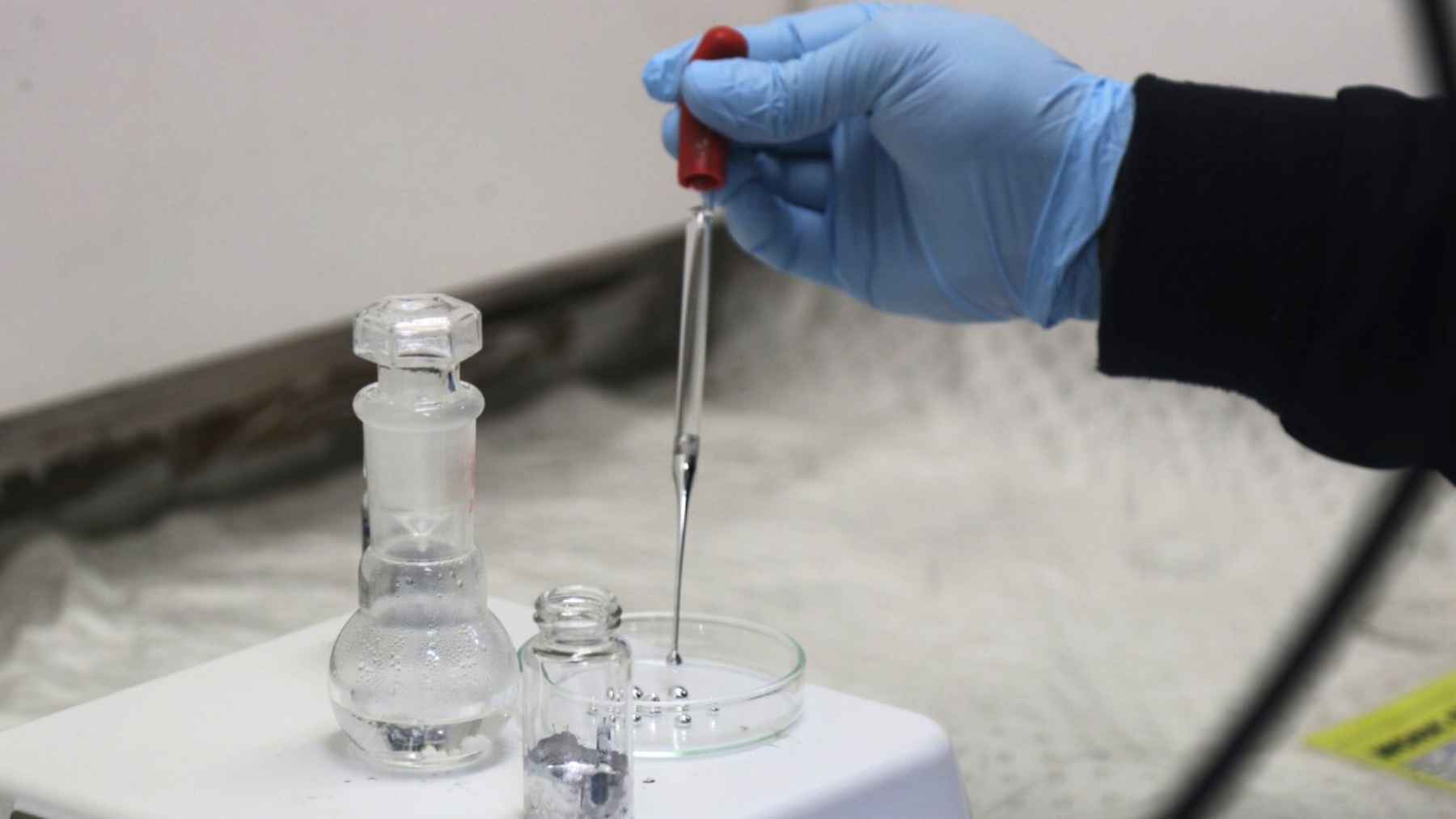
To pin down the timing, the team directly dated tiny grains within the iron ore itself rather than relying on the surrounding rocks. By analyzing traces of uranium and lead locked inside these minerals, they could tell when hot fluids moved through the crust and concentrated the metal.
That timeline now ties the world’s richest iron deposits to specific pulses of supercontinent breakup, giving explorers a much clearer playbook for where to look next.
The scale is hard to grasp. Global iron ore production in recent years has hovered around 2.5 billion tons annually, and nearly all of it feeds steelmaking. The estimated 55 billion tons in Hamersley equal more than twenty years of current worldwide output. For an industry that builds everything from bridges to wind turbine towers, that is a huge safety net.
Australia already sits at the center of this system. It is by far the largest exporter of iron ore, supplying more than half of global seaborne trade and earning over 100 billion dollars a year from the sector, much of it through shipments to China.
A deposit of this size strengthens that position and could keep ore trains and bulk carriers busy for decades, even as automation lifts productivity in the Pilbara region.
So what does a $6.5 trillion iron windfall mean in a world trying to cut carbon pollution. That part is more complicated. The iron and steel sector is responsible for roughly 7 to 11 percent of global carbon-dioxide emissions, since most steel still comes from coal-fired blast furnaces. More cheap ore can feed that old system for longer, unless climate policies and technology really start to bite.
At the same time, high-quality iron ore is a key ingredient in cleaner “green steel” routes that replace coal with hydrogen and electricity. Hydrogen-based direct reduction is particularly hungry for very high-grade feedstocks, often close to 67 percent iron, and analysts already warn that such ores are scarce. Hamersley’s enriched deposits will not automatically become green steel material, but understanding how and where high-grade ore forms could help align future mining with low-carbon technologies instead of locking in business as usual.
On the ground, the story is not just about prices and climate targets. Pilbara iron mining brings land clearing, dust, huge water demands and the risk of saline or acidic seepage from pits and waste that can harm soils and groundwater.
The ancient iron-rich ranges also host unique ecosystems and sites that are culturally important to Aboriginal communities, which are already under pressure from decades of mine expansion and related infrastructure.
The new geochronology work offers at least one practical benefit for the environment. If companies know that giant ore systems tend to form during specific tectonic episodes and in certain types of crust, they can narrow exploration to the most promising corridors instead of drilling almost everywhere and hoping for the best.
That does not remove the impacts of mining, but it can reduce some of the blind searching that disturbs land without delivering usable resources.
In the end, this “unprecedented” iron reserve is both a time machine and a mirror. It lets geologists look back more than a billion years to watch supercontinents tear and heal, and it reflects how tightly modern economies are tied to a single, carbon-heavy material.
Whether this find becomes a bridge to cleaner steel or just more fuel for the status quo will depend on choices made far away from the Pilbara, in energy ministries, boardrooms and those monthly electric bills so many households worry about.
The study was published by Curtin University.
Image credit: Mineral Resources Limited