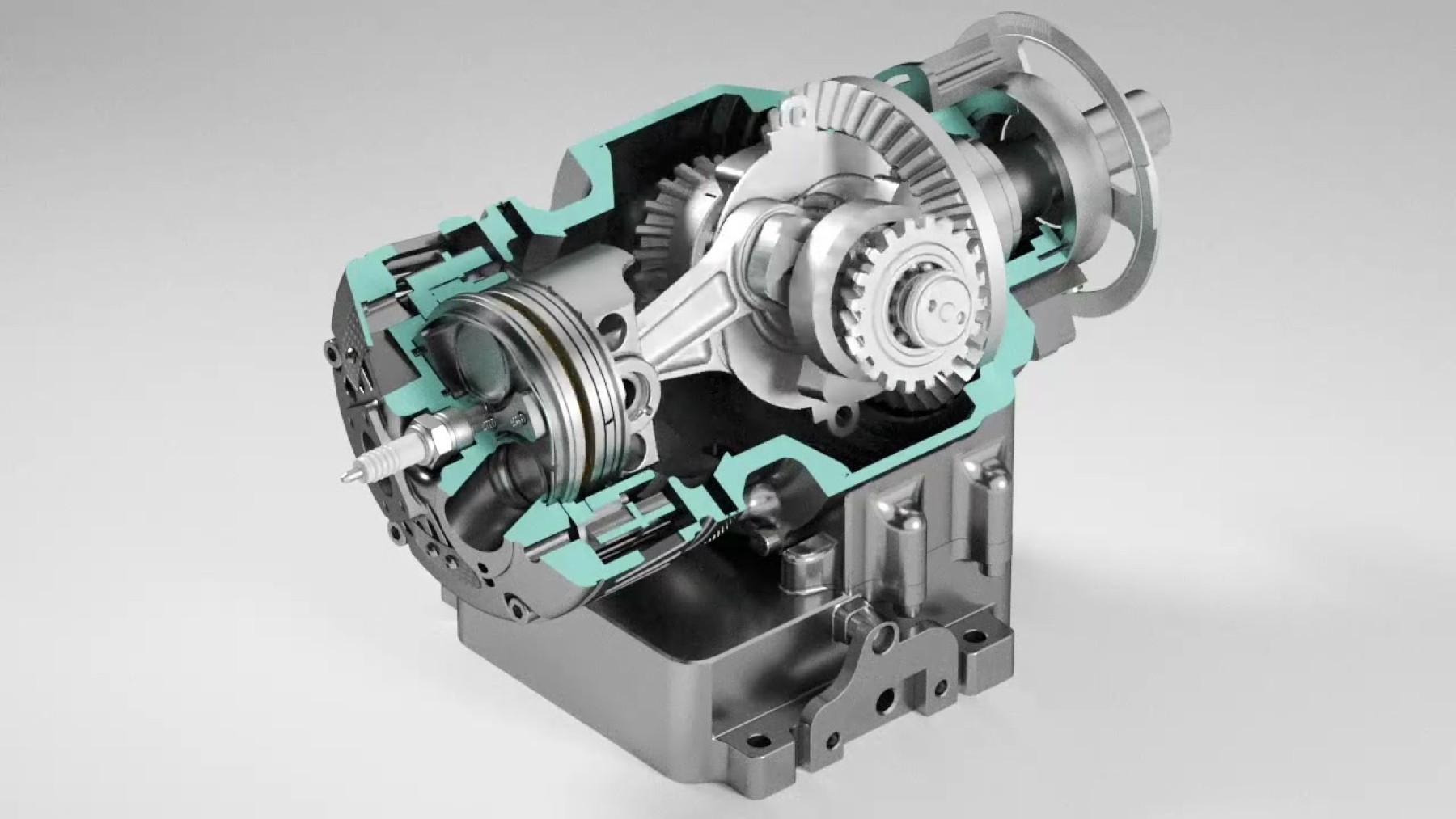
The automotive industry is abuzz with the news of the Avadi MA-250, the first ultra-compact ICE that has recently been revealed. Michael Arsenaeu designed this revolutionary engine and is the first to change the direction of combustion technology in an electric-focused market offering efficiency, power, and a compact design.
Here, the article explains how the mechanics work, the promise of the technology across the automotive industry, and why professionals consider it a significant advancement in engine design.
The innovative design of the MA-250: Why it’s different from conventional engines
Avadi MA-250 engine is quite different internally as it eliminates half the parts required in a conventional engine design. Its design involves an internally rotating piston and a two-rod system that engages pinion gears to provide efficient movement that fits the compact design.
This flexible configuration of the engine also means that there are fewer parts in the engine, thereby decreasing its weight and the level of complexity. The MA-250 has no crankshaft as seen in other conventional ICE engines; instead, it rotates the piston and cylinder within the engine case to duplicate a four-stroke cycle of intake, compression, power, and exhaust.
This efficient, lightweight design is quite a departure and could herald significant changes in engine use. Nevertheless, this doesn’t make the MA-250 a small device; it is a powerful machine. It only has 23.6 pounds (10.7 kg) of dry weight and develops up to 16 hp and 30 Nm of torque at 3,700 rpm.
They are lighter by half the weight than traditional 250-cc engines that produce similar torque but slightly higher horsepower than the MA-250. High brake thermal efficiency, reportedly at 42.12%, goes beyond many current engines, which hover at 20-30% at most. Such efficiency reduces fuel consumption and emissions, making the MA-250 attractive to industries focusing on environmental issues.
The role of the MA-250 in the shift toward greener technology solutions
As the world moves towards electric vehicles, the efficiency of ICEs is often under debate. However, the MA-250 is viewed by professionals as a more grounded transition from conventional engines to complete electrification. This compact engine is a more environmentally friendly solution than traditional combustion engines.
Still, it does not demand a swap to electrical energy in areas where the electrical structure is not yet well established. Essential in many fields, including transportation, machinery, and many others, its flexibility is owed to the form of the junctions.
This flexibility complies with present sustainability objectives without the expensive costs of electric engine modifications. It is an effective solution for businesses that want instant albeit gradual improvements to environmentally friendly innovation.
The Avadi MA-250 engine is expected to revolutionize the market, especially in applications where electric motors are not feasible or high energy density is still critical. In Avadi’s opinion, the engine’s design is versatile and can accommodate various uses. It might even be used to retrofit internal combustion engines into existing structures.
The engine’s fuel efficiency and low emission are due to its ultra-compact design. Still, its capacity to deliver high torque at low weight will significantly interest the industrial, transport, and machinery sectors. Avadi’s engineers are still fine-tuning the engine, with fresh enhancements likely to enhance the airflow issue—a factor that may improve the feasibility of the engine in other markets.
Why the MA-250 engine could be a game changer for the automotive industry
This exposure of the MA-250 can be seen as a sign that the development of ICE technology has not yet reached its plateau. Thus, Avadi presents a versatile, environmentally friendly, and efficient substitute to conventional engines, which may be easily integrated into existing or new manufacturing designs.
Most of the time, the debate on green mobility is presided over by electric vehicles, but the MA-250 proves that ICEs still have room to be developed responsibly for today’s world.
As a stopgap measure or as a new paradigm, this ultra-compact engine embodies tradition and innovation in equal measure, a combination that industry insiders expect will revolutionize the combustion engine in the next few years.