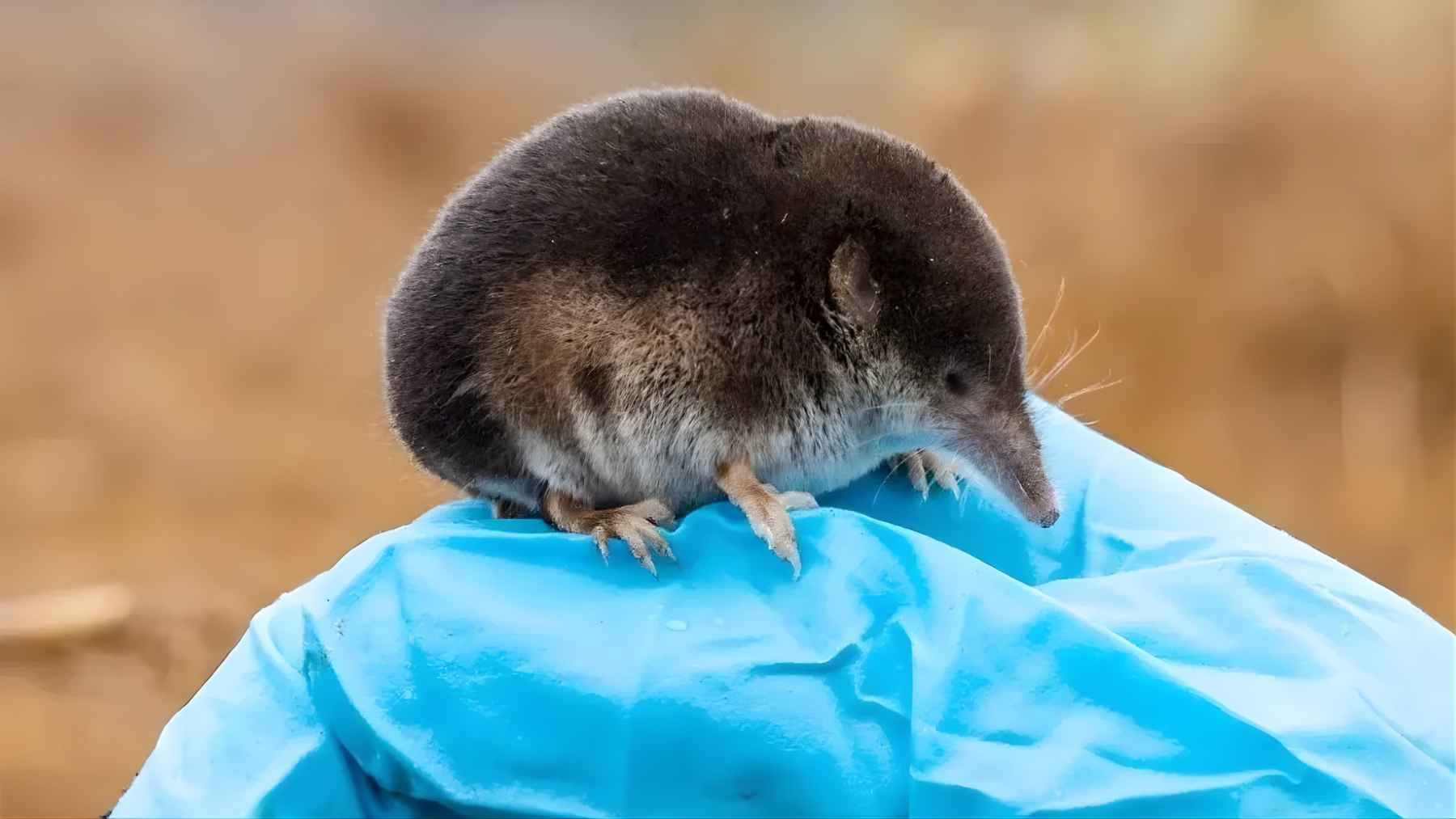
Some scientific discoveries involve giant telescopes or particle colliders. Others fit easily in the palm of a hand. In the high plateaus of the Ethiopian Highlands in Ethiopia, researchers have just confirmed a new mammal species so small it weighs about as much as a sugar cube.
The animal is a dwarf shrew named Crocidura stanleyi, and it tips the scale at roughly 3 grams. Its body is only about 5 centimeters long with a short, furry tail, which places it among the tiniest mammals known on Earth. For anyone who assumed we had already found every mammal out there, this discovery is a gentle reality check.
A shrew as light as a sugar cube
According to a news release from the Swedish University of Agricultural Sciences (SLU), researcher Yonas Meheretu first spotted the tiny shrew in a pitfall trap more than two and a half kilometers above sea level on Mount Damota in southern Ethiopia.
He had persuaded the team to add special bucket traps that would catch extremely small animals that ordinary methods tend to miss. When he looked into one of those buckets in 2023 and saw the unfamiliar shrew, he later said he would never forget that moment.
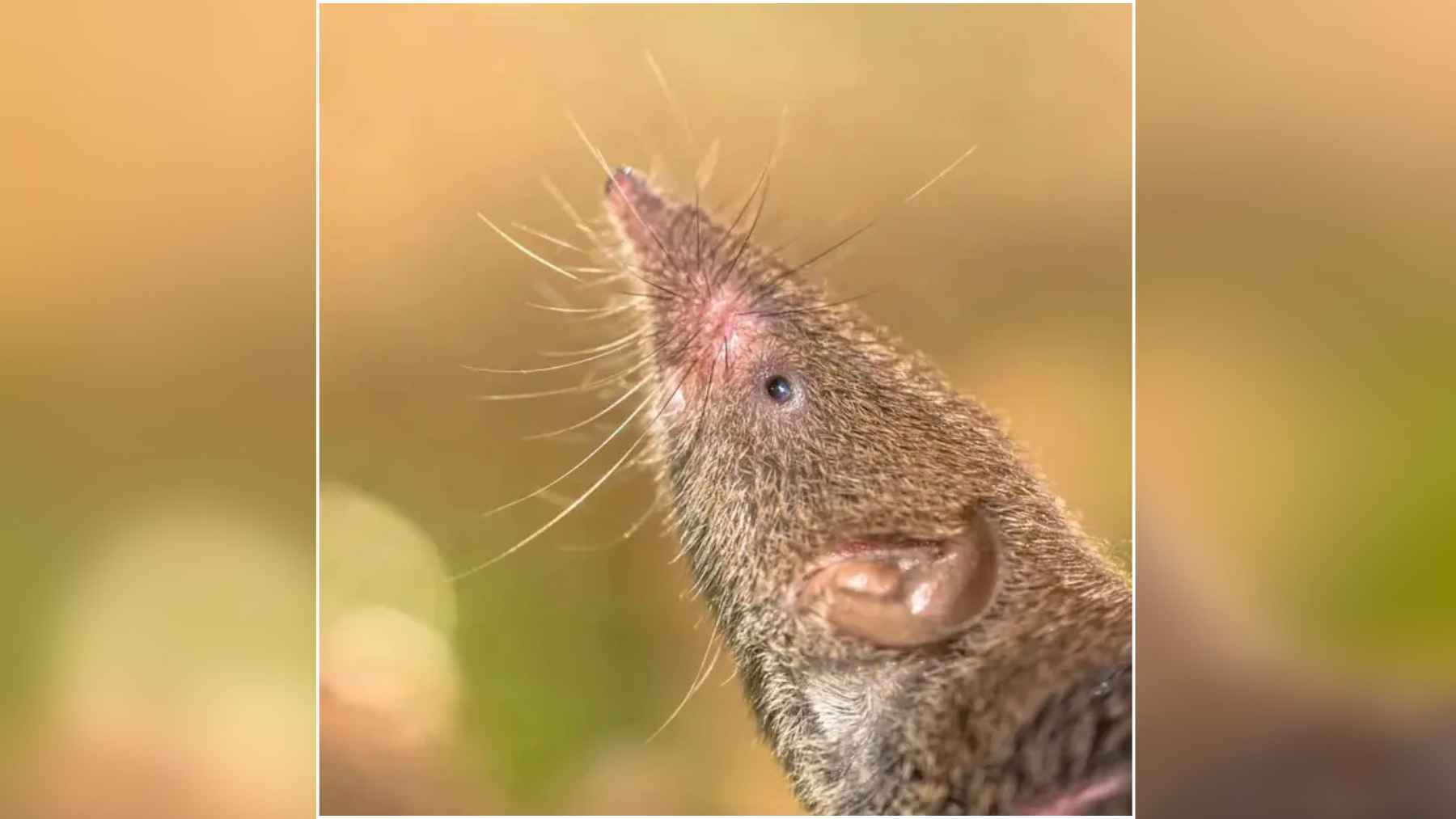
The animal weighs about 3 grams, similar to a standard sugar cube on a kitchen counter. Its head is described in the study as slightly flattened, its fur gray brown, and its tail short and noticeably hairy, which helps distinguish it from other shrews in the region. The body measures around 5 centimeters and the tail roughly 3 centimeters, so the whole animal could curl up comfortably on a fingertip.
Lead author Evan W. Craig, who recently completed his doctorate at the University of Massachusetts Boston, described it as “an exciting time to be a biologist” because scientists are still discovering new species.
For him and his colleagues, Crocidura stanleyi turns the abstract idea of biodiversity into something you can literally hold in your hand. It shows how the smallest creatures can deliver some of the biggest scientific surprises.
Ten years of fieldwork behind a three-gram mammal
The story of this species begins in 2015, when mammalogist Bill Stanley of the Field Museum of Natural History caught a tiny shrew during an expedition in the Simien Mountains of northern Ethiopia. Stanley suspected the animal might be something unusual, but he died suddenly a few days later while still in the field.
His specimen ended up in the museum collection, waiting quietly for someone to take a closer look.
Years later, the Mount Damota specimen that Meheretu captured provided a crucial second data point. Together with dozens of other museum samples, these shrews formed the backbone of an integrative taxonomic study that combined detailed measurements of bones and fur with modern genetic analysis.
The work showed that the sugar-cube-sized animals were not just small examples of a known species but a distinct lineage now named Crocidura stanleyi.
Craig and his coauthors examined more than one hundred dwarf shrew specimens from several institutions around the world, which helped them tease apart subtle differences between similar looking animals. That kind of painstaking comparison is not glamorous, but it is how hidden species are brought into the scientific record.
Without long-term field projects and well-curated museum collections, this shrew would likely still be passing unnoticed through the grass.
Ethiopian Highlands a natural laboratory on a moving continent
The new shrew lives in scattered pockets across the high plateaus of the Ethiopian Highlands, at elevations from roughly 1,400 meters to about 3,600 meters. Scientists sometimes describe this region as the Roof of Africa because so much of the land sits well above 1,500 meters, with peaks that rise past 4,000 meters.
The entire plateau is split diagonally by the Great Rift Valley, part of a huge tectonic crack that runs across East Africa.
These heights host some of the continent’s most distinctive mammals, including the endangered Ethiopian wolf and the grass-eating gelada monkey, both found only in these highlands.
Conservation groups note that the wolf is one of the rarest canids on Earth, while large gelada herds draw wildlife watchers to places such as Simien Mountains National Park. The tiny shrew now joins this roster of unique animals that have evolved in cool, isolated Afroalpine grasslands.
Geologists see the same landscape as a slow-motion experiment in how continents break apart. Christopher Scholz has described rifting in East Africa as giving us a “front row seat” on a continental breakup, where new ocean basins are born over millions of years.
Researcher Lucía Pérez Díaz has explained that as the rift widens, seawater will eventually flood in and leave a large island in the Indian Ocean made from parts of Ethiopia and Somalia, including the Horn of Africa.
How a tiny shrew fits into Earth’s vast biodiversity
Spanish zoologists Miguel Lizana at the University of Salamanca and José Luis Viejo at the Autonomous University of Madrid estimate that Earth may hold between 3.6 million and 100 million species, with around 10 million often cited as a reasonable middle value.
They point out that only about 3% of the species described so far are vertebrates, meaning animals with backbones such as mammals, birds, reptiles, amphibians, and fish.
In their work on animal diversity in Spain, the two researchers calculate that the country has about 1,730 vertebrate species, including 35 amphibians, 69 freshwater fish, 87 reptiles, 158 mammals, and 521 birds. That is just one nation on one continent, yet it already shows how quickly the numbers add up when you start counting.
Against that backdrop, it becomes easier to see how a three-gram predator prowling the moss in Ethiopia could stay unnoticed for so long.
For most people, biodiversity is an abstract word that appears in schoolbooks or in debates about climate policy and land use. Studies like the one that defined Crocidura stanleyi translate that idea into something much more concrete, a living animal that could hide under a fallen leaf yet tells a story about evolution, geology, and conservation.
The next time you scroll past a photo of mountain scenery, it might be worth wondering what other sugar-cube-sized secrets are still hiding in the grass.
The main scientific study has been published in the Journal of Vertebrate Biology.