Deep under the hills of central China, geologists say they have located more than one thousand metric tons of gold beneath the Wangu gold field in Pingjiang County, an underground stash worth about 600 billion yuan, or roughly $85.9 billion.
If confirmed, the discovery would rank among the largest known gold deposits on Earth and could cement central Hunan Province as a major mining hub. It also sets up a tough test for what responsible mining really means in the middle of a climate and biodiversity crisis.
A deep gold find under Hunan
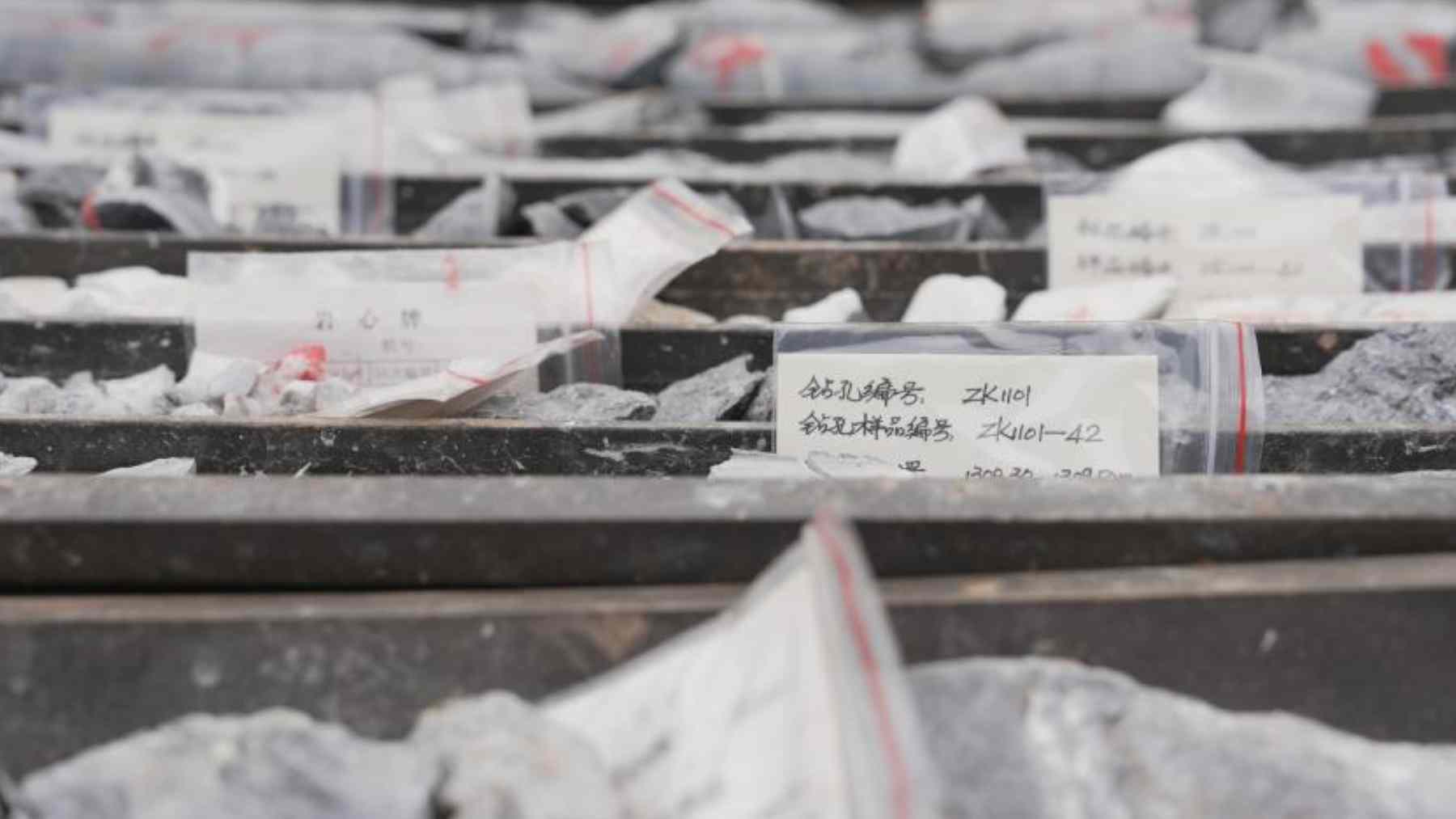
According to the Geological Bureau of Hunan Province, exploration teams have identified more than forty gold-bearing veins around two thousand meters below the Wangu site. Those veins already account for about three hundred metric tons of confirmed resources, with three-dimensional models suggesting that total reserves down to three thousand meters could exceed one thousand metric tons.
Many of the drilled rock cores reportedly show visible gold, something geologists rarely see in modern exploration. In some samples, each metric ton of ore holds up to 138 grams of gold, far richer than the grades that keep many underground mines in business.
The find has already been branded a “supergiant” deposit and compared with South Africa’s South Deep mine, long considered one of the biggest gold reserves on the planet with around nine hundred metric tons in the ground.
Yet even here, experts urge caution. Analysts at the World Gold Council have described the headline figure of one thousand tons as aspirational, noting that only the three hundred tons at shallower depth have been outlined in detail so far and that deeper estimates still rest on models rather than full drilling.
Economic promise meets environmental risk
On paper, a mine like this looks like a jackpot. It could bring thousands of jobs, new rail spurs and roads, and steady demand for steel, cement, and power. Local restaurants and repair shops would feel that money quickly. For a country that already leads the world in gold production and uses far more gold each year than it mines, adding such a resource sounds attractive.
But big gold projects rarely come without a heavy footprint. Groups that track mining impacts point out that gold mining is among the most polluting branches of the mineral industry. Producing enough metal for a single wedding ring can generate around twenty tons of waste rock and tailings, which often carry residual cyanide or heavy metals that can leach into rivers and groundwater.
At Wangu, any future mine would have to move and crush huge amounts of rock at depths beyond two kilometers. That means ventilation fans, cooling systems, and hoists running for long hours. In a world that is already trying to cut carbon emissions, adding another energy hungry operation to the grid complicates the picture for both climate targets and household electric bills.
Gold and climate in a warming world
Researchers who study the sector estimate that global gold mining already emits more than one hundred million tons of carbon dioxide equivalent each year. One detailed life cycle study for a large-scale operation found that producing a single kilogram of gold can release more than twelve thousand kilograms of greenhouse gases when you add up fuel, electricity, and processing chemicals.
Those numbers explain why investors now ask whether major mines plan to run on coal fired power or on a mix of renewables and efficient equipment. In practical terms, that means choices like tying a project into hydropower, building on-site solar and battery systems, or upgrading to electric haul trucks instead of diesel fleets. It is the kind of detail that seldom makes headlines but quietly shapes the real climate cost of every ounce of metal.
What responsible mining would need to look like at Wangu
If the Wangu deposit moves from exploration to full mine planning, environmental engineers will have a long checklist. Deep mines must handle groundwater carefully to avoid draining or contaminating local aquifers.
Tailings storage facilities need robust liners, monitoring wells, and emergency plans so that cyanide and dissolved metals do not escape into surrounding streams and farmland. International reviews of gold tailings show that weak dams and poor oversight have repeatedly led to spills that poisoned rivers and killed fish and livestock.
Communities will also want clear answers on noise, dust, and land use. Even if the main workings sit far underground, access roads, power lines, and waste piles change the surface.
For farmers and residents in Pingjiang, the difference between a boom that lifts the local economy and a project that leaves polluted water and unstable ground will come down to enforcement of standards and transparency over time, not just to promising words in an early prospectus.
At the same time, the Wangu discovery might push the industry to prove that “green mining” can be more than a slogan. Some large gold producers are experimenting with closed-loop water systems, better cyanide recovery, and independent audits of their climate performance.
If a deposit as deep and rich as this one cannot meet strong environmental expectations, critics will ask whether the concept works at all.
A crossroads for gold and the green transition
For now, the Wangu numbers remain partly provisional, and the site is still an exploration project rather than a working supermine. What happens next will be watched not only by traders who care about gold prices but also by climate researchers and local communities who care about rivers, forests, and air quality.
In that sense, this buried trove is more than a story about hidden wealth. It is a test of whether the race to secure minerals can be squared with serious environmental protections at great depth.
The official press release was published on Xinhua.