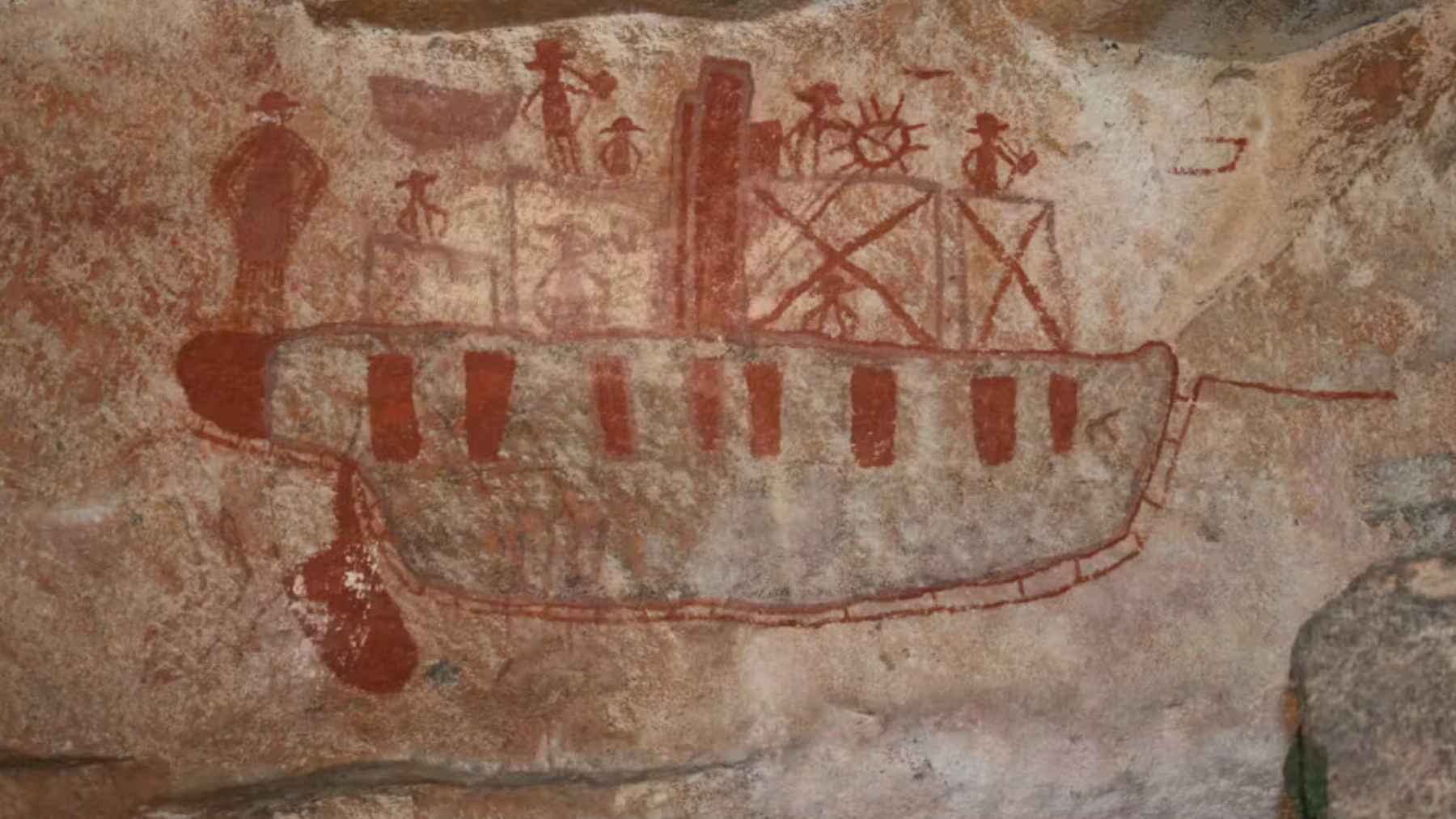
For years, scientists argued over timing. One camp favored a later arrival around 47,000 to 51,000 years ago, based mainly on earlier genetic models. Another pointed to older archaeological sites and Indigenous knowledge that suggested people had been there much longer.
The new research largely settles that debate in favor of the earlier timeline and shows that the first Australians were accomplished ocean voyagers long before writing or farming existed.
Two sea roads into a drowned continent
Back then, sea levels were lower and New Guinea, Tasmania and mainland Australia formed a single landmass that scientists call Sahul. Even so, there was never a continuous land bridge from Southeast Asia. Reaching Sahul meant island hopping across Wallacea and tackling open water channels that could be more than one hundred kilometers wide.
The new study finds that early migrants did not follow just one trail. Genetic patterns show a northern route that moved through the Philippines and into what is now New Guinea and a southern route that skirted the Indonesian islands toward northern Australia.
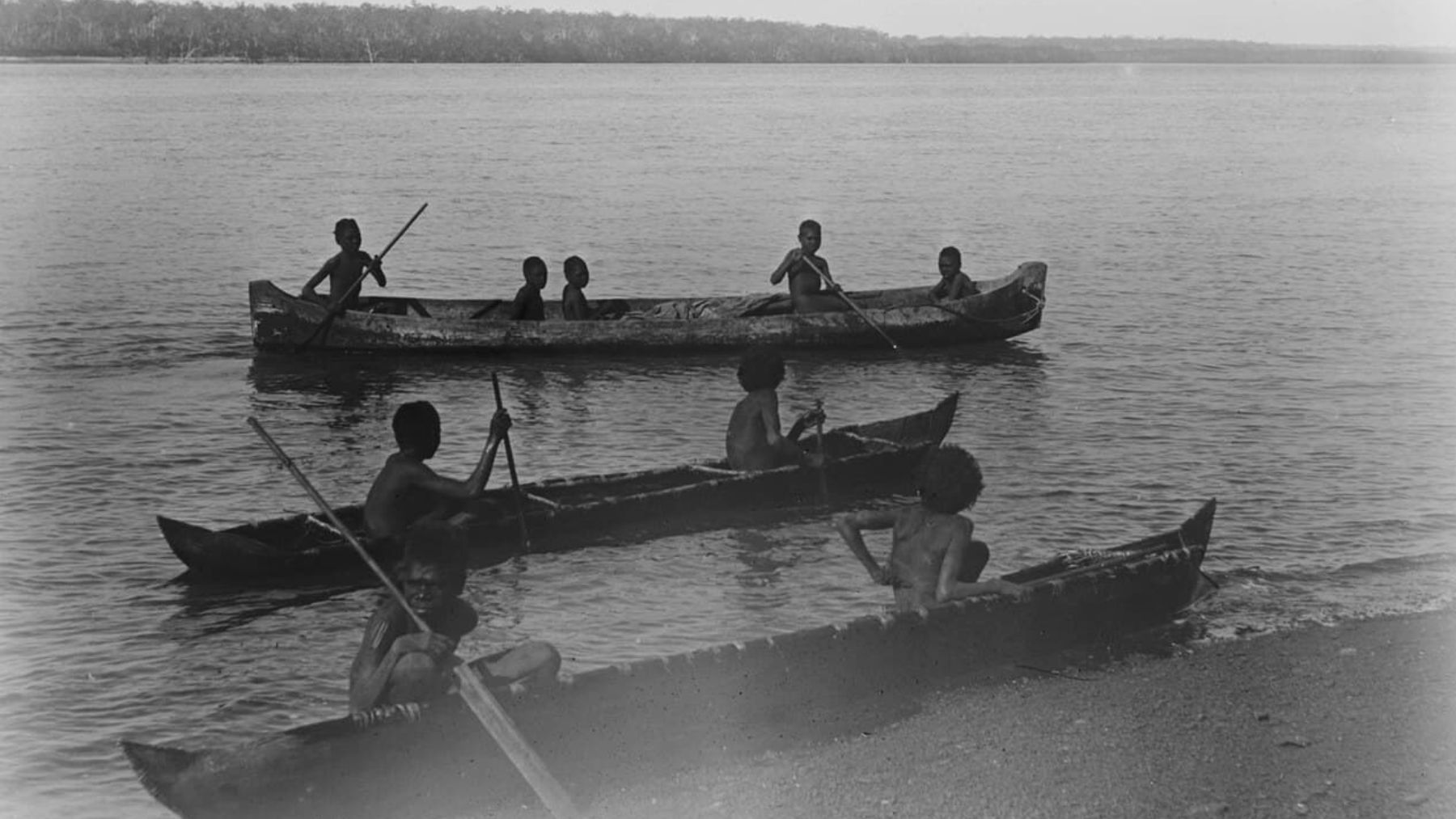
In practical terms, that means small groups of hunter gatherers planned repeated crossings, built watercraft sturdy enough for rough seas, and coordinated landings on unfamiliar shores. This was not a lucky raft drifting on the tide. It looks much more like intentional exploration over generations.
A genetic time machine in living communities
To reach these conclusions, an international team analyzed 2,456 complete mitochondrial genomes from Indigenous communities across Sahul and the wider Pacific, including 700 newly sequenced samples and 245 from the western Pacific.
Mitochondrial DNA is passed down the maternal line. Because it accumulates mutations at a roughly predictable pace, it acts as a kind of molecular clock.
The researchers reexamined how fast those mutations build up and used several different statistical methods to estimate when key maternal lineages split from one another. Their results point to major founder lineages reaching the Sunda region around 60,000 years ago and then moving on into Sahul soon after.
Crucially, the team also finds a clear geographic split. Lineages in one branch are concentrated today in New Guinea and nearby islands, while another set dominates in mainland Australia. That pattern fits neatly with the idea of a northern and a southern entry route.
Matching DNA with the oldest Australian sites
For archaeologists, one of the most important outcomes is that the new genetic timeline lines up with the oldest known sites on the ground. The rock shelter of Madjedbebe in northern Australia has produced evidence of human occupation at least 65,000 years old, including stone tools, grinding stones, ochre and food remains.
Until now, some researchers felt the genetics and the archaeology were telling slightly different stories. With this study, those dates move much closer together. Independent lines of evidence now agree to a large extent that people were living in northern Sahul by around 60,000 years ago, and probably a bit earlier in some places.
Deep roots and living connections
The work also highlights just how long the ancestors of Aboriginal Australians and Papuan peoples have been connected to their lands. Several mitochondrial branches identified in the study are found only in Australia or only in New Guinea and appear to have been isolated for tens of thousands of years.
When rising seas finally drowned the land bridge between Australia and New Guinea around nine thousand years ago, communities on either side were already distinct but still carried echoes of a shared origin. Genetic evidence now suggests that these populations preserve some of the oldest continuous lineages outside Africa, a point echoed by multiple independent studies.
The authors note that their findings refine a Western scientific narrative while respecting the way many Indigenous people describe their own history. In the paper they acknowledge long standing views that their ancestors have always been part of these landscapes, from tropical highlands to arid plains.
Early seafaring and our changing planet
At the end of the day, this is not only a story about dates on a timeline. It is about how early humans read currents and coastlines, responded to shifting climates, and learned to live with new ecosystems from mangrove coasts to desert interiors.
The study also provides some of the earliest strong evidence that our species was comfortable crossing open ocean, long before sails, compasses or charts existed.
For anyone stuck in traffic on a modern coastal highway or watching the tide creep higher along familiar beaches, it is a reminder that people have been adapting to changing seas for a very long time. The difference now is the speed of that change and our responsibility for it.
The study was published in Science Advances.