For more than twenty years, schoolbooks and science shows have repeated the same story that the universe is not only expanding, it is speeding up. Now a fresh wave of data is quietly shaking that picture and giving new life to a dramatic alternative ending called the Big Crunch, where everything in the cosmos eventually falls back together.
New measurements of dark energy from huge galaxy maps and a bold reanalysis of old supernova data suggest that the mysterious force pushing space apart may be getting weaker with time. If that trend is real and continues long enough, gravity could one day win the cosmic tug of war, slowing the expansion, stopping it, and finally reversing it so that the universe begins to shrink. Scientists are excited, but they also warn that the case is far from closed.
What scientists mean by dark energy and the Big Crunch
Dark energy is the name given to a very strange effect that makes distant galaxies move away from each other faster over time. Instead of pulling things together like ordinary gravity, it acts more like a gentle pressure inside space itself, stretching the fabric of the universe. For years, most cosmologists treated it as a constant background push that never changes, which leads to an endless expansion that only gets faster.
The Big Crunch is almost the mirror image of that story. In this scenario, dark energy weakens so much that gravity starts to dominate again. The expansion first slows, then stops, then reverses, until every galaxy, star, and atom is dragged back into an extremely dense, hot state similar to the conditions right after the Big Bang.
Some models even imagine that a new Big Bang could follow, leading to a cyclical or “bouncing” universe.
New maps of the cosmos hint dark energy is changing
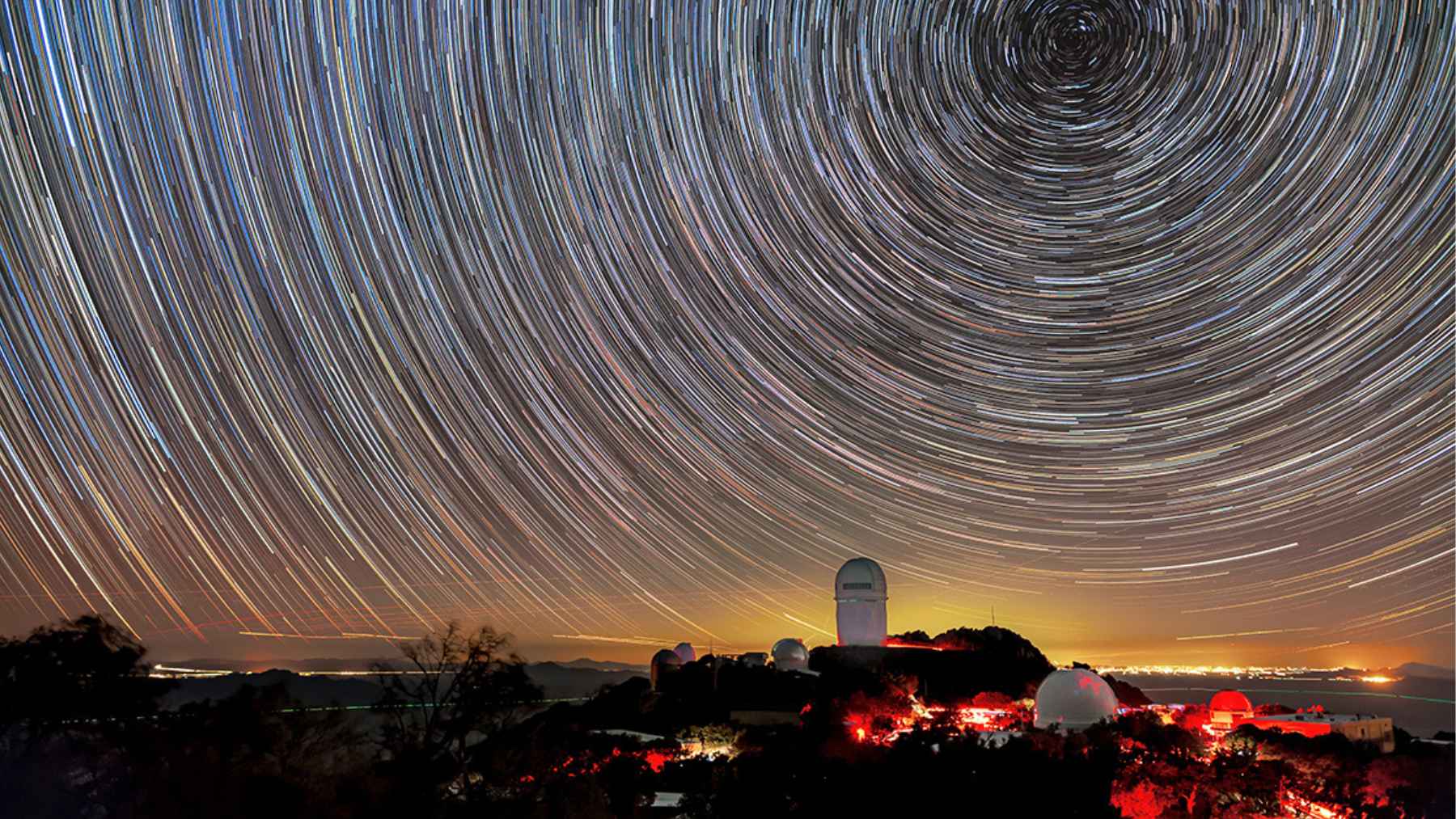
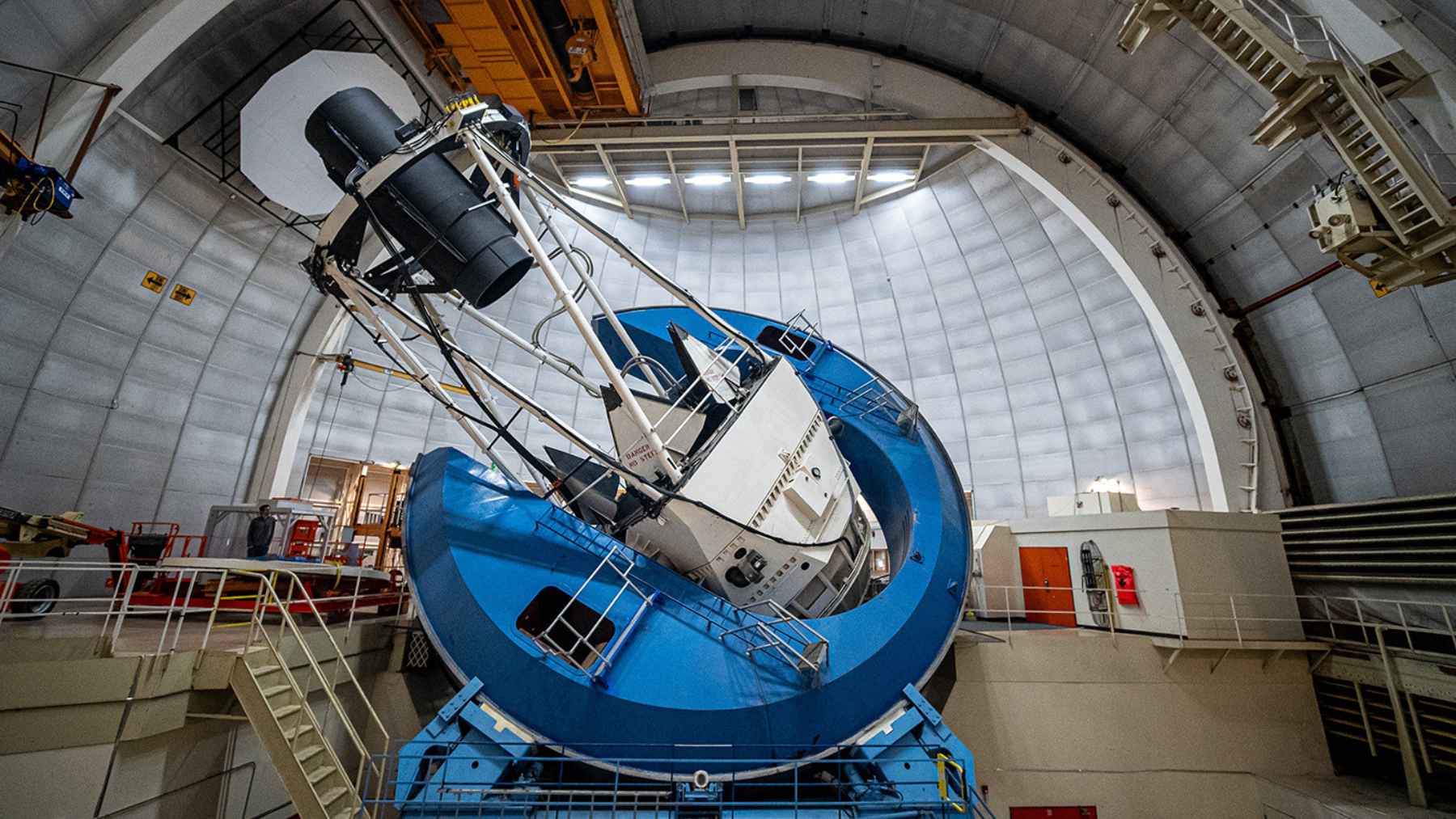
A key piece of this puzzle comes from the Dark Energy Spectroscopic Instrument, an international survey that has built the largest three-dimensional map of the universe ever made. Using light from about fifteen million galaxies and quasars spread across eleven billion years of cosmic history, DESI tracks a pattern in how matter clumps together called baryon acoustic oscillations, which act as a kind of standard ruler for measuring expansion.
When DESI data are combined with other observations, such as the faint afterglow of the Big Bang and older supernova surveys, they point to a surprising possibility. Several teams now see hints that dark energy was stronger a few billion years ago and appears to be roughly ten percent weaker today, which means the universe is still expanding but seems to be easing off the accelerator instead of flooring it forever.
South Korean team revisits the supernova yardsticks
Another big clue comes from a group at Yonsei University, led by astronomer Young Wook Lee. Their team took a fresh look at type Ia supernovae, the stellar explosions that first revealed cosmic acceleration in the 1990s and are often treated as “standard candles” with nearly fixed brightness.
By measuring the ages of three hundred host galaxies, they found that supernovae in younger galaxies are systematically dimmer than those in older ones, even after the usual corrections.
That pattern creates what they call an age bias in past distance estimates. Once they adjusted the supernova data to account for this bias and combined it with baryon acoustic oscillation and cosmic microwave background measurements, the picture changed sharply.
The corrected data lined up better with a model where dark energy evolves over time and suggested that the universe has already entered a phase of decelerated expansion instead of speeding up today. One member of the team described it as moving from stepping on the gas to gently tapping the brakes.
From Big Freeze and Big Rip to possible Big Crunch
For the most part, textbooks have favored endings where expansion never reverses. In a Big Freeze, dark energy stays positive and the universe keeps expanding faster until galaxies drift so far apart that their light can no longer reach one another, leaving a cold, lonely cosmos.
In a more extreme Big Rip, dark energy grows stronger with time and eventually tears apart galaxies, stars, planets, and even atoms.
If dark energy continues to weaken, the menu of options changes. In some models, the expansion simply slows and coasts, so space becomes bigger but at an ever gentler pace. In others, if dark energy not only fades but effectively turns negative, gravity could pull everything back together and trigger a Big Crunch in tens of billions of years, long after the Sun and Earth are gone and no humans remain to watch the final sunset.
Why cosmologists still urge caution
Not everyone is ready to declare that the universe has started to slow down. The DESI collaboration itself notes that its results are still below the strict confidence threshold physicists usually demand before announcing a discovery, and some researchers worry that unknown systematics could still lurk in the data.
At the same time, independent experts, including cosmologists at University of Cambridge, have praised the work as intriguing while stressing that the evidence for evolving dark energy is not yet decisive.
Upcoming observatories such as the Vera C Rubin Observatory and the Euclid mission are expected to deliver far more precise measurements of both supernovae and large-scale structure, which should help confirm or rule out these early hints.
For people worrying about tomorrow’s commute or the next electric bill, any Big Crunch would be unimaginably far in the future, yet these studies still matter because they test the limits of physics and reshape how we understand our place in a changing universe.
The main official study has been published in the Monthly Notices of the Royal Astronomical Society.