The scientific community, together with NASA, deals with an unidentified ‘dark force’ that causes the universe to expand faster than predicted. Scientists have identified dark energy as an undetectable force that controls universal expansion despite remaining undetectable. Applying this force leads to mind-boggling effects that might result in a catastrophic condition called the Big Rip. This paper delves into the analysis of this unknown force accelerating universe expansion.
The expanding universe revealed itself to scientists by demonstrating beyond expectations.
Scientists have been baffled because the universe has shown continuous acceleration in its expansion ever since astronomers detected this phenomenon during late 1990s observations. An observation of speed-up shows an opposing force that opposes gravity by separating galaxies faster and faster. NASA operates advanced telescopes and satellites to analyze this phenomenon according to their scientific investigations.
Despite extensive scientific work, the correct explanation of this force has proved impossible to determine. Scientists label this force ‘dark energy’ while expressing complete unawareness regarding its essential properties and origin. Cosmic accelerated expansion creates major cosmological issues that force scientists to question the universe’s future.
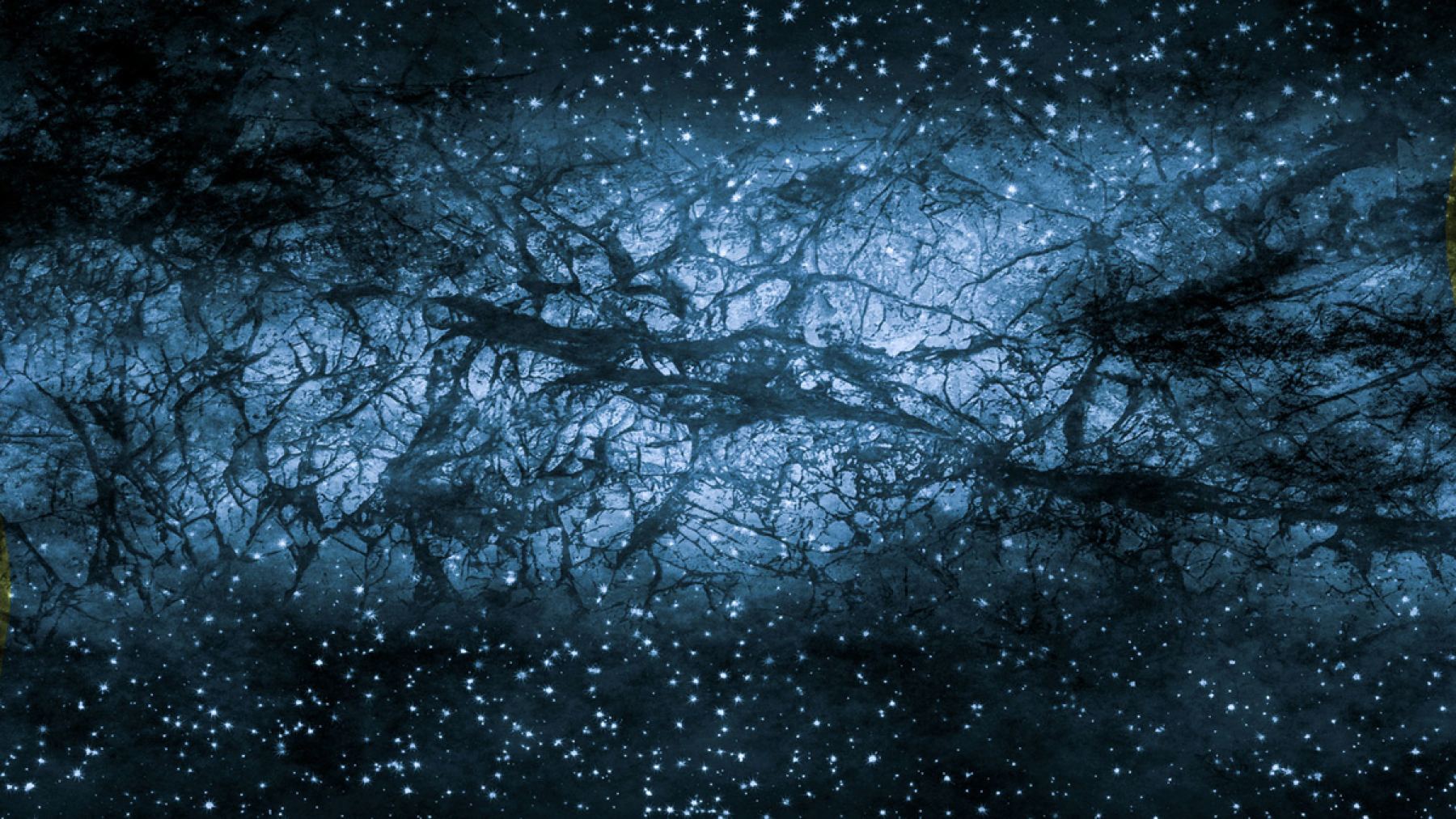
Scientists use dark energy to refer to the unidentified force that powers the progressive universe expansion. The estimate shows dark energy constitutes 68% of the total universal energy, while dark matter and ordinary matter represent less than 32% combined. Scientists observe that dark energy opposes dark matter because it repels rather than attracts through gravitational forces.
The existence of dark energy fills the entire universe, yet we lack any knowledge regarding its nature.
NASA focuses its dark energy research on studying the cosmic microwave background radiation and supernovae together with large-scale galaxy surveys. Observational evidence helps researchers understand how dark energy works despite its undetectable nature. Dark energy presents modern astrophysics with its greatest difficulty because understanding this phenomenon transforms how we see the structure of our universe.
According to a dark and threatening hypothesis, dark energy possesses the dangerous potential to destroy all things permanently in the universe. Scientists propose the Big Rip as one of the most sensational theories describing how the universe may evolve in the distant future. Dark energy is expected to expand with growing repulsive force until it surpasses all other universal forces, including gravity. The destructive force would split galaxies apart, tear stars and planets apart, and dismantle atomic structures.
Experts introduced the Big Rip concept in the early 2000s, and scientists have strongly debated this theory since then. Under the current rate of dark energy expansion, the universe faces potential destruction that would involve separating atomic structures from each other. These circumstances emphasize the need to study dark energy and determine how it affects the long-term fate of cosmic objects.
The most recent NASA missions aim to deliver compelling solutions to the mysteries of the universe.
NASA continues to work on understanding dark energy through various space explorations while collaborating with different institutions. The destructive force would split galaxies apart, tear stars and planets apart, and dismantle atomic structures. Researchers study dark energy through three main missions: the Hubble Space Telescope, the James Webb Space Telescope, and the Euclid mission.
International projects with advanced technologies combine forces to obtain more accurate measurements while creating superior theoretical frameworks. Achieving our goals will be difficult because the potential discoveries are worth pursuing. Breaking the dark energy mystery will transform our understanding of cosmological destiny and cosmic dynamics.
An unknown entity named dark energy creates the rapid expansion of the universe, which scientists believe could eventually cause a destructive event called the Big Rip. NASA continues researching to understand this unknown force’s identity and cosmic significance. Experiencing the darkness of dark energy stands as a leading mystery in current scientific pursuits that seek to transform our view of the cosmos forever.