When clouds roll over a field or a greenhouse lamp dims, plant leaves have to choose fast. Keep pores open to grab carbon dioxide, or close them to save water. A new study has watched that choice unfold in real time and found that some familiar crops are surprisingly wasteful. What actually happens inside the leaf at that moment?
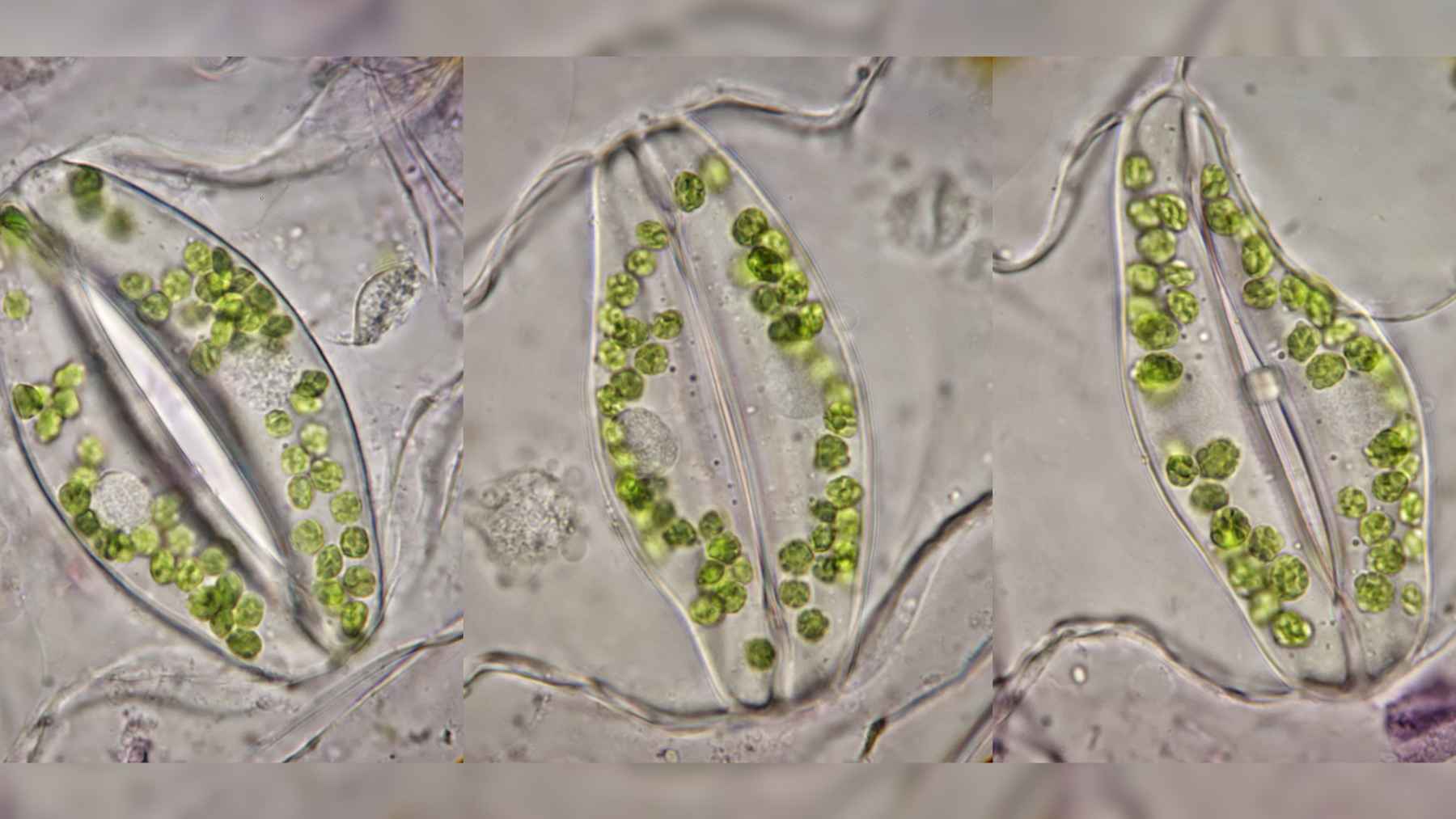
Scientists from the University of Twente and Wageningen University built aportable microscope that clips onto a living leaf and tracks dozens of stomata, the microscopic pores on its surface. In maize and chrysanthemum, they followed individual pores as light suddenly increased or decreased, mimicking the rapid flicker that happens all day in real crop canopies.
Tiny pores, big climate stakes
Stomata act like tiny valves. They let carbon dioxide in for photosynthesis and release water vapor. As the air warms and dries, and rainfall patterns shift, farmers in many regions already see crops demanding more irrigation water.
Light on a leaf rarely stays steady. Passing clouds, moving leaves and overlapping foliage constantly switch plants between shade and sun. Photosynthesis can adjust fairly quickly, but stomata lag behind. Research suggests this delay can cost crops about 10% to 40% of their potential daily carbon gain.
A microscope that goes to the plant
The new instrument sits on a tripod. A leaf is held gently between soft cushions so air and light still reach both sides. A ring of green light scans a patch of tissue smaller than a grain of rice and takes a stack of images at different depths every minute. Software combines the stack into a sharp surface view and automatically traces each pore as it opens and closes.
Because the leaf stays in its growth chamber or greenhouse, the thin layer of still air around it remains intact. That boundary layer is common outdoors and can shape stomatal behavior, especially on hot, dry afternoons when plants are already under stress.
In chrysanthemum, the system resolved full opening and closing patterns for roughly 78% of the stomata in view. In maize, it clearly tracked about 45%, enough to spot sharp contrasts between the two species.
Maize trains its pores, chrysanthemum wastes water
Under steady light, some maize stomata kept cycling between open and closed states. When light suddenly jumped to a saturating level, these “opening and closing” pores, if closed at that moment, snapped open faster than pores that had been closed and stable. That faster response boosted carbon dioxide uptake during bright spells.
When light dropped again, maize pores with larger openings tended to close quickly and without delay. In practical terms, that let the plant enjoy high gas exchange under strong light, then defend its water supply as soon as shade returned.
Chrysanthemum behaved differently. More than half of its stomata hesitated before closing or never fully closed after a decrease in light. Many pores stayed wider than needed for at least thirty minutes.
The team’s simulation suggests that removing a typical closing delay of about four minutes would save roughly 13% of the water lost in that half hour. Removing both the delay and the tendency to stop at a half closed state could cut water loss by around 40% for the average pore.
For growers who keep an eye on both irrigation bills and heat inside greenhouses, that kind of microscopic leak adds up. A variety whose stomata shut a little faster after shade could keep flowers healthy with less water and less energy for pumping and cooling.
From lab gadget to breeding tool
This microscope is not just a clever camera trick. It gives breeders a way to select crops based on how their pores actually move under realistic, fluctuating light. Instead of focusing only on how many stomata a leaf carries, they can look for lines where pores open quickly when light appears and close promptly when it fades.
Over time, tools like this could help deliver crop varieties that produce the same harvest with less water, or maintain yields when droughts and heat waves hit.
The study was published in Plant, Cell & Environment.