Imagine being able to generate about 3 liters of water daily just from harnessing the power of sunlight. Perhaps there is such an atmospheric water generator that can put an end to the drought. There is a need for an atmospheric water generator as about 2,2 billion people are unable to access freshwater, especially in remote regions.
Introducing the solar-powered atmospheric water generators (SAWEs) that were developed by researchers based at the King Abdullah University of Science and Technology (KAUST). This alternate system can harvest approximately 3 liters of water per square meter daily by making use of two core things: humid air and sunlight.
Understanding the concept behind water harvesting
Although the idea of SAWE is not entirely new since atmospheric water extraction has been around for a considerable amount of time, however, the concept of collecting water vapor from the air did not prove to be very effective and efficient. All older models intended for water harvesting worked on a two-stage cycle of absorbing moisture at night when the air is cooler and more humid, and they rely on the use of solar heat during the day to release and, as such, collect water.
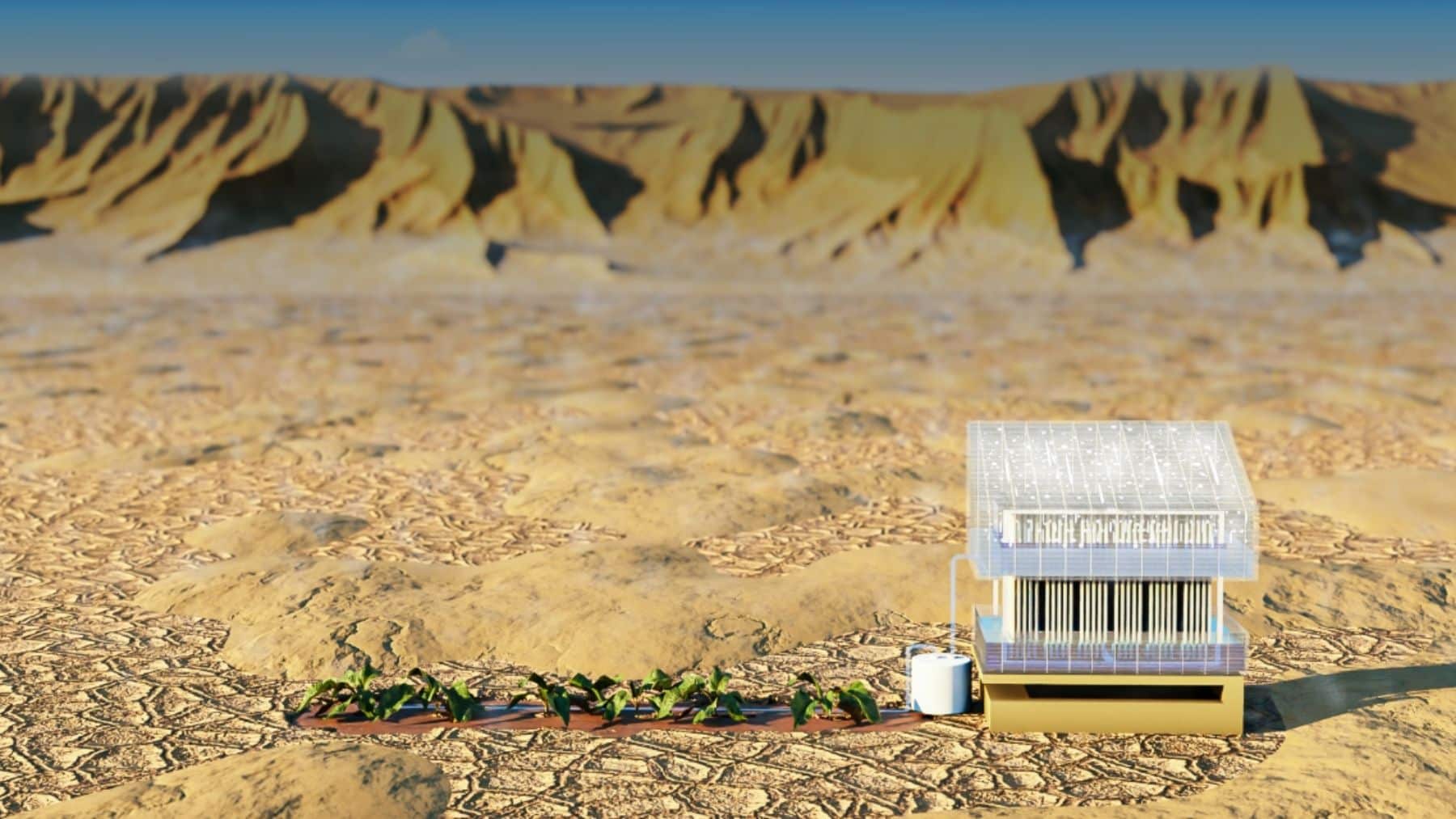
With the SAWE technology, as has been developed by Professor Qiaoqiang Gan and his team at KAUST, the entire water harvesting game has changed. This is all because of mass transport bridges (MTBs), which are microchannels filled with a salt solution in order to cycle water through the device. Water vapor is absorbed from the atmosphere and transported into a solar-heated chamber. It is here that sunlight evaporates the water, which then condenses on cooler surfaces, to provide cleaner, drinkable water. Due to this self-regulating mechanism, this KAUST system can produce 3 liters of water per square meter daily, with the most water being produced during summer and humid conditions.
Using SAWE technology in real life
Although we often hear of energy floating on water, it is rather rare to find a solution that can convert solar energy into water. During lab testing, the prototypes showed tremendous promise. This led to the KAUST team scaling up their device for field tests in Thuwal, Saudi Arabia. During summer, this unit performed well and was able to produce 2–3 L/m²/day during the summer and up to 2.8 L/m²/day in autumn. During the 35-day testing period, the SAWE showed practical compatibility, assisting crops such as Chinese cabbage to grow without the need for any tap water.
It is scalable solar power solutions like this that surely fit in with Saudi Arabia’s environmental goals. This technology by the KAUST team of researchers, seems to work well with the newly launched Saudi Green Initiative, which aims to plant approximately 10 billion trees. A solution like this can even cater for the water needs in regions near the Red Sea, where freshwater may be scarce.
Using solar water in more than one way
A design by KAUST researchers comes with an integrated system that combines water harvesting with solar energy capabilities. Solar panels are backed with a hybrid hydrogel created from salt-infused water-absorbing materials. The material can retain moisture at night, releasing it during the day so as to cool the solar panels or to collect water either for drinking or irrigation. The system features solar efficiency by about 10% when cooling and is still as efficient when supplying a valuable freshwater resource.
This dual-panel setup allows for enough water to be provided to meet daily needs for water and to support the growth of crops using water that has been extracted from the air. With the talks if moonlight solar panels increasing, soon we will see similar discussions happening about solar water.
The solution for droughts
The potential offered from this method of water generation is great, specifically meant for drier regions, however, the technology involved requires further work. SAWEs means a decentralized water supply option for many by skipping the need for traditional infrastructure. By utilizing water vapor in the atmosphere and the sun’s power, this system will help prevent droughts. Since water is always scarce, this solution is most needed.