Kilauea eruption could restart in Hawaii this week as scientists set a November 22 to 26 window for a 57th lava fountain, after the last one shot about 660 feet into the air
Kilauea eruption: USGS scientists expect a 57th lava fountain between November 22 and 26 after the summit swelled again in Hawaii.

· 4 min read
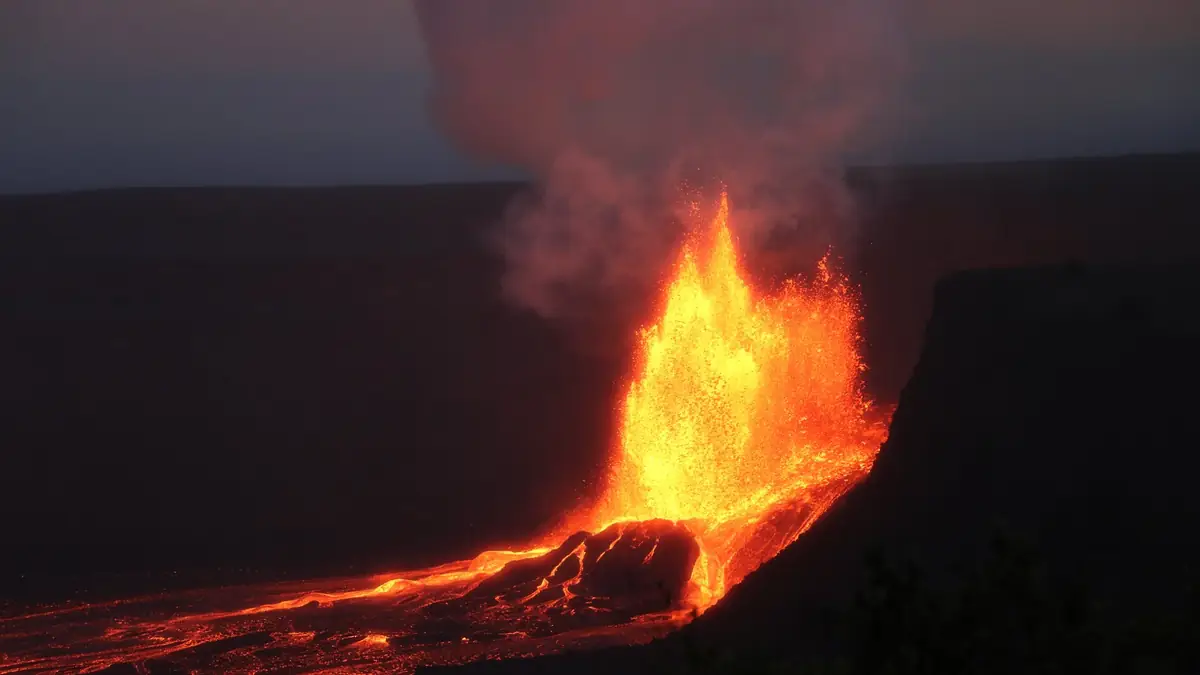
Kilauea in Hawaii may be about to erupt again. The U.S. Geological Survey's Hawaiian Volcano Observatory said on Saturday, November twenty-first, that a new lava fountaining episode is likely between November twenty-second and twenty-sixth. It would be episode fifty-seven of an eruption that began on December twenty-third, twenty twenty-four, at the volcano's summit. The last episode ended on November fifth, when lava fountains rose about six hundred sixty feet. Scientists base the forecast on summit ground swelling, plus glow and small spatters in the vents. But that swelling stalled just before midnight on November twentieth, so the episode will most likely start late in the window, unless swelling picks up. The eruption is inside Hawaiʻi Volcanoes National Park and does not threaten homes. Visitors should check the webcams and the daily update before going.
Key points
- Kilauea eruption
- Kilauea lava fountain
- Halemaʻumaʻu crater
- Hawaii volcano
The Kilauea eruption in Hawaii is heading for another burst of lava. The U.S. Geological Survey's Hawaiian Volcano Observatory (HVO) said on Saturday, November 21, that a new fountaining episode is likely and set a forecast window of November 22 to 26.
It would be episode 57 of an eruption that began on December 23, 2024, inside Halemaʻumaʻu crater at the volcano's summit. The forecast appears in the observatory's daily update, issued at 8:48 a.m. Hawaii time.
The eruption has been paused since the last episode, number 56, ended on November 5. That episode sent lava fountains about 660 feet (200 meters) high from the north vent.
Why scientists expect more lava
The forecast rests on tilt trends at the summit, along with the glow and minor spatter seen in the vents. HVO's Uēkahuna tiltmeter has recorded nearly continuous summit inflation since episode 56 ended, a sign that the summit ground is swelling.
Since that episode, the instrument has logged about 14.7 microradians of inflationary tilt. That swelling stalled just before midnight on November 20, when tilt turned flat to slightly deflationary.
Because the inflation stalled, the observatory moved the episode 57 forecast window to November 22 to 26.
HVO says the timing still depends on that trend. If inflation stays stalled or returns slowly, episode 57 will most likely start late in the window, but a faster rate could bring it earlier.
Glowing vents and a lava pond
Although no fountains are rising, the vents are far from quiet. Summit webcams recorded strong to moderate glow from both the north and southwest vents overnight, and a livestream camera showed nearly continuous flames and minor spattering.
A helicopter overflight on November 18 confirmed a large lava pond inside the southwest vent. It was occasionally spattering and overturning.
The north vent was largely crusted over. Two pukas, or holes, in that crust are the source of the flames and spatter seen at night, according to the observatory.
Seismic tremor remained continuous over the past day, but no earthquakes were located beneath the summit. Activity in the East Rift Zone and Southwest Rift Zone remains low.
What the last episode looked like
Episode 56 lasted about six hours, from 12:10 p.m. to 6:01 p.m. on November 5. Only the north vent produced fountains that day.
The eruptive plume rose as high as 18,000 feet above sea level. HVO estimates from tiltmeter data that about 8 million cubic yards of lava came out, at an average rate of roughly 260 cubic yards per second.
Most of the fallout drifted southwest, into closed areas of Hawaiʻi Volcanoes National Park. Trace amounts reached Highway 11.
Fountaining episodes at Kilauea generally last less than 12 hours. They are separated by pauses of two or more weeks, the observatory explains.
Gas, ash and glass threads
Gas is a hazard even between episodes. HVO says water vapor, carbon dioxide and sulfur dioxide are continually released during an eruption, and emissions can stay hazardous right downwind of the vents even when they are not erupting.
Sulfur dioxide reacts in the air to form vog, or volcanic air pollution, and both may cause breathing and other problems at high levels. On Saturday morning, trade winds were carrying the gases to the southwest.
The fountains also produce tephra, small glassy fragments that include ash, pumice and Pele's hair, a thread of volcanic glass. Residents and visitors should limit their exposure, since the fragments can irritate skin, eyes and lungs.
Plants that come back
Fallout from the fountains has damaged vegetation downwind of the vents. Some native plants are proving tough, though.
In May 2025, HVO scientists photographed a hāpuʻu fern partly buried in tephra a few hundred yards from the crater rim. The fern was already unfurling new fronds.
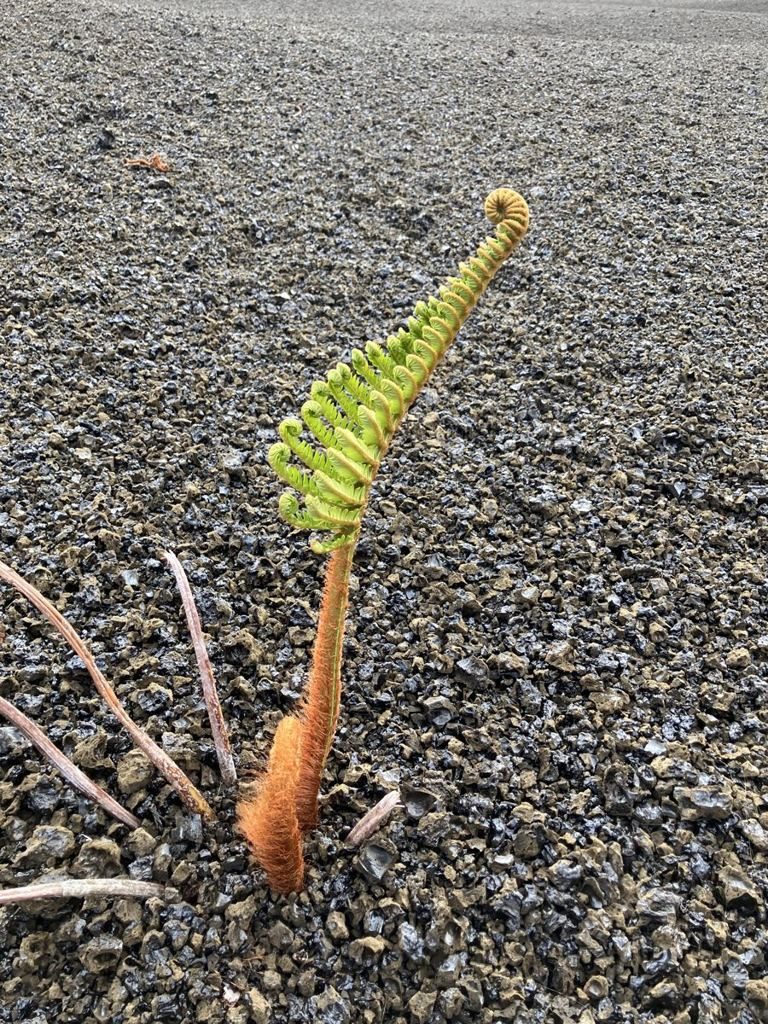
Eruptions can reset whole landscapes and leave plants to start over on bare rock. Researchers have described the same process on Indonesia's Anak Krakatau, where life rebuilds after the lava.
Where to watch it safely
All eruptive activity remains within Hawaiʻi Volcanoes National Park, and the National Park Service says it does not threaten homes. The park's eruption viewing page lists safe overlooks along Crater Rim Drive and links to live webcams.
The park advises visitors to check webcams and the USGS daily update before going. Crowds and traffic grow during eruptions, so the park suggests arriving early and parking only in marked spots.
Visitors should bring a headlamp, warm clothes and a rain jacket, plus eye protection and a dust mask for falling tephra. The park also asks people to watch for nēnē, the Hawaiian goose, on the roads.
Volcanoes elsewhere are also watched from the ground and from space. In Nicaragua, satellite radar is tracking magma beneath Masaya. At Kilauea, the next signal to watch is the tiltmeter.
Photos: U.S. Geological Survey
Adrian Villellas
Writer at ECOnewsAdrián Villellas is a computer engineer and entrepreneur in the fields of digital marketing and advertising technology. He has led projects in data analysis, sustainable advertising, and solutions for new audiences. He also contributes to scientific initiatives related to astronomy and space observation. He writes for science, technology, and environmental media outlets, where he makes complex topics and innovative advances accessible to a broad audience.
More from Adrian VillellasComments · 0
Rules ›No comments yet. Be the first to share your view.