North Carolina drought: extreme drought jumped from 10% to 26% of the state in one week, and Durham had 76 days of easily accessible water left as officials asked residents to conserve water
North Carolina drought: extreme drought covers 26% of the state, 39 counties are in extreme drought and Durham had 76 days of water left.

· 4 min read
North Carolina's drought is getting worse, and state officials are asking residents to conserve water. Extreme drought jumped from about ten percent of the state to more than twenty-six percent in just one week, according to the U.S. Drought Monitor. Thirty-nine counties in central and eastern North Carolina are now in extreme drought, and seventeen more are in severe drought. In Durham, the city had seventy-six days of easily accessible water supply as of November seventeenth, and the Little River Reservoir is more than twenty feet below full. Falls Lake has only twelve percent of its water quality pool left. Governor Josh Stein said only more rain will end the drought. A storm system this weekend may bring some rain to the east, but officials warn that rainfall deficits remain large. Residents should check with their local water system about restrictions on uses like lawn watering and car washing.
Key points
- North Carolina drought
- extreme drought
- Durham water supply
- conserve water
The North Carolina drought continues to worsen. On November 19, the state Department of Environmental Quality (DEQ) encouraged residents to conserve water as abnormally low rainfall pushed many areas back into severe or extreme drought.
Thirty-nine counties in central and eastern North Carolina are now in extreme drought, and 17 more are in severe drought. Those classifications came from the state's Drought Management Advisory Council, according to DEQ's release.
After some relief earlier this fall, the agency says, drought conditions are returning to summer levels. The largest rainfall deficits are in the eastern half of the state.
A jump in a single week
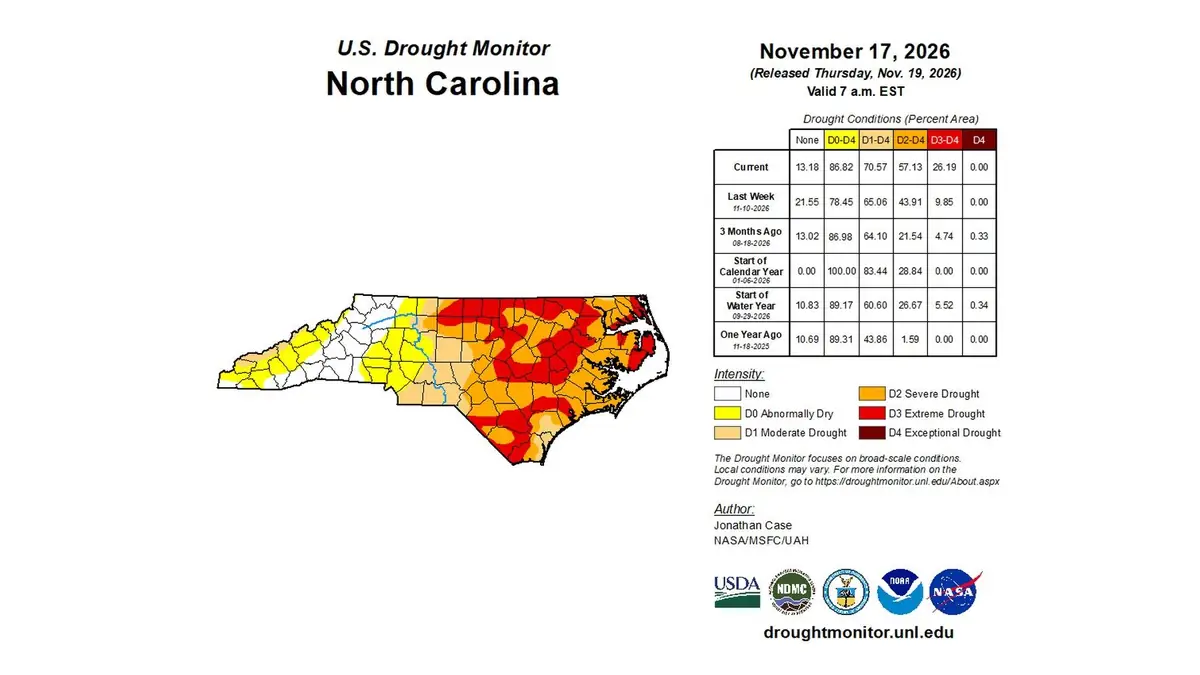
The weekly U.S. Drought Monitor map for North Carolina shows how quickly things changed. Extreme drought, the second-worst category, covered 26.19% of the state as of November 17, up from 9.85% a week earlier.
At the start of 2026, none of the state was in extreme drought. Today, about 71% of North Carolina is in moderate drought or worse, according to the Drought Monitor.
A year ago, severe drought or worse covered just 1.59% of the state, and now it covers 57%.
The jump is tied to drought conditions described in the advisory council's weekly update. It has been more than a month since the last significant rain in parts of the northern Piedmont and Coastal Plain, and extreme drought has expanded there.
Durham's water clock
Some of the most severe impacts are in the Piedmont, where every water supply reservoir is below normal. As of November 17, the City of Durham had 76 days of easily accessible water supply, DEQ said.
The council's update adds that the Little River Reservoir, one of Durham's main water supplies, is now more than 20 feet below full. The city's water department explains the situation in a video on its YouTube channel, which DEQ linked in its release.
Governor Josh Stein thanked state officials and local governments for working together to protect access to drinking water. The governor also said that only more rain will end the drought.
Reservoirs across the state
Several major lakes are well below normal for this time of year. As of November 16, Jordan Lake stood 3.92 feet below normal, with 96% of its water supply pool remaining.
The John H. Kerr Reservoir was 9.8 feet below normal, with 48% of its water supply pool left. Falls Lake was 6.57 feet low, with 61% of its water supply pool and only 12% of its water quality pool remaining.
One exception is W. Kerr Scott Reservoir in Wilkes County. It is still tracking at normal levels after a big rise from Hurricane Isaias in early October.
DEQ Secretary Reid Wilson said drought conditions have now lasted more than a year across the state. Many streams and water supply reservoirs are at alarmingly low levels, according to the secretary.
Dry pastures, very dry fall
Livestock pastures are suffering in the state's western Mountains, too. In Macon County, the local extension office reports so little grass in pastures that livestock producers have had to feed stored hay.
Along the coast, New Bern has had only 3.51 inches of rain this fall, less than half of normal. That makes it the city's third-driest start to fall since 1948, the council says.
Soils and streams are running dry, and cover crop planting has been delayed. Some parts of the Mountains saw their first snow of the season, but precipitation in any form was hard to come by elsewhere.
What residents are asked to do
In counties in extreme drought, water systems are advised to follow their Water Shortage Response Plans and cut water use. They must also report their weekly water use and conservation status online.
Residents should check with their local water system about restrictions. These can include limits on lawn watering, car washing or other uses, and some systems may also have tips for saving water.
DEQ's drought indicator wells can also show how groundwater is holding up locally. Long droughts can drain aquifers too, as satellites showed in the Upper Colorado River Basin.
Rain coming, but not enough
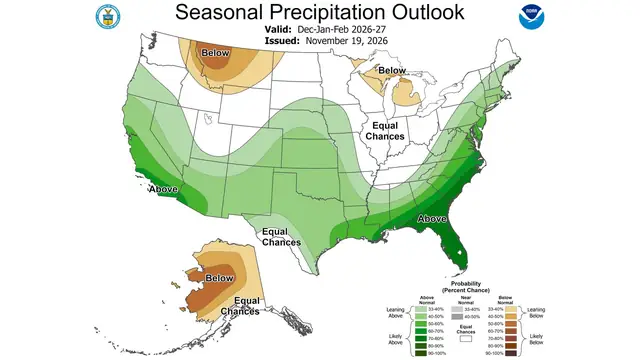
The council expected a storm system moving up the coast this weekend to bring rain to eastern North Carolina and perhaps into the Piedmont. Its track was still uncertain when the update was issued.
Even so, DEQ warned in its release that rainfall deficits remain large. The wetter weather that usually comes with El Niño has not materialized, the agency added.
Other states are testing new ways to stretch supplies. In Arizona, solar panels over a canal are being tested to save water. In North Carolina, for now, residents are being asked to use less water.
Map: U.S. Drought Monitor
Glossary for this story
- Drought
- A long period of much-lower-than-normal rainfall that reduces the water in rivers, reservoirs and soil.
- Aquifer
- An underground layer of rock or soil that holds water, which can be pumped out through wells.
- El Niño
- A natural pattern in the tropical Pacific: El Niño warms its waters and La Niña cools them, and both shift weather around much of the world for months.
Javier Niño
Writer at ECOnewsJavier Niño has been a Spanish National Police officer since 2017 and a journalist specialising in employment, labour law and Social Security, with more than seven years of writing experience. At ECOnews he covers environment, energy and sustainability news, focusing on how new regulations and court rulings affect people in their everyday lives.
More from Javier NiñoComments · 0
Rules ›No comments yet. Be the first to share your view.