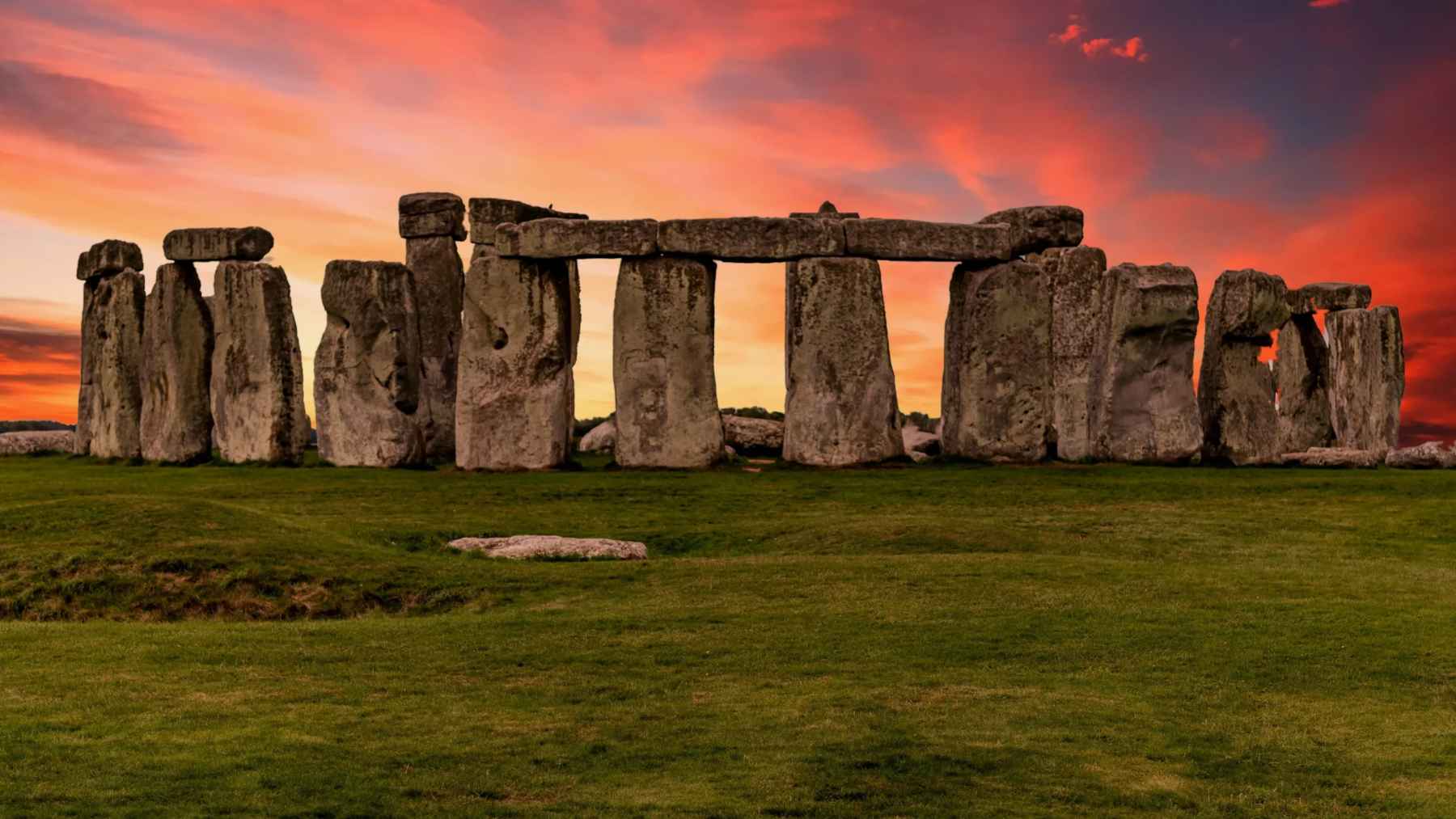
A new geological study of river sands around Stonehenge has delivered some of the clearest evidence yet that people, not ancient ice, brought the monument’s giant stones to their current home on Salisbury Plain.
By reading the microscopic minerals in nearby river sediments, researchers found no sign that Ice Age glaciers ever dumped big rocks in this part of southern England.
For more than a century, one popular idea suggested that glaciers carried huge stones hundreds of miles from Wales or Scotland, leaving them ready for Neolithic builders to simply rearrange. The new work instead backs the tougher scenario in which prehistoric communities deliberately moved multi-ton blocks across the landscape.
How scientists tested the glacier idea
Geologists Anthony J. I. Clarke and Christopher L. Kirkland from Curtin University led the study, focusing not on the stones themselves but on the sand in nearby rivers. They collected sediment from streams that drain the Stonehenge landscape and then examined more than seven hundred tiny grains of two hard minerals called zircon and apatite.
These minerals act like geological passports. When zircon and apatite form inside a rock, they lock in chemical clues about how old that rock is and where it came from. Even after the rock breaks down, the grains can survive and travel, carrying that memory with them.
Using precise dating methods, the team built an age profile for each grain. If glaciers had once dragged rocks from far away into the Stonehenge area, the river sands today should still contain a clear mix of minerals that match those distant source regions. That is the fingerprint the scientists went looking for.
Tiny grains that weaken the glacier theory
The zircon grains in the samples mostly fell between about 1,700 and 1,100 million years old, ages linked to ancient sedimentary rocks that fed into the London Basin and other formations in southern Britain. The apatite grains clustered around 60 million years old, a time when this region sat under a shallow sea and was covered by younger marine sands.
Crucially, those age patterns do not match the rocks in western Preseli Hills, where Stonehenge’s so-called bluestones were quarried, or the northern areas tied to the monument’s central Altar Stone. If glaciers had carried big boulders from those regions, the local sands should be packed with telltale minerals from Wales or northern Britain, yet that signal is missing.
The team also notes that classic signs of glaciation, such as thick layers of till or scattered foreign boulders, are absent on Salisbury Plain. Combined with the mineral evidence, that strongly suggests that ice sheets never reached this part of southern England during the last Ice Age in a way that could deliver Stonehenge-sized blocks.
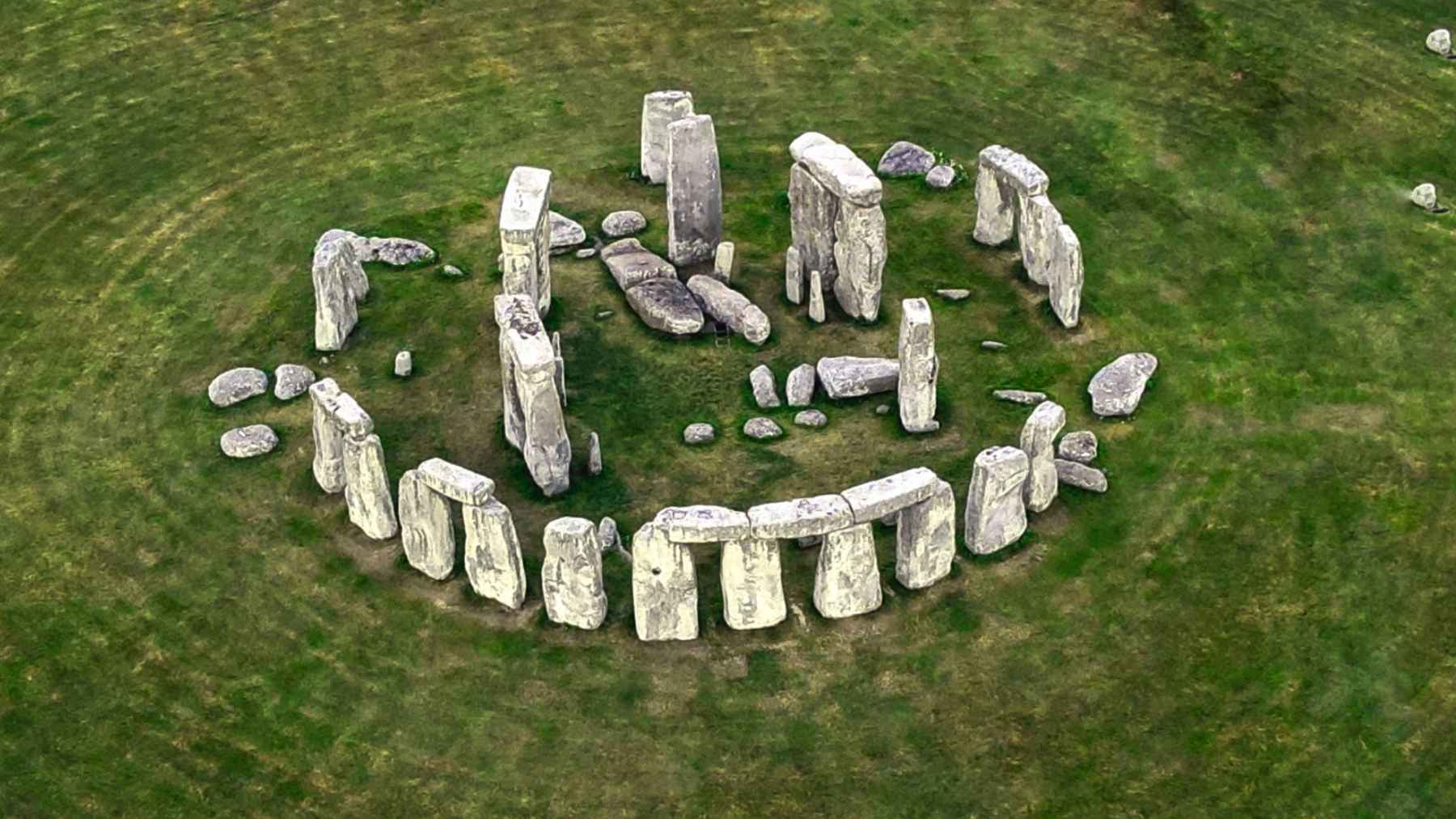
Humans back at the center of the Stonehenge story
If nature did not do the heavy lifting, that leaves people. Earlier work has already traced the big sandstone sarsen blocks to Marlborough Downs about thirty two kilometers away, the bluestones to the Preseli Hills about 290 kilometers distant, and the Altar Stone to the Orcadian Basin more than 700 kilometers from the site.
Together with the new river sand study, these findings point to deliberate long-distance stone transport by Neolithic communities more than five thousand years ago.
Lead author Clarke explained that if glaciers had delivered rocks from Scotland or Wales, the team would have seen it in the sand.
“Those rocks would have eroded over time, releasing tiny grains that we could date to understand their ages and where they came from,” he said, adding that the lack of such grains makes “the alternative explanation that humans moved the stones” far more plausible.
Moving stones heavier than a delivery truck without wheels, cranes, or paved roads would have demanded careful planning, shared labor, and strong leadership. For visitors standing in the quiet field today, that means Stonehenge is not just a ring of rocks, it is also a monument to human coordination and stubborn persistence.
The exact routes and techniques that ancient builders used remain open questions, but the new evidence shifts the spotlight firmly back onto people rather than ice.
The main study has been published in Communications Earth & Environment.