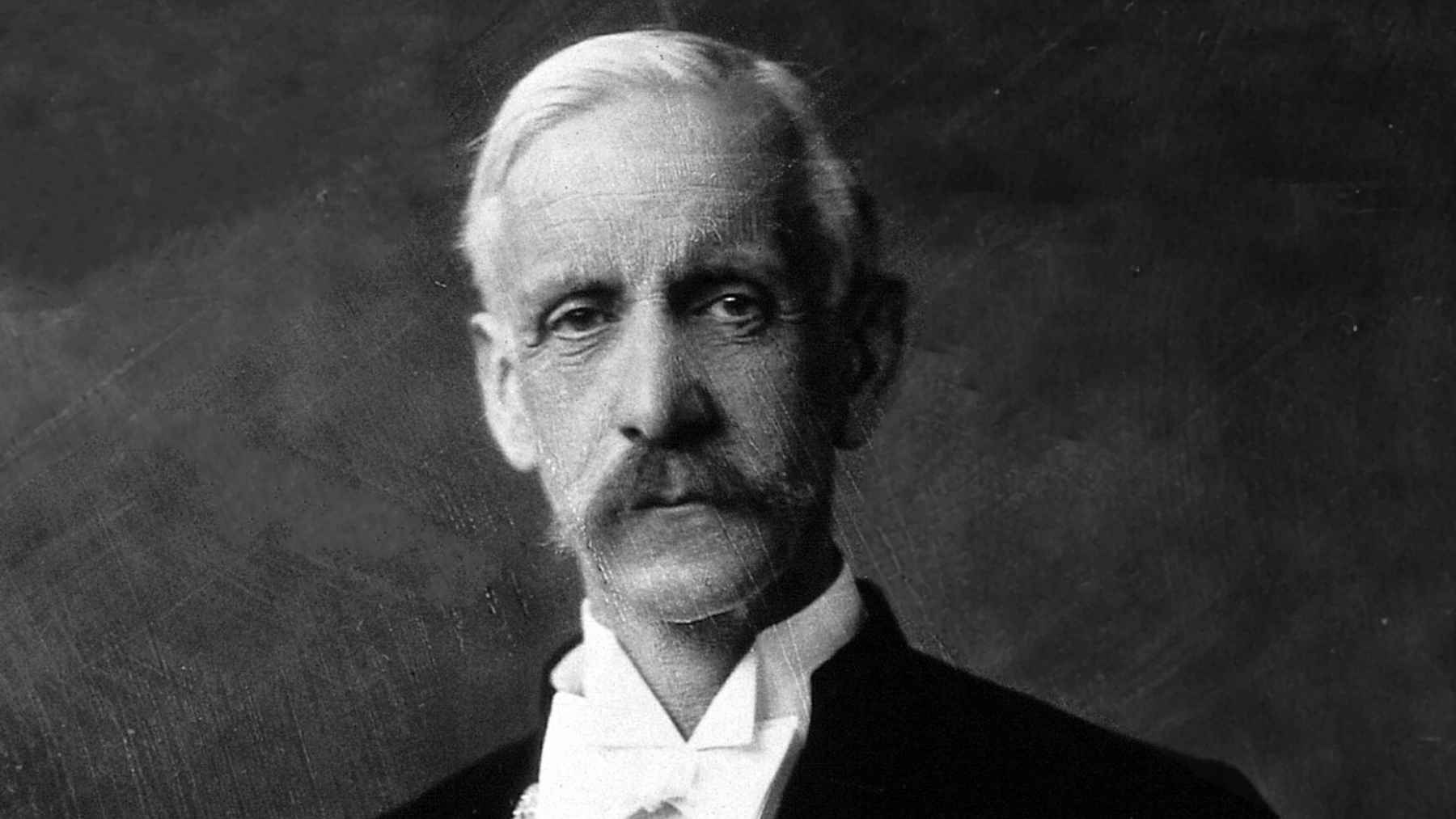
Could a living body thrive on a “perfect” diet made only of purified protein, fat, carbohydrates, salts, and water? At the start of the 1900s, many scientists thought the answer was yes. It sounded neat and scientific, but Frederick Gowland Hopkins helped show why that idea was badly incomplete and why tiny missing nutrients could change everything.
Working at the University of Cambridge, the British biochemist found that very small substances in food could decide whether young animals grew or declined. That insight helped him share the 1929 Nobel Prize in Physiology or Medicine with Christiaan Eijkman. It also pushed nutrition away from simple calorie counting and toward a fuller picture of how the body actually stays healthy.
The rat experiment that upended a neat theory
In 1912, he tested young rats with a carefully purified diet made from casein, lard, starch, sugar, and minerals. Some animals also received a tiny milk supplement of about 2 milliliters a day. The difference was striking, because the milk group kept growing while the others stalled.
Then came the switch. After about two weeks, the animals that started getting milk began to recover and grow, while those that lost it went downhill. For a field still focused on proteins, fats, carbs, and mineral salts, that was a serious shock.
Years earlier, he had already warned that “no animal can live upon a mixture of pure protein, fat, and carbohydrate.” He argued that even a diet that looked complete on paper could still fail in real life. In plain language, food needed hidden helpers, not just the big nutrients listed on a chart.
What vitamins are and why the discovery mattered
He first described those missing substances as “accessory food factors.” Today we call them vitamins, compounds the body needs in tiny amounts so cells can grow, repair themselves, and keep basic processes running. Casimir Funk later coined the term “vitamine,” soon shortened to “vitamin,” but this early rat work offered some of the clearest proof that such trace nutrients were real and essential.
Why did that matter so much? Because illnesses such as scurvy, beriberi, and rickets were affecting large numbers of people, and scientists were still trying to understand why some diets kept bodies functioning while others quietly broke them down. A full plate, as this work suggested, was not always a complete diet.
Why the legacy reaches beyond vitamins
His influence did not stop with nutrition. University records note that he discovered the amino acid tryptophan in 1901 and was later credited with identifying glutathione, a small molecule that helps protect cells. He also helped turn biochemistry into a field of its own, often described as the chemistry of life.
That broader legacy still matters. His Nobel presentation said vitamins were necessary for normal metabolism and growth, and metabolism is simply the nonstop chemical activity that lets cells use food, build tissue, and stay alive. To a large extent, he showed that health is not just about eating more, but about not missing the small things the body cannot do without.
The main historical work has been published in The Journal of Physiology.