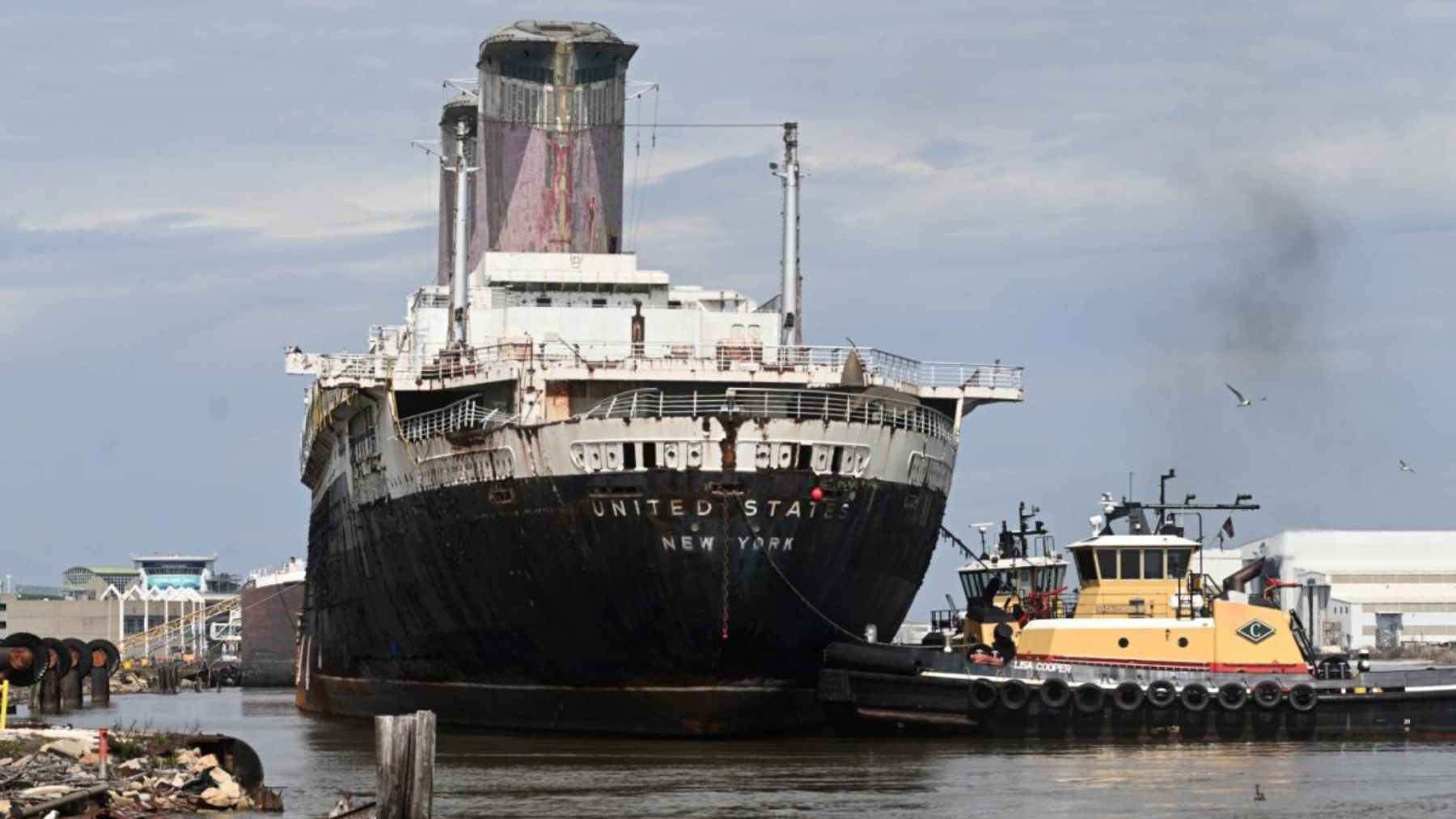
The SS United States is moving again, and it is not headed for a glamorous transatlantic crossing this time. The nearly 1,000-foot ocean liner has left Philadelphia and is being towed to Mobile, Alabama, as the first step toward becoming what officials describe as the world’s largest artificial reef in the Gulf of Mexico.
If the timeline holds, the ship will be sunk off Florida’s Panhandle in early 2026, turning a fading waterfront landmark into a new home for marine life and a major draw for divers. It is a practical plan with a little symbolism baked in, too, since the ship that once raced across the Atlantic is now expected to “settle in” and stay put.
A legend that outran the Atlantic
In 1952, the SS United States made headlines by smashing the transatlantic speed record on its maiden voyage, averaging about 36 knots, which is a little over 41 miles per hour. It crossed the ocean in three days, 10 hours, and 40 minutes, a mark that still stands for ocean liners.
The ship was built for more than luxury travel. It was also designed so it could be converted to carry thousands of troops fast in an emergency, a reminder of how closely engineering and national security could overlap in the early Cold War years.
Why it ended up here
Air travel changed everything, and not in the ship’s favor. By 1969, the SS United States had been moved into reserve status, and over the decades, multiple private redevelopment ideas stalled under the weight of huge costs.
More recently, a rent dispute added pressure to find a final path forward. When the ship’s departure finally began, it followed a U.S. Coast Guard safety review that had become part of the checklist before any tow could happen.
Turning a ship into an artificial reef
An artificial reef is exactly what it sounds like, a man-made structure placed on the seafloor to give fish and other sea life places to hide, feed, and reproduce. But sinking a ship is not as simple as letting it slip under the waves, because an old vessel can carry pollutants that do not belong in the ocean.
That is why the ship has to be stripped and cleaned first, including removing oils, fuels, wiring, plastics, and other materials that could break loose or leak over time. In practical terms, it is like clearing out a whole building before you renovate, except the “renovation” ends with the structure becoming part of the seafloor.
Where the ship is expected to rest
Okaloosa County has said the ship is expected to be submerged about 22 nautical miles southwest of Destin, Florida, at roughly 180 feet deep, with upper decks far closer to the surface. For divers, that depth range matters because it can shape who can visit and how often boats can safely run trips, especially when the weather turns choppy.
The project would also add a headline-grabbing centerpiece to a region that already uses artificial reefs to support fishing and diving. It is easy to picture how this could land on someone’s weekend plans, the way a new stadium changes a city’s calendar, except here the main attraction sits beneath the waves.
A farewell with mixed emotions
Not everyone sees “reefing” a historic ship as a win, and legal challenges have argued that sinking it means losing a rare piece of maritime history. Supporters counter that the alternative was a slow decay, or eventual scrapping, after decades of stalled restoration efforts.
Susan Gibbs of the SS United States Conservancy, the nonprofit tied to preserving the ship’s legacy, has described the moment as both historic and emotional, saying, “The ship will forever symbolize our nation’s strength, innovation, and resilience,” and adding, “We wish her ‘fair winds and following seas’ on her historic journey to her new home.”
The main official press release has been published by Okaloosa County.