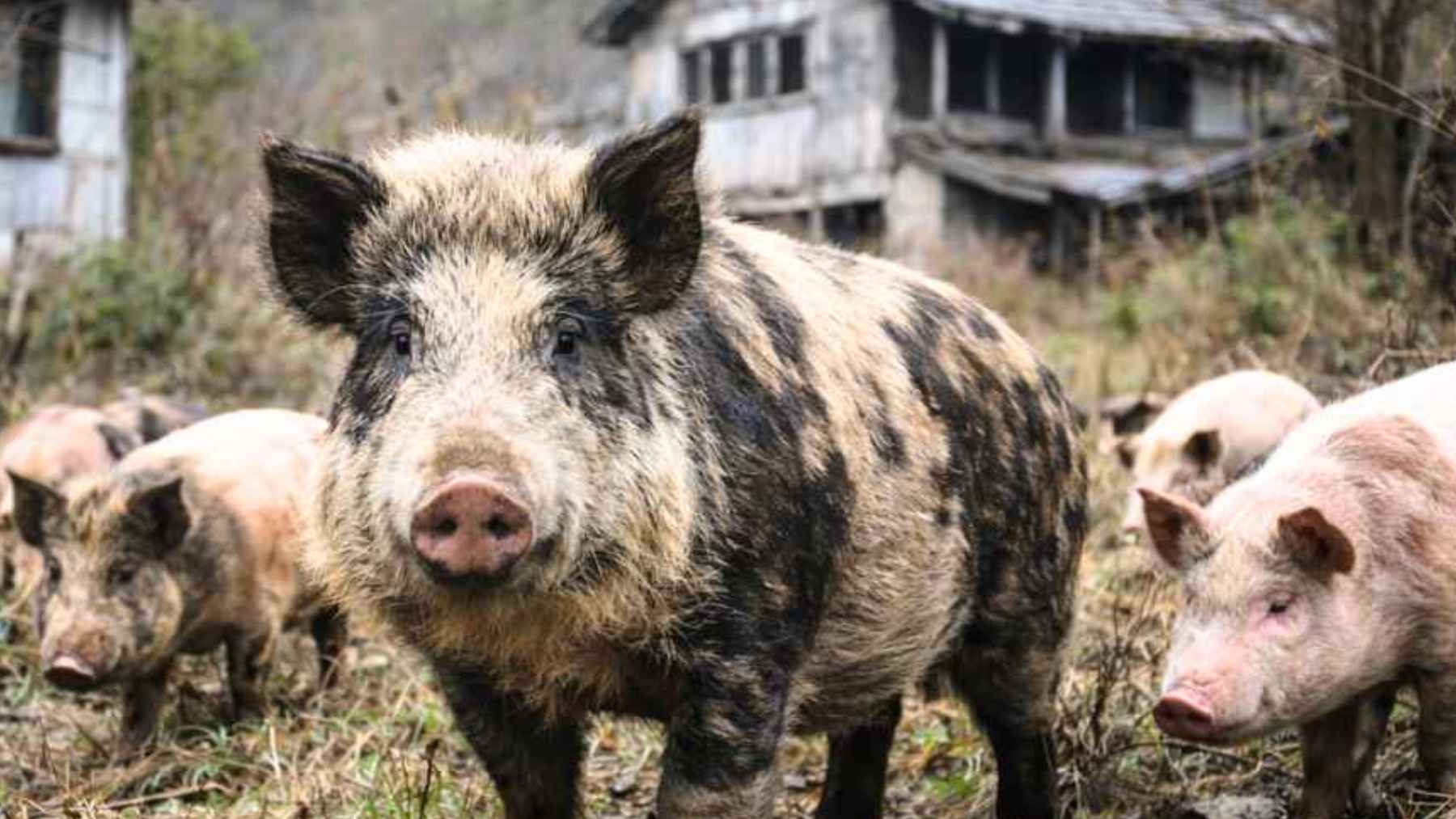
What happens when farm animals escape into a place people can no longer live? A new study published 15 years after the March 11, 2011, Fukushima nuclear disaster shows that domestic pigs that got loose after the evacuation bred with wild boar and left behind a genetic legacy that spread quickly through the local population.
This does not mean scientists discovered a separate species in the formal sense. What they documented is a hybrid population, and the bigger surprise was that pig mothers seem to have passed on a faster breeding pattern that helped the population move from one generation to the next more quickly.
How the hybrid population took shape
After the Fukushima Daiichi accident, human activity dropped sharply across abandoned farms and forest edges. That gave escaped pigs room to roam and mate with wild boar, turning the area into a rare natural experiment in what happens when domestic and wild animals mix. A 2021 study had already shown that pig genes were entering local wild boar after the disaster.
In the new paper, Shingo Kaneko of Fukushima University and Donovan Anderson of Hirosaki University analyzed genetic material from 191 wild boar and 10 domestic pigs collected between 2015 and 2018. They compared mitochondrial DNA, which is inherited only from the mother, with other DNA markers inherited from both parents to see how the mixed population changed over time.
Why the maternal line matters
Hybridization simply means the two animal groups had offspring together. The team found that many boar carrying pig maternal DNA were already more than five generations removed from the original crosses, which signals unusually fast turnover.
That matters because domestic pigs can reproduce year-round, while wild boar usually breed once a year. In practical terms, that means the maternal pig line may have helped these hybrids move through generations faster, even as much of the pigs’ broader DNA signal thinned out through repeated mating with wild boar. The researchers also found that animals with pig maternal DNA carried less pig-derived DNA in the rest of their genome than some other hybrids, a clue that faster reproduction was reshaping the population.
Why this matters beyond Fukushima
This is where the paper gets useful beyond one exclusion zone. The authors say the same mechanism could appear in other parts of the world where domestic pigs and wild boar overlap, making the study relevant for invasive species planning as well as wildlife genetics.
For wildlife managers, the takeaway is fairly direct. If maternal lineages help speed up generation turnover, authorities may be able to better predict when hybrid populations are likely to grow quickly and when control efforts should start earlier. That may sound technical, but it can shape real decisions about monitoring, removal priorities, and how fast a local problem might snowball.
The main study has been published in the Journal of Forest Research.