Imagine a cargo ship pulling away from port and, instead of burning diesel, it runs on fuel made from the very seawater beneath its hull. That is the vision behind a new United Kingdom project that plans to turn salt water into clean hydrogen and use it in ship engines that emit only steam.
Researchers at Brunel University London and clean energy startup Genuine H2 are building what they describe as the country’s first all in one seawater to hydrogen maritime demonstrator. Backed by 1.44 million pounds from the UK Department for Transport and Innovate UK under the UK SHORE clean shipping program, the GH2DEM project will show a full chain from seawater intake to hydrogen production, storage on board and combustion in a heavy duty engine with no direct carbon dioxide emissions.
For a sector that currently produces about 3 percent of global greenhouse gas emissions while carrying the vast majority of world trade, any realistic alternative to marine diesel attracts serious attention.
From seawater to solid hydrogen on deck
So how does this work in practice. The system uses advanced electrodes that split hydrogen directly from seawater using renewable electricity. This avoids the usual step of desalination, which is energy hungry and expensive, and sidesteps long standing corrosion and chlorine problems that have plagued earlier seawater electrolysis ideas.
Professor Xinyan Wang, who leads the engine side of the project, summed up the approach by saying that the team will “take seawater, split it using renewable electricity to make hydrogen gas, store it onboard as a molecular solid” before feeding it into the engine in place of diesel.
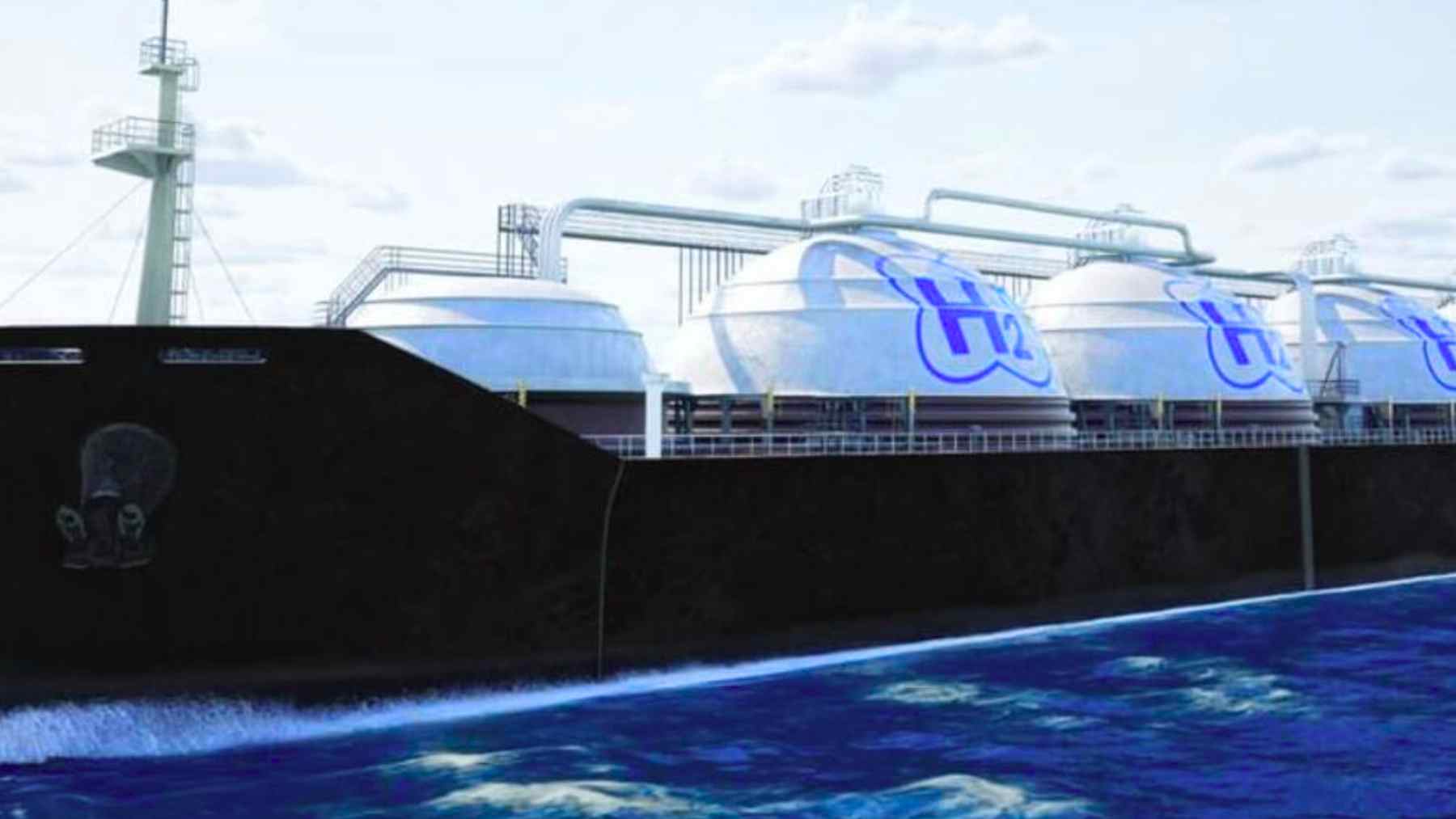
The storage step is what makes this feel different from many other hydrogen pilots. Instead of pumping hydrogen into heavy high pressure tanks or chilling it to very low temperatures, Genuine H2 relies on an ultrathin nano film that locks hydrogen into a solid state at room temperature and normal pressure. This avoids bulky cylinders and complex cryogenic systems, two of the biggest obstacles to putting hydrogen on workboats, trawlers or ferries that need every inch of deck space.
If you have ever watched a fuel truck squeeze along a busy pier, you can see the appeal of something compact, stable and simple to handle.
Why this matters for ocean emissions
International shipping runs mostly on diesel and heavy fuel oil, which means exhaust fumes, soot and carbon dioxide for every mile sailed. According to the International Maritime Organization and other global bodies, ships are responsible for roughly 3 percent of worldwide greenhouse gas emissions and that share could grow if traffic keeps rising.
That is why regulators and companies are scrambling for cleaner fuels, from green ammonia and methanol to battery hybrid systems. Hydrogen often features in those conversations, but storing enough of it safely on board has been a stubborn engineering problem. Compressed tanks are heavy and take up valuable cargo space while liquid hydrogen needs powerful refrigeration and extra safety measures.
Brunel’s demonstrator tries to tackle several pieces at once. It produces hydrogen on demand from seawater, uses modified internal combustion engines that many shipyards already understand and couples that with a lighter solid storage system. Land based tests of the heavy duty engine, powered entirely by Genuine H2’s electrolyser and storage package, are expected to run through early 2026 on the university campus before any move toward trials at sea.
If it performs well, this could give operators of ferries, fishing boats and harbor service vessels a new option in places where batteries alone are not practical. Think of shorter coastal routes with tight schedules and limited charging infrastructure along the quay.
Plug and play energy beyond the port
While the current funding is tied to maritime decarbonization, Genuine H2 is pitching its technology as a modular, plug and play platform that can sit in many different settings. Company documents describe circular units that use seawater or wastewater to make green energy and pure water, claiming that the process can even remove carbon dioxide from the liquid and lock it in bicarbonate form.
In practical terms, that means the same approach could be adapted for land based refueling hubs for trucks or buses, backup power for hospitals, or small systems in remote farms and construction sites that want to cut diesel use. The company also points to potential applications in cars, trains and even aircraft, although those areas would face their own certification and safety hurdles.
It is a big promise and, to a large extent, still a promise. Yet it shows how a technology first tested on a workboat can ripple into other corners of the energy system, from city depots to off grid communities that juggle fuel deliveries and high bills.
Early days and open questions
As with any early stage climate solution, there are many unknowns. Engineers still need to prove how durable the novel electrodes and nano films are in salty, vibrating, real world conditions. The full energy balance from wind turbine or solar panel through electrolysis, storage and combustion must be mapped carefully so that “zero emission at the funnel” does not hide big losses upstream. Policymakers are also wrestling with how hydrogen engines sit beside fuel cells, ammonia and other options in future rules for green shipping.
For now, the Brunel and Genuine H2 team is taking a concrete step that many coastal communities will be watching closely. Turning seawater into fuel that can push a boat without pumping carbon into the air sounds almost like science fiction when you first hear it. The coming years will show whether this solid hydrogen approach can move from lab rig to everyday workhorse and help bring cleaner air to ports and coastal towns.
The official statement was published on Brunel University London.