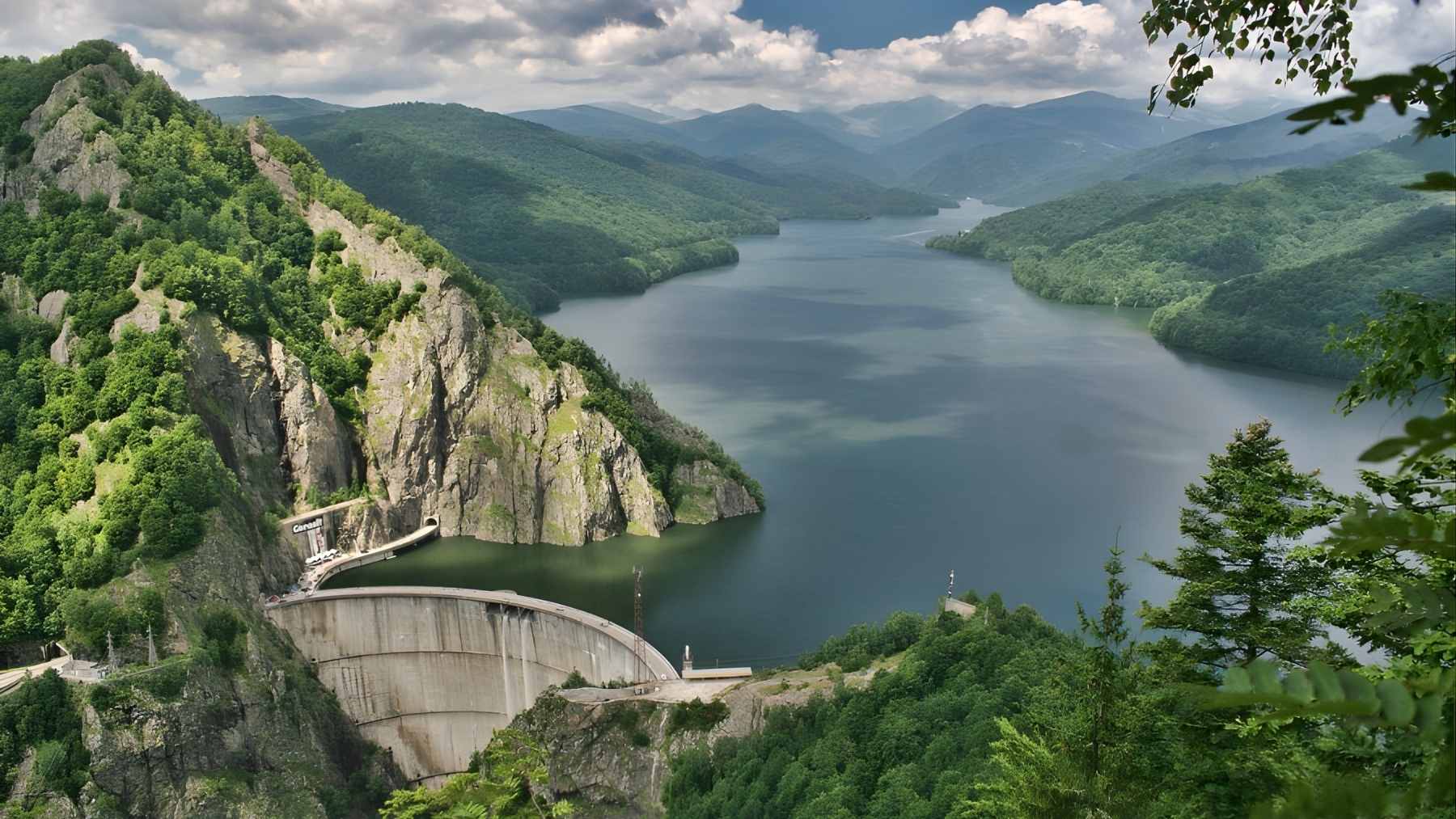
Deep inside Romania’s Parang Mountains, far from crowded highways and noisy cities, sits one of Europe’s most ambitious hydropower projects. The Lotru-Ciunget system was carved into rock in the 1960s and 1970s to harness the fast, cold waters of the Lotru River. Today it still feeds the national grid with hundreds of megawatts and quietly keeps homes, factories, and electric bills a little steadier.
Built around Lake Vidra and its huge rockfill dam at almost 1,300 meters altitude, the development was once described by engineer Dorin Pavel as “the most grandiose scheme in Europe” on a mountain river. The complex stretches from glacial valleys high in Parang to the Olt River near the town of Brezoi. How many people driving the nearby mountain roads know that such a system is quietly humming beneath their feet?
A hidden hydropower giant in the Parang Mountains
The Lotru River springs from the cirque that holds the Galcescu glacial lake in the Parang range, at almost 2,000 meters altitude. From there it winds for about 80 kilometers through forests and narrow valleys before joining the Olt River near the town of Brezoi. Over that distance it drops more than 1,600 meters, which gives it impressive hydropower potential for a relatively short mountain river.
Romanian specialists began studying this potential as early as the interwar period. In 1933, professor Dorin Pavel, often seen as the founder of the Romanian hydropower school, sketched the first plan for harnessing the Lotru in his “General plan for hydropower development in Romania.” His ideas would shape the project that later took form in the communist era.
Construction on the Lotru development started in the mid 1960s, in the same years when work began at the giant Iron Gates I project on the Danube. The Parang scheme was designed as a chain of hydropower plants and reservoirs with a total capacity above 1,000 megawatts.
At its heart sits the Lotru-Ciunget underground plant, rated at 510 megawatts and fed by Lake Vidra, which lies nearly 800 meters above the turbines.
An intricate network of dams, tunnels, and galleries
The Vidra dam is the first large rockfill dam built in Romania. It rises more than 120 meters and holds back an artificial lake that covers over 12 square kilometers. The reservoir gathers not only the Lotru but also waters captured from neighboring valleys that are guided toward Vidra.
To make that happen, builders drove an extraordinary network of tunnels through the mountains. The project created more than 70 galleries and secondary intakes with a combined length above 120 kilometers. Together with the main adduction between the dam and the plant, the total length of underground works reaches about 148 kilometers and connects 81 dams and intake structures.
An article in the technical journal Hidrotehnica in 1972 highlighted this scale, noting three systems of derivations that collect water from 80 rivers, tributaries, and streams.
In practice that means the Lotru-Ciunget scheme concentrates flows and drops from 92 mountain tributaries into the Vidra reservoir before sending the water down to the underground powerhouse. For an inland river system, it ranks among the most complex hydropower developments in Europe.
Building Europe’s “most grandiose” mountain river scheme
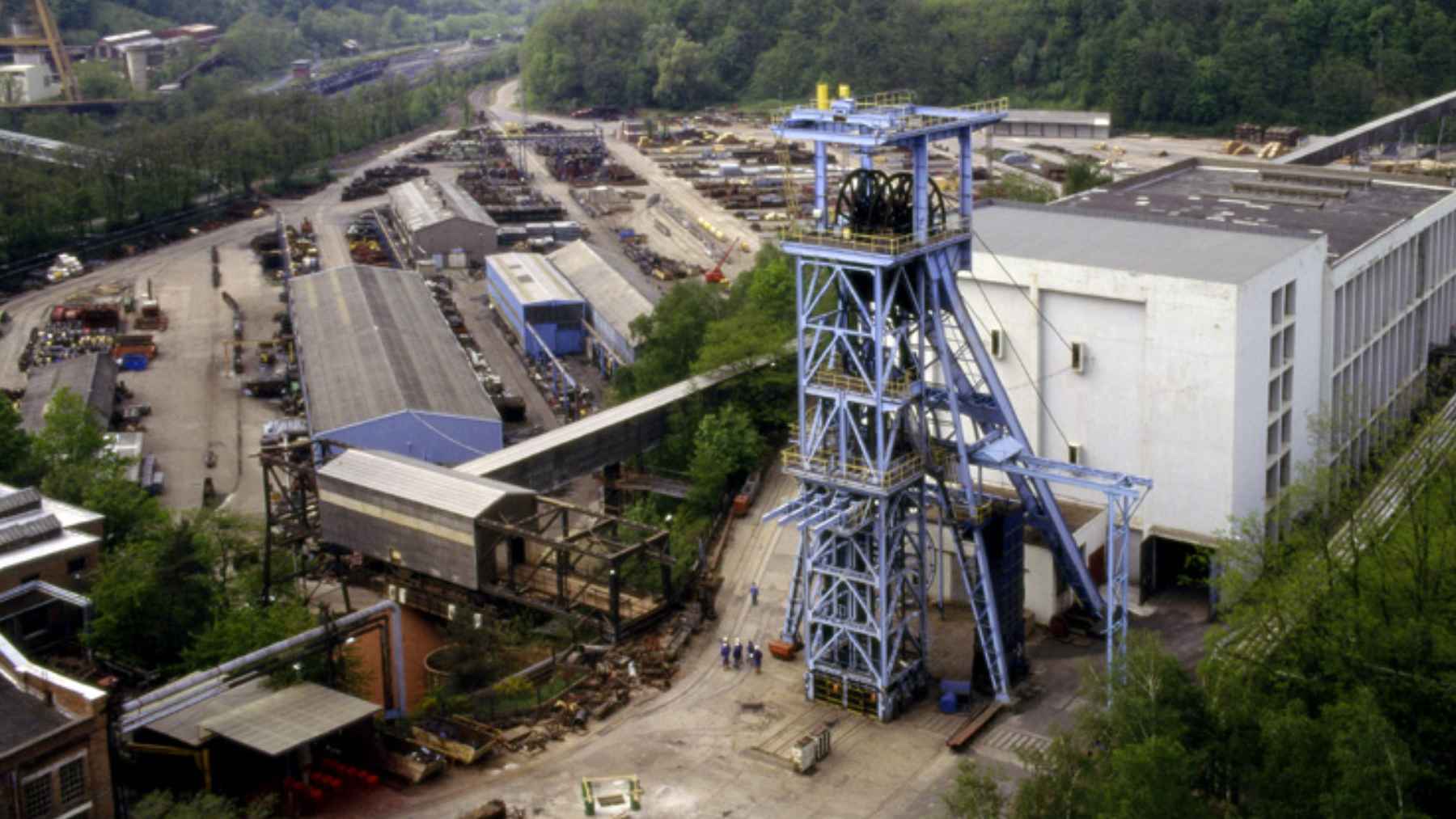
At the peak of construction more than 8,000 workers were sent into the remote Parang valleys. They lived in over 20 temporary colonies scattered along the future reservoirs and tunnels, a world of concrete mixers, blasting charges, and mud. Almost 300 kilometers of access roads had to be carved into the slopes just to reach the work sites.
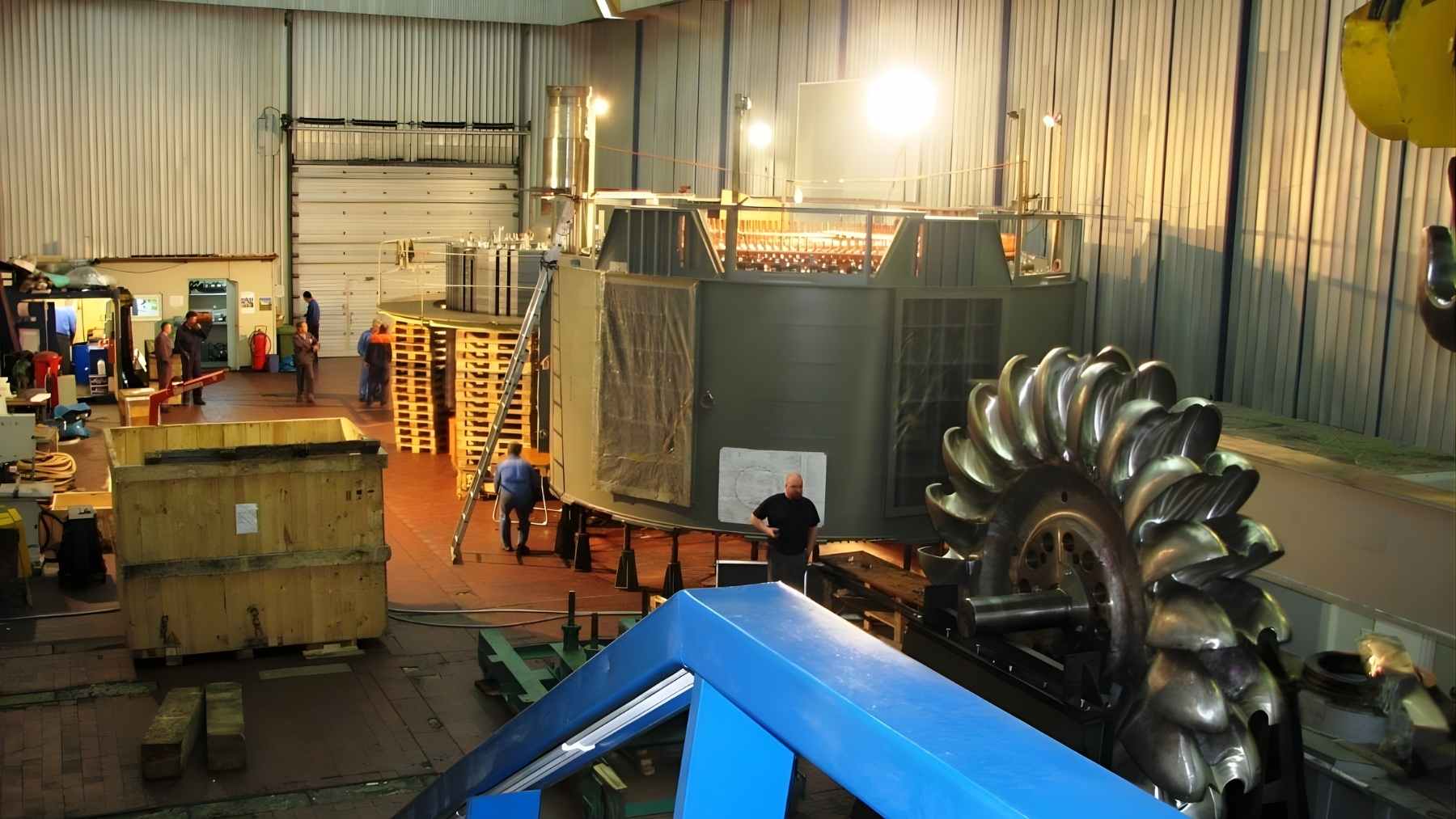
Temperatures in the high alpine zones often dropped to minus 20 degrees Celsius in winter, yet crews kept drilling galleries and pouring concrete. The power station at Ciunget was built entirely underground and equipped with three units, each pairing a turbine and generator of 167 megawatts and a 190 MVA transformer working between 15 kilovolts and 220 kilovolts, similar to the equipment used at Iron Gates I.
For many Romanians this investment meant more stable electricity during cold evenings when heaters hum and lights burn for long hours.
The same engineer later placed Lotru alongside other major Romanian hydropower works such as the Izvorul Muntelui Bicaz dam on the Bistrita and the cascade of plants on the Arges. He called the Lotru system on the river and its mountain tributaries “the most grandiose scheme in Europe” thanks to its 150 kilometers of galleries and the 300 million cubic meter Vidra lake feeding a drop of more than 800 meters. In his view, the Lotru-Ciunget project stood on the same level as the Iron Gates system on the Danube.
Work camps that became mountain resorts
The huge construction effort also reshaped the social landscape of the valley. Worker camps that once housed tunnel crews and concrete teams were gradually earmarked for tourism by the communist regime led by Nicolae Ceausescu. Some planners even dreamed that the area might one day host a Winter Olympic Games.
The magazine Contemporanul noted in 1970 that the Lotru Valley runs east to west and is framed by four almost parallel mountain massifs that shelter it from outside weather. On the north-facing slopes, snow can persist for about eight months each year, while broad alpine plateaus and gentle ridges offer room for hundreds of kilometers of ski slopes of varying difficulty. In everyday terms, that means long winters, deep snow, and ideal conditions for winter sports fans.
Voineasa, the first resort on the Lotru Valley, was created in the 1960s about 30 kilometers below Lake Vidra. It initially hosted several thousand workers from the hydropower complex, then was supposed to grow into a climate resort with roughly 5,000 tourist beds.
Around Vidra, three more resorts named Vidra, Alba, and Mura were planned, although only the Vidra resort was actually built.
Today, Lotru power supports the grid and mountain tourism
Work on the Lotru hydropower scheme unfolded over almost two decades. The Lotru-Ciunget plant entered operation in 1972, followed by the smaller plants at Malaia and Bradisor downstream, which together add about 130 megawatts of capacity.
According to Hidroelectrica, most of the construction took place between 1966 and 1982, including pumping stations and the dense network of secondary intakes that still feed the system today.
In the 2000s, upgrades to the Transalpina road DN 67C and the DN 7A reopened these high valleys to visitors. Today tourists reach Lake Vidra to escape summer heat from the lowlands or to ski in winter, and they often combine it with visits to Lake Oașa, the Șureanu ski area, and other stretches of the Transalpina road in central Romania.
From Vidra’s shore, a gondola lifts visitors to the Transalpina Ski Resort at around 1,800 meters, and ski lifts climb higher toward the Bora peak above 2,000 meters, although snowstorms and icy roads still make access tricky in deep winter.
For most people, the Lotru-Ciunget system remains out of sight, buried in tunnels and underground halls, but its contribution shows up every time the grid needs flexible power to balance demand. The same waters that light up homes also support a growing mountain tourism region built on lakes, ski slopes, and scenic drives across the Parang range.
The main official information about the Lotru hydropower development has been published by Hidroelectrica.
Image credit: Romania Insider.