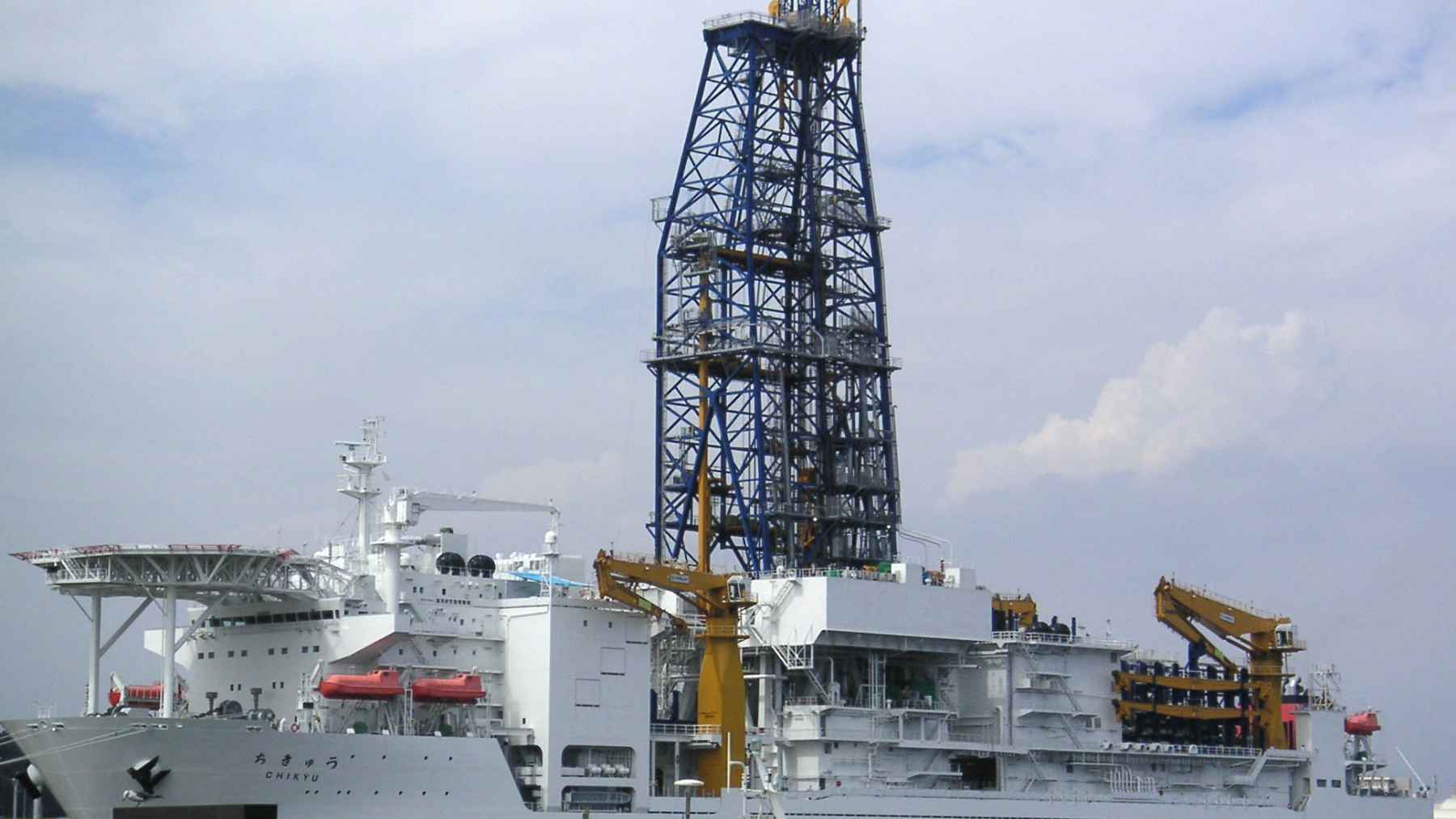
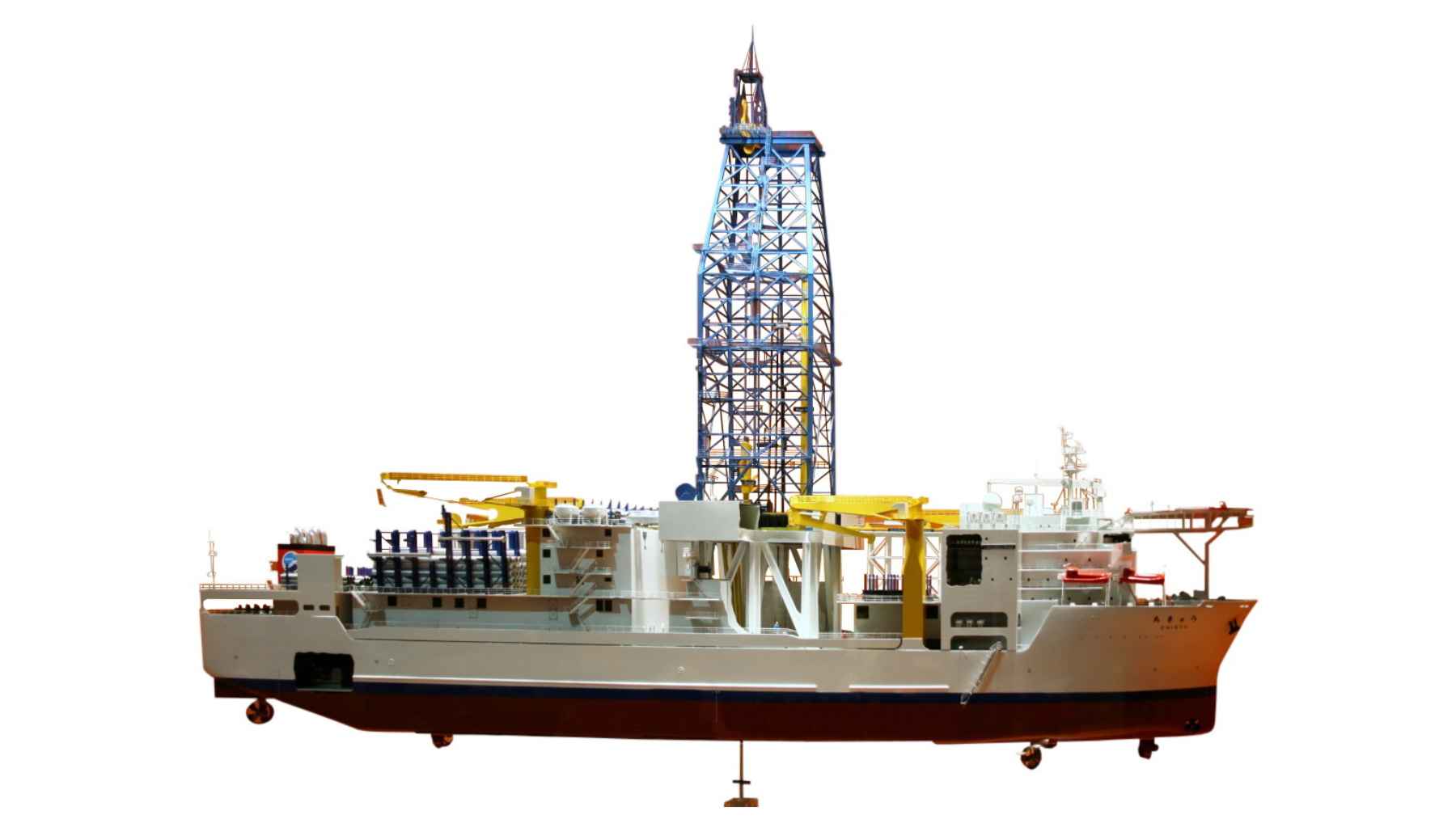
Far out in the Pacific, near the tiny coral atoll of Minamitorishima Island about 1,900 kilometers southeast of Tokyo, a Japanese drill ship has just pulled off a world first. Using a long string of pipes, the vessel Chikyu has lifted mud rich in rare earth elements from nearly 6,000 meters below the surface, in a continuous flow, for several days in a row.
For a country that imports most of its critical minerals, this is more than a technical stunt. Japan sees the deep seabed near this atoll as a strategic backup for the metals that power electric cars, wind turbines, smartphones, and advanced weapons. It is also a direct response to export controls and political pressure from China which still dominates global rare earth supply.
How the ultra deep test works
The government-backed program lowered about 600 ten-meter pipe segments to the seafloor, connected them to a mining machine, then pumped a slurry of mud and seawater back up to the ship.
Recovery runs between January 30 and February 1 confirmed that rare earth bearing sediment could be lifted from around 6,000 meters at three separate sites, something no country had managed at that depth before.
The mud is believed to contain elements such as neodymium and dysprosium used in high strength magnets for electric vehicle motors along with gadolinium and terbium that show up in everything from medical imaging to high-end electronics.
Surveys by university teams in the 2010s suggested the broader area could host around 16 million tons of rare earth resources, which would put Japan near the top tier of global reserves if they can be tapped.
Since 2018, Tokyo has invested roughly 40 billion yen in this effort and the current cruise is still classed as a test. If the engineering holds up and the recovered mud proves rich enough, planners hope to trial a system capable of lifting about 350 tons per day in 2027, then decide whether industrial mining after 2028 makes economic sense.
Energy transition, security fears, and the China factor
Rare earths are sometimes called the vitamins of modern technology. You only need a little, but without them many green technologies do not work. Japan currently relies on China for around sixty percent of its rare earth imports which analysts say leaves its auto and electronics industries exposed whenever diplomatic tensions flare.
Government advisers have even estimated that a three-month disruption in Chinese supply could shave more than 600 billion yen off Japan’s economy. That is why officials describe the Minamitorishima mud less as a business opportunity and more as an insurance policy for factories that make batteries, motors, and the components hidden inside every laptop.
At the same time, academic work on Japan’s rare earth strategy suggests deep sea mud will probably remain a high-cost, last resort resource rather than a cheap rival to Chinese mines.
One recent review in the journal Resources Policy estimates production costs above fifty dollars per kilogram for some elements and concludes that these deposits function mainly as a strategic reserve, while Japan’s real strengths lie in high-purity processing, magnet design, and recycling.
What happens to the deep ocean?
All of this raises a blunt question: what does six kilometer mining mean for the seafloor itself?
Scientists know that rare-earth-rich mud accumulates over millions of years and hosts slow growing, poorly understood ecosystems. Environmental groups and Pacific nations warn that scraping and vacuuming the seabed could destroy habitat, stir up clouds of sediment, and introduce heavy metals into food webs, with damage that may last decades or longer.
Project leaders counter that their system keeps the mud in a closed pipe to limit plumes and that they will monitor water quality and marine life around the test site. Compared with many land-based rare earth mines, deep sea mud also appears to contain very little uranium or thorium, so it may generate less radioactive waste during processing.
Still, researchers and networks such as the Deep Sea Conservation Coalition argue that the science on deep sea recovery and long-term impacts is far from complete. They are calling for very strict safeguards and in some cases a temporary halt to new seabed mining ventures worldwide.
A test for ocean governance
Because Minamitorishima sits inside Japan’s exclusive economic zone, national agencies have more control than the International Seabed Authority which oversees many high seas projects. Even so, global eyes are on Chikyu. If this experiment moves toward commercial production, it could set a precedent for how countries balance climate goals, security worries, and the rights of deep ocean ecosystems.
For now, the ship is still at sea, engineers are watching gauges, and biologists are waiting to see what the samples reveal. The real test will be whether a cleaner energy future can be built without turning the deep Pacific into the next sacrifice zone.
The official statement was published by the Ministry of Economy, Trade and Industry (METI).