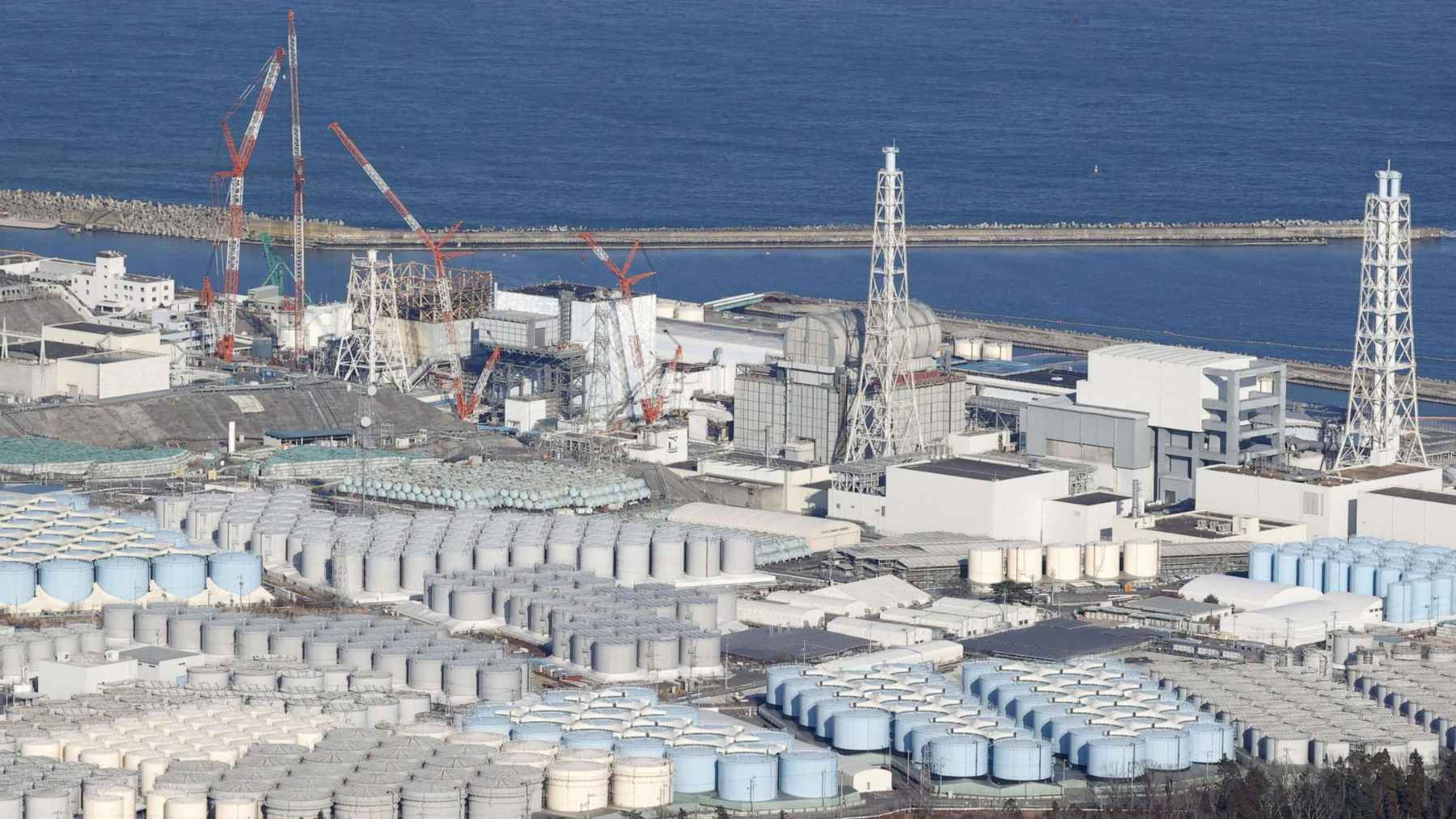
What do you expect to find beneath a damaged nuclear reactor? Probably not a living bacterial community. Yet researchers studying stagnant water inside the torus room below Fukushima Daiichi’s Unit 2 reactor found microbes surviving in water loaded with about 1 billion becquerels of cesium 137 per liter.
The surprise is not just that life is there. It is that much of it appears to be made up of fairly ordinary bacteria, and many of them are linked to metal corrosion, which could create a new headache for the long cleanup effort.
The team, led by researchers at Keio University, examined two samples collected in 2020 from different depths in the torus room, a space beneath the reactor building that retained seawater after the March 2011 earthquake and tsunami.
Using full length 16S rRNA sequencing, they found that one sample was dominated by Limnobacter and the other by Brevirhabdus. In practical terms, this was the first comprehensive look at microbial life from inside this part of Fukushima, not just from nearby soil or seawater.
Common bacteria in an extraordinary place
Here is the part that really stands out. Tests on a close relative of the main Limnobacter strain suggested radiation tolerance similar to ordinary bacteria, not some exotic microbe specially built for extreme radiation. The researchers suggest the surrounding conditions may be doing part of the work. Sludge, trapped seawater chemistry, and likely biofilm formation could all help create tiny shelters where microbes keep going.
These microbes also seem to survive by tapping into inorganic chemistry. Key groups in the torus room are associated with oxidizing compounds such as thiosulfate, iron, and manganese to gain energy. That fits a place filled with metals, salts, and residue rather than the usual food sources. Strange? Yes. But for bacteria, it may be enough.
Why the cleanup crews should care
This is where the story shifts from fascinating to practical. The paper found that about 70% of the bacterial genera identified in the torus room were associated with “microbiologically influenced corrosion.” Limnobacter made up 41.6% of the TW1 community, while Brevirhabdus reached 39.0% in TW2. Other detected groups can oxidize sulfur, iron, or manganese in ways that dissolve metals or worsen corrosion on steel surfaces and pipes.
Think about the rust that slowly eats away at an old household pipe. Inside a damaged nuclear plant, a similar process can weaken metal surfaces and clog intake pipes. The authors also point back to the Three Mile Island cleanup, where algae growth and biofilm formation were reported during decommissioning. So this is not just an eerie science story. It could become part of the engineering problem too.
A reminder about how life works
For the most part, the finding is also a striking lesson in resilience. Even in a dark, semi-enclosed pool of highly-contaminated water, life has found a foothold by using chemical energy tied to seawater-related compounds and metal-rich residue.
The microbial mix appears to combine marine bacteria with microbes typical of biofilms, sludge, and wastewater, suggesting Fukushima’s damaged infrastructure has turned into its own odd little microbial niche.
That does not make the situation less serious. If anything, it makes it more complicated. For decommissioning teams, the big message is that biology does not stay out just because a place looks unlivable to us. It moves in quietly, adapts, and becomes one more factor engineers have to manage.
The study was published in Applied and Environmental Microbiology.