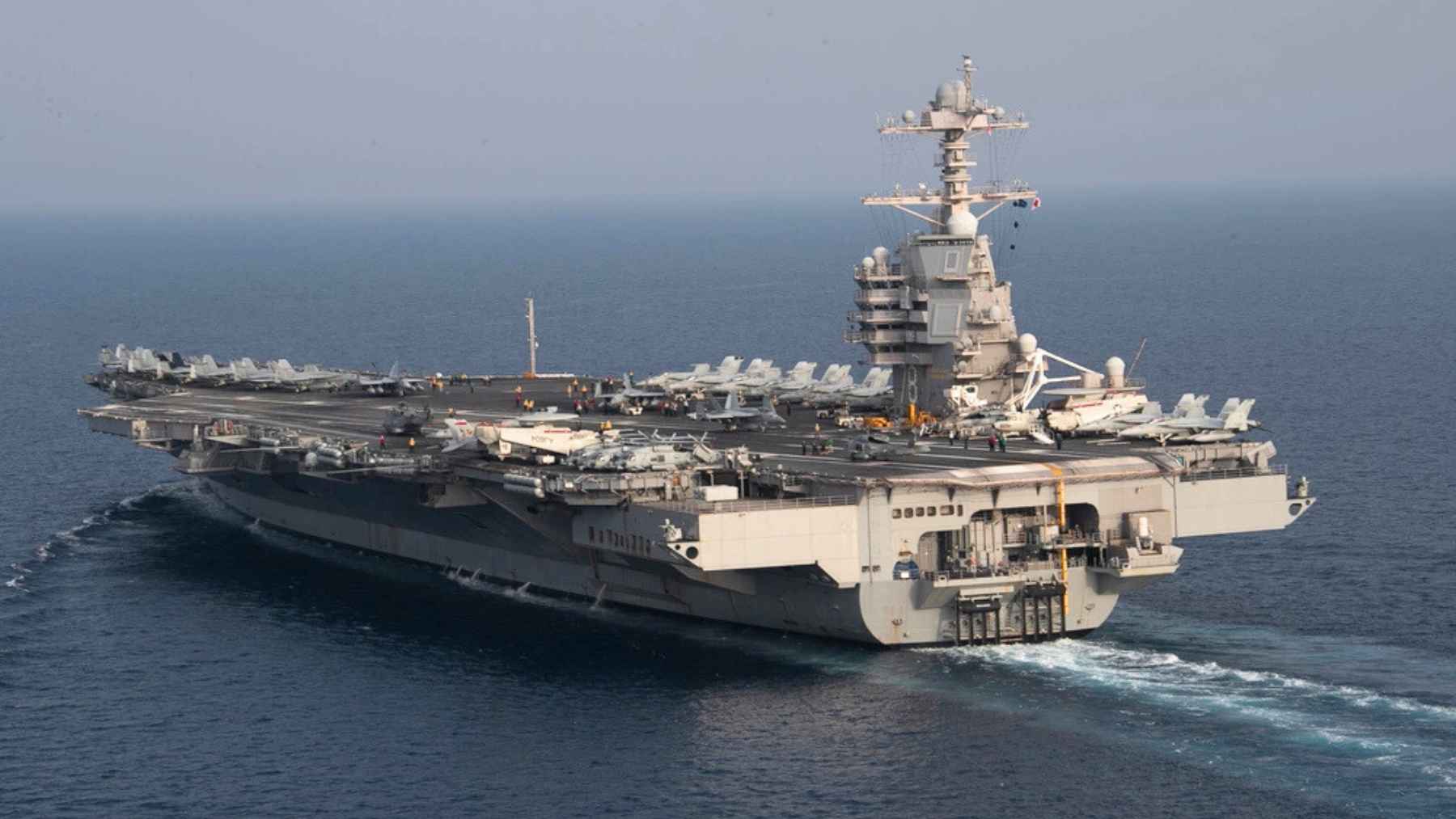
For more than two hundred days, the USS Gerald R. Ford and its carrier strike group have stayed at sea, shifting from European waters to the Caribbean in a marathon deployment that even the US Navy’s top admiral now calls unsustainable.
Adm. Daryl Caudle has publicly said he will push back against any attempt to extend the supercarrier’s cruise, arguing that the human and technical strain has gone far enough. What rarely enters this debate is something else stretched thin by record deployments. The climate and the oceans that carry this floating city are under pressure too.
According to reporting from The War Zone and 19FortyFive, the Gerald R. Ford strike group left Norfolk on June 24, 2025, initially to support operations in Europe and the Mediterranean. In autumn, the Trump administration redirected the group to the Caribbean under US Southern Command for counter narcotics and security missions, leaving it operating far from home for more than seven months.
Adm. Caudle has called the ship “an invaluable option” for any crisis, yet he also warned that another extension would “get some push back from the CNO,” citing the toll on sailors’ families and on already fragile maintenance schedules. Extended cruises mean ships return in worse shape than planned, repair yards are thrown off schedule, and the next deployment cycle slips further into the future.
At first glance, that sounds like an internal Navy logistics problem. In climate terms, though, it is a small window into one of the least-discussed sources of greenhouse gas emissions on the planet. The Pentagon is already the world’s largest institutional greenhouse gas emitter.
In 2019, US Department of Defense emissions reached about 55 million metric tons of carbon dioxide equivalent, with roughly 60% coming from operational fuel use, mostly jet fuel for aircraft and other vehicles.
By the EU’s own estimates and independent research, militaries worldwide account for around 5.5% of global greenhouse gas emissions, which is more than all civilian aviation. In 2023, the Pentagon’s operations and installations alone generated an estimated forty eight million metric tons of CO₂ equivalent, more than the annual emissions of several entire countries.
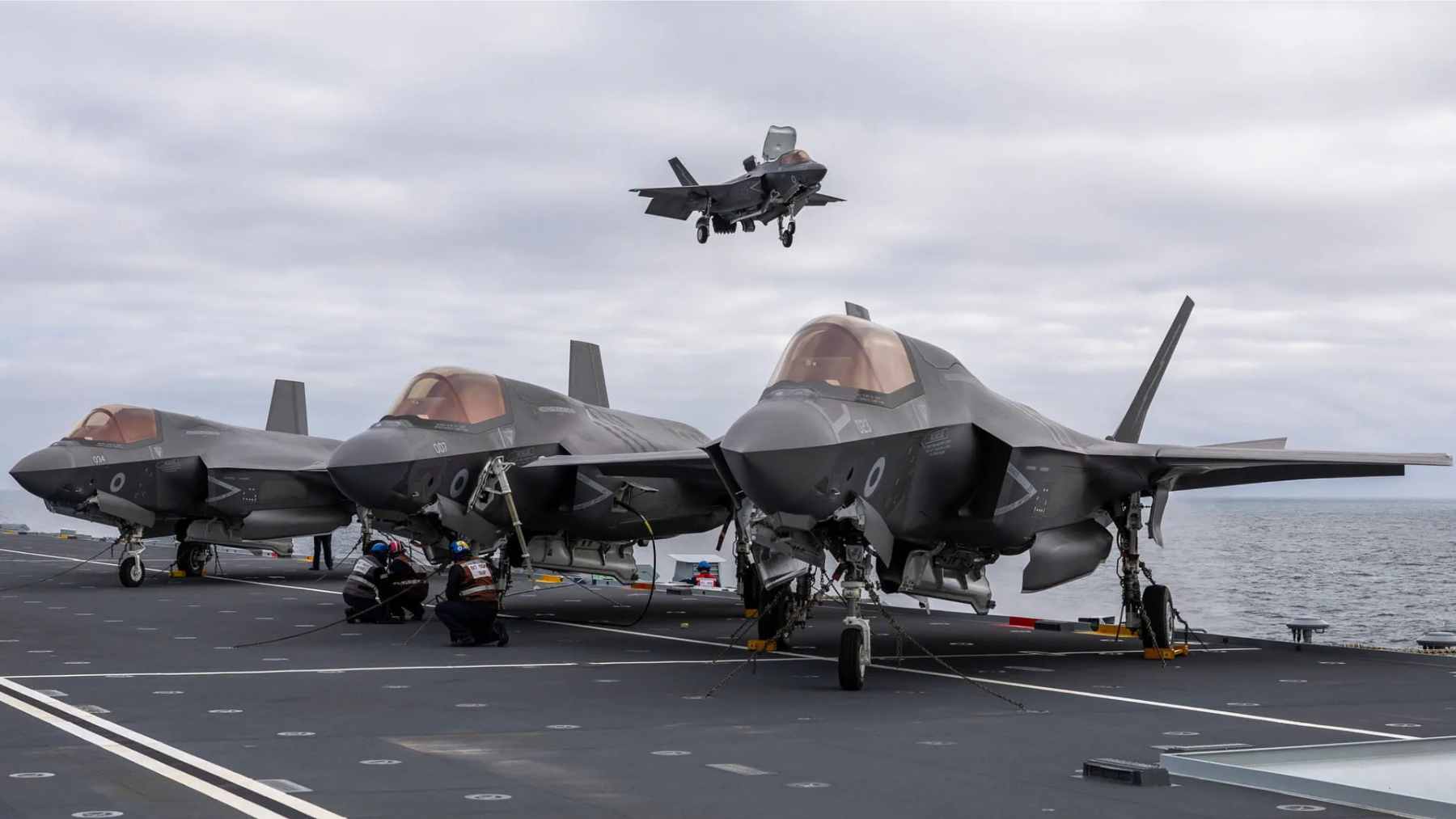
Carrier strike groups sit right inside that carbon-intensive core. The Gerald R. Ford’s nuclear reactors do not burn fossil fuel for propulsion, but the rest of the package still runs on oil. Escort destroyers rely on marine fuel, and the carrier’s air wing burns large volumes of jet fuel every day it is flying training and patrol sorties.
A modeling study of deployed US carrier groups estimated that a carrier strike group can consume on the order of 270,000 gallons of liquid fuel per day for aircraft and escorts.
Stretch that out over more than two hundred days at sea and you get a sense of the invisible “carbon wake” that follows a record deployment. For most people worried about their electric bill or replacing an old gas boiler, those numbers are hard to picture. Yet they sit in the same global carbon budget that scientists say we are rapidly exhausting.
The impact does not stop at emissions. A carrier strike group is also a powerful source of underwater noise. Scientific reviews show that noise from large ships and naval activity can mask whale and dolphin communication, alter feeding behavior, and raise stress levels in marine mammals. Low-frequency ocean sound levels have risen by about ten to fifteen decibels in many regions since the mid 20th century, with commercial and military shipping identified as major contributors.
On top of that background roar, active sonar and explosives used in training can have more acute effects. A US Navy draft environmental impact statement once estimated that planned sonar and explosives training between Hawaii and California could cause more than 1,600 cases of hearing loss or other injury to marine mammals in a single year, and potentially kill more than two hundred animals annually.
The Caribbean, where the Gerald R. Ford group has been operating, is home to whales, dolphins, fish nurseries, and coral reefs already stressed by rising temperatures. While there is no public evidence tying this specific deployment to particular strandings or mortalities, experts warn that every additional large, noisy formation operating for months in biodiverse waters adds to cumulative pressure on marine life.
It is another reminder that “security” at sea is not only about missiles and jets, but also about the health of the ecosystems beneath the hull.
To be fair, parts of the US Navy are trying to adapt. Under its Climate Action 2030 strategy, the Department of the Navy reports steps such as installing advanced energy management systems on destroyers, ordering hundreds of electric vehicles for bases, and planting almost 600,000 trees on Navy and Marine Corps lands, with an eye toward sequestering about 240,000 tons of carbon annually by mid century.
The trouble is that the clock is moving faster than politics. Expanded budgets and rising geopolitical tensions are driving more and longer deployments, even as climate impacts worsen and military emissions remain largely exempt from international reporting rules.
For the most part, citizens only hear about a ship like the Gerald R. Ford when it sails into a crisis, not when its fuel use and noise footprint ripple through the atmosphere and the sea.
In practical terms, that means debates over extensions to record-breaking cruises are not just about sailors’ family plans or shipyard backlogs. They are also about whether the world’s most powerful fleets will remain a climate blind spot.
Counting military emissions fully, investing in cleaner fuels for aircraft and escorts, tightening noise limits, and choosing diplomacy over escalation where possible all reduce the hidden environmental cost of “showing the flag” at sea.