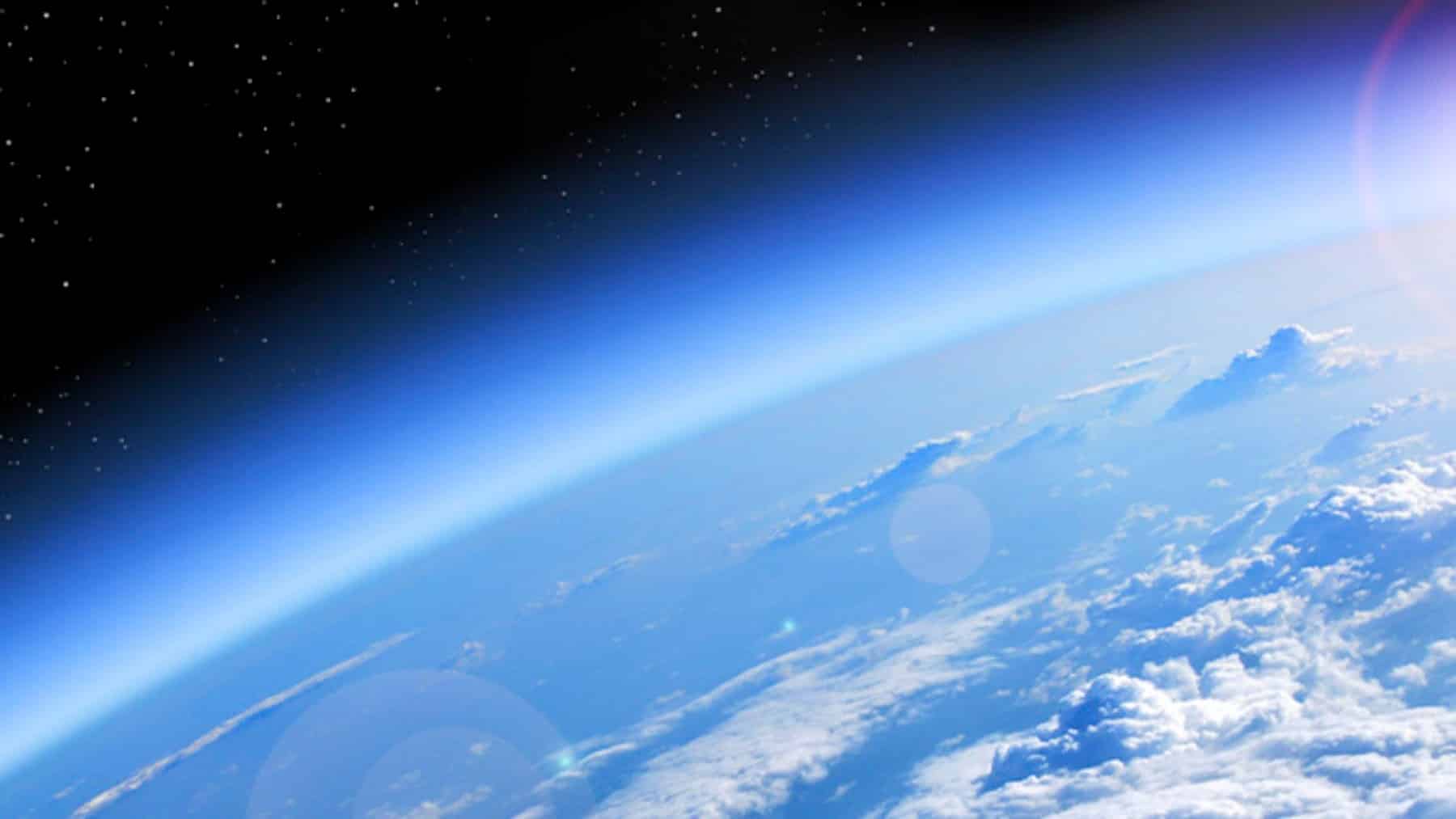
The combined research team of Toho University scientists with Nexus for Exoplanet System Science at NASA published a finding that shows Earth’s oxygen-rich atmosphere will end soon. Researchers using simulation models in Nature Geoscience demonstrated that our atmosphere will undergo substantial changes during the subsequent billion years. The discovery has forced scientific researchers to modify their accepted models of planetary atmospheric evolution alongside its effects on life sustainability.
Scientists have detected the surprising disappearance timeline of Earth’s breathable environment
Research simulations demonstrate that Earth faces an atmosphere-transforming catastrophe during the next billion years of existence. The Sun’s energetic expansion will set off a series of events that result in major decreases in atmospheric carbon dioxide. The research team’s advanced climate models use numerous geological and biological processes to predict future planet conditions at a previously unseen scale. Earth’s carbon dioxide emissions will decrease when the Sun heats up and sends out additional energy because heat absorption breaks down the gas in the atmosphere.
The possibility exists that your descendants will observe Earth’s atmosphere run out of air
As carbon dioxide levels decrease through the simulation, plants experience deterioration that leads to lower oxygen creation levels. Photosynthesis becomes impossible when CO2 levels drop insufficiently, so atmospheric oxygen decreases rapidly. The process may proceed much faster than predicted, which will impact future generations. The planet would become exposed to dangerous solar radiation because the ozone layer would completely disappear during this period.
Research findings disclose hard-to-believe relationships between oxygen loss on Earth
Earth faces significant risks from the alarming timeline scientists have discovered for decreasing Earth’s atmospheric oxygen levels. According to expert estimates, the decline in atmospheric oxygen will start and progress until critical oxygen levels reach approximately 10,000 years from now. The swift atmospheric evolution will permanently disable Earth’s abilities to support advanced life forms. According to the study, these atmospheric changes between enhanced solar radiation and decreasing CO2 will form a destructive cycle.
What scientists discovered about the final chapter of Earth’s oxygen-rich history
Methane levels in atmospheric air will dramatically rise during this transformation, thus accelerating the reduction of breathable air. Earth’s atmosphere will develop into a primitive climate, forcing various contemporary life species to become extinct. Only ancient anaerobic organisms will survive during this transformation. The Earth will transition back to settings that have not occurred for billions of years, ultimately signaling the conclusion of advanced complex multicellular life.
The scientific investigation helps explain Earth’s approaching atmospheric transformation
The research data indicates that atmospheric change will duplicate historical Earth conditions. Land-based animals and marine life forms would disappear soon because the absence of plants would create an uninhabitable air environment. The research demonstrates how the Sun’s natural evolution will eventually disturb the fragile ecological balance that supports complex life.
The scientific findings establish completely new principles regarding the capabilities of planetary life
The findings from this study create significant benefits beyond Earth by assisting researchers with their quest for extraterrestrial life detection. Scientific research indicates complex life exists through a reduced timeline, although scientists originally thought it would last longer. Thus, the search for habitable worlds is even more complex than previously evaluated. Through scientific research, we enhance our capabilities to understand Earth’s unique habitable traits and their brief durations.
Researchers Kazumi Ozaki and Christopher Reinhard developed this simulation to uncover the specific moment at which Earth loses its capacity to sustain most plants and animals. Scientists agree that life will eventually disappear from Earth when the sun exhausts its power before self-annihilation. Survival will become more challenging for living organisms as the solar heat intensity intensifies before that crucial point. For more information, you can access the complete study by the Georgia Institute of Technology.