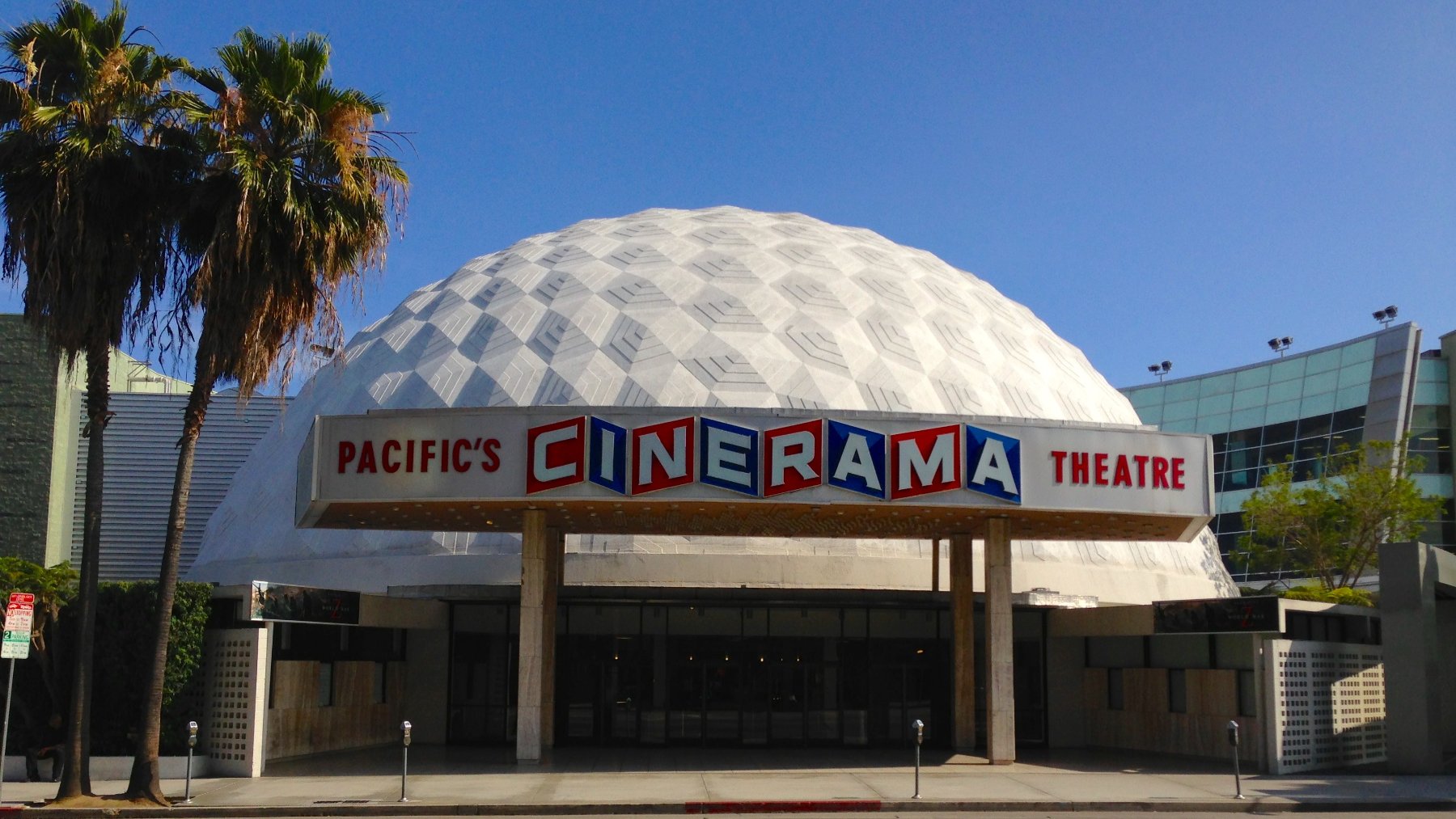
Hollywood’s golf ball-shaped movie landmark is getting a second act. Sony Pictures Entertainment and its Alamo Drafthouse theater chain plan to reopen the Cinerama Dome in early 2028, following a shutdown that began during the COVID-19 pandemic in 2020.
For fans, the comeback promises more than another place to buy popcorn. The project will preserve the theater’s distinctive identity while also putting an existing building back to work. That gives this entertainment story an environmental dimension, since preserving usable structures can reduce demand for new materials and avoid demolition waste.
The Dome will still feel like the Dome
Sony announced the project on July 22, 2026, with restoration scheduled from August 2026 through early 2028. “We believe in moviegoing down to our soul,” said Tom Rothman, chairman and CEO of Sony’s Motion Picture Group, in the company’s announcement.
The Cinerama name and exterior branding will remain, along with the historic theater’s traditional concession experience. Unlike many Alamo locations, the Dome itself will not become a dine-in cinema, keeping its familiar movie-night format intact. Its midcentury modern character will also remain central to the restored experience.
Next door, the former 14-screen ArcLight Hollywood will reopen as Alamo Drafthouse Hollywood. That neighboring complex will offer the chain’s dine-in service alongside screenings, special events, and other programming. Moviegoers will have two different experiences at one destination.
A concrete landmark built for the big screen
Opened in 1963, the Dome was designed by Welton Becket & Associates and inspired by Buckminster Fuller’s architectural ideas. Its rounded shell consists of 316 interlocking concrete panels, including hexagons and pentagons. Those pieces create the unmistakable shape visible from Sunset Boulevard.
Inside, an approximately 86-foot-wide curved screen helped make the theater a destination for large-format movie presentations. Its opening attraction was “It’s a Mad, Mad, Mad, Mad World,” which the Los Angeles Conservancy says ran there for 66 weeks.
Preserving that character has taken work before. In 1998, preservation advocates helped secure an agreement that protected the Dome’s interior and exterior after proposed alterations threatened its marquee, curved screen, and other features. The current revival builds on that earlier effort rather than starting from scratch.
Why keeping an old building can matter
What does saving a movie theater have to do with sustainability? The Environmental Protection Agency identifies preserving existing buildings as a way to prevent waste before it is created. Keeping useful materials in place can also reduce the resource and energy demands associated with producing replacements.
The scale of the wider problem is substantial. EPA estimates show that the United States generated 600 million tons of construction and demolition debris in 2018, including material from buildings, roads, and bridges. Demolition accounted for more than 90 percent of that total, although much of the debris went to another use rather than a landfill.
But a restoration announcement is not a carbon audit. Sony’s release provides no project-specific figures for emissions savings, energy use, or waste diversion, so the Dome’s potential environmental benefits cannot be quantified from the announcement. Its eventual performance will depend on both the renovation and how the reopened building operates.
Younger audiences offer a reason for optimism
Will people show up once the doors reopen? Fandango’s 2026 Moviegoing Trends and Insights Study, based on a January survey of more than 5,000 moviegoers, offers an encouraging signal. Gen Z respondents reported seeing an average of seven movies in theaters during 2025, while millennials averaged 7.2.
Fandango also found that Gen Z values moviegoing as a social gathering, while millennials often see it as a break from daily routines. That suggests a possible audience for a memorable night out, not a guarantee of packed houses in 2028. A national survey is not a forecast for one Hollywood theater.
What to watch before opening night
The Los Angeles Conservancy says it is working with Sony and Alamo to review the proposed reopening plans. For this landmark, the challenge is to make the building useful again without stripping away the features that made people care about it in the first place.
Preservation and efficiency need not pull in opposite directions. The National Park Service notes that historic buildings can be made more energy-efficient while retaining their character, a useful benchmark for assessing future details about the Dome rather than assuming an old building must stay technologically frozen.
Sony’s announcement does not specify an exact opening day, so early 2028 remains the timeframe to keep in mind.
The official press release was published on Sony Pictures Entertainment.