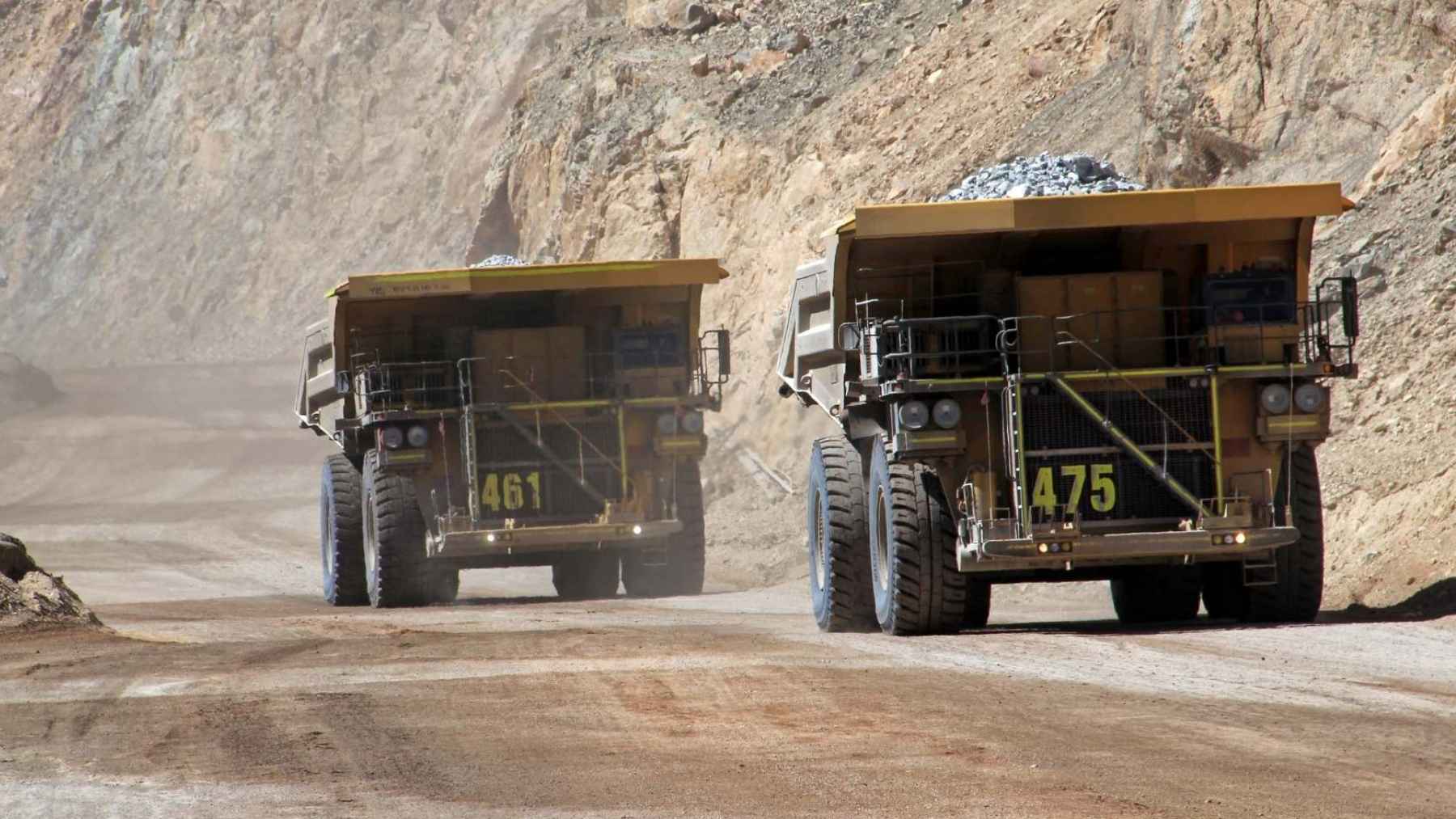
Videos of more than 200 driverless mining trucks snaking across the Gobi Desert have been shared online as supposed proof of a secret “treasure” excavation in China. In reality, the convoy belongs to one of the world’s most automated open pit coal mines in Xinjiang’s Zhundong coalfield, a mega energy base that Chinese authorities have been promoting for years as a model of the “intelligent mine”.
At this site, technology firms such as EACON and CHC Navigation report that more than 200 autonomous haul trucks work around the clock, guided by 5G connectivity, high precision satellite navigation and remote control centers far from the pit. Their job is not to uncover a hidden stash of rare metals. It is to move vast quantities of coal and waste rock from a basin that holds an estimated 390 billion tons of coal resources in one of China’s driest and most fragile regions.
Smart trucks and an old fuel
On paper, the technology is impressive. Global Times describes a fleet of just over 200 unmanned trucks at an open pit mine run by Tianchi Energy in Jimsar, Xinjiang, where a handful of operators in a command room set production plans while the trucks shuttle soil and rock in tightly choreographed loops. CHC Navigation highlights the same Zhundong operation as a showcase for its guidance systems, which keep the trucks moving despite dust, extreme temperatures and steep pit walls.
The setup mixes buzzwords that usually sound green to many readers, such as artificial intelligence, real time data platforms and high speed wireless networks, with a very old fuel. Coal. In practical terms, the “smart” label refers to how the mine runs, not to what it extracts.
Chinese media and company statements emphasize two benefits. First, fewer workers need to spend long shifts in a remote open pit with bitter winters and scorching summers, which can genuinely reduce accident risk. Second, machines that never tire can keep the coal moving day and night, cutting labor costs and raising output.
It is easy to see the appeal for any government worried about blackouts and public anger over electricity bills during a heat wave.
Xinjiang’s coal boom
Xinjiang has quietly become one of the country’s coal heavyweights. Industry and local reports indicate that coal production in the region reached around 540 million tons in 2024, with growth of roughly 17 percent compared with the previous year.
At the national level, official statistics show China produced about 4.76 billion tons of coal in 2024, a record that underlines how central coal remains for keeping lights and air conditioners on across the country. Zhundong sits at the heart of that strategy. Research describes the Zhundong Economic and Technological Development Zone as a mega base for sending gas and electricity generated from coal to the more industrialized east of China.
For the most part, this fits Beijing’s energy security logic. Large, shallow coal seams are cheaper to mine, and long distance rail and power lines can move that energy to factories and cities far from Xinjiang.
A fragile environment under pressure
The ecological reality around Zhundong is much less sleek than the driverless trucks. Scientific studies describe the coalfield as part of an inland desert region with an already fragile ecosystem and very limited water. Over the past two decades, researchers have tracked how grasslands in the area have been converted into construction land and disturbed surfaces as open pit mining expanded, with many zones classified as high or higher ecological risk.
In other words, the mine may be “intelligent” on the inside, but it is still carving deeper scars into a dry landscape that struggles to recover once heavy machinery moves on. Automation can even make that pressure worse by making it easier and cheaper to mine more coal, more quickly.
That tension sits at the center of China’s climate paradox. The country is a global leader in renewable energy, yet its coal production and coal fired power generation remain at or near record highs.
Human rights and transparency questions
Technology is not the only reason this mine draws scrutiny. The trucks operate in a region that has been under intense international observation for human rights concerns. In 2022, the Office of the United Nations High Commissioner for Human Rights published an assessment that pointed to arbitrary and discriminatory detention of Uyghurs and other predominantly Muslim communities in Xinjiang and warned that these practices may amount to crimes against humanity.
Coal from Zhundong is largely consumed within China, so it does not appear as a simple export that foreign buyers can label or trace. Even so, the broader debate about forced labor risks and heavy state control in Xinjiang now shadows large industrial projects in the region. For companies selling “smart mine” technology and for governments talking about clean supply chains, that shadow is not a minor detail.
A glimpse of the future, and its limits
The Zhundong convoys show what the future of mining could look like in many countries. Control rooms instead of crowded cabs. Sensors instead of clipboards. Algorithms instead of long lines of diesel trucks stuck in the dust.
The open question is whether that future will also mean fewer emissions and less damage to land and communities, or simply more efficient extraction of one of the most climate intensive fuels on the planet.
For now, the driverless trucks in Xinjiang are a reminder that “smart” does not automatically mean sustainable. At the end of the day, what really matters is not only how mines operate, but what they dig up and what kind of world that energy is building.
The press release was published on CHC Navigation.