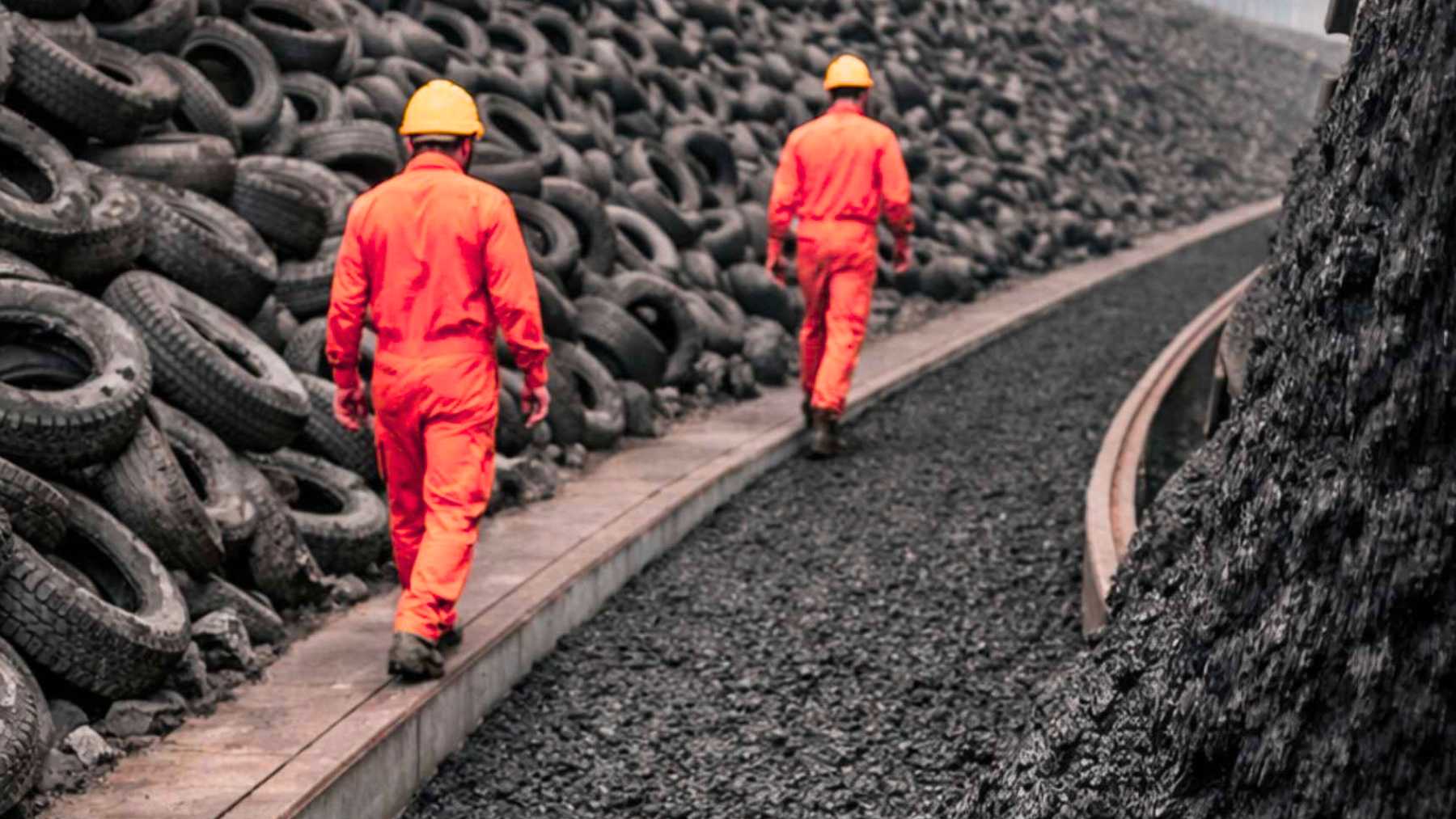
Mountains of worn-out tires that once gathered dust in empty lots are now being ground up and poured under our wheels as part of a growing push for rubber-modified asphalt. The idea is to clean up a stubborn waste stream, build pavements that last longer, and even shave a little noise off the daily commute, but researchers stress that this technology is helpful rather than magical.
Global tire waste: how big is the problem?
Industry and policy reports estimate that close to one billion tires reach the end of their useful life every year worldwide, with almost 300 million scrap tires generated annually in the United States.
In Brazil, the reverse logistics system run by Reciclanip sent more than 418,000 tons of unusable tires to approved destinations in 2023 and has passed 5.1 million tons since 2011.
What is rubber modified asphalt and how does it work?
Rubber modified asphalt tries to flip that story. Old tires are shredded into granules, steel and fibers are removed, and the remaining rubber is blended into the asphalt binder or directly into the mix of stones and sand.
In wet processes the rubber swells inside the binder and gives the material more elasticity, and Brazil has had national technical standards for rubber asphalt since 2009 that embed this approach in routine road work.
Performance benefits of rubberized roads
A State of Knowledge report prepared for the U.S. Tire Manufacturers Association reviewed more than 300 studies of rubber asphalt performance worldwide and concluded that, in many designs, rubber-modified mixes resist cracking and rutting better than conventional asphalt when projects are properly engineered and built.
A cold-region case study led by Michigan Technological University found that a dry-processed rubber pavement increased fracture energy by roughly 29 to 50 percent and reduced traffic noise by about 2 to 3 decibels compared with standard surfaces.
Recycled tires in infrastructure and public works
Public programs in California report that a thin resurfacing layer of rubber asphalt about five centimeters thick can reuse around 2,000 passenger tires per lane mile, so a multi lane highway that stretches for many kilometers can turn tens of thousands of old tires into infrastructure in a single campaign.
Life cycle studies also suggest that rubber-modified pavements often need fewer repairs over time, which means fewer potholes and work zones and road budgets that are a little less strained.
Environmental concerns of rubber in asphalt
Environmental scientists, however, keep a cautious eye on what is inside the mix. Tires contain metals and complex organic compounds, including polycyclic aromatic hydrocarbons that matter for soil and water quality.
A peer reviewed study published in 2022 measured sixteen priority PAHs in crumb rubber and in rubber asphalt, found contents in the microgram-per-gram range, and reported that only a few compounds leached above one microgram per square meter under lab conditions while warning that releases depend on the mix recipe, local climate, and time.
Microplastics from tire wear: a hidden problem
There is also the problem that you cannot see from your car window. Every time a wheel turns, tiny fragments of tire and road surface grind off and enter the environment, and independent reviews now identify tire and road wear particles as one of the largest sources of microplastics by mass.
Using recycled rubber in asphalt helps empty tire stockpiles, but it does not stop the steady trickle of wear particles that comes simply from driving.
A balanced approach to sustainable mobility
So is rubber asphalt good or bad in absolute terms, or does everything depend on how and where it is used? When old tires replace a share of virgin materials in well-designed road layers, combined with strict environmental controls and open reporting of field data, rubber asphalt can be an important piece of a circular tire economy.
At the same time, many experts argue that real progress against traffic-related pollution still depends on cutting vehicle use through better public transit and safer options to walk or cycle.
Rubber modified asphalt and the future of road sustainability
At the end of the day, rubber-modified asphalt turns a stubborn waste stream into something useful under our feet. It will not make roads fully green on its own, but it can make them tougher, quieter, and a bit kinder to landfills when applied with care.
The report was published by the U.S. Tire Manufacturers Association.