Most people will follow the next trip around the Moon from a couch or a desk. A smaller group may actually feel the rumble from the launch pad at NASA’s Kennedy Space Center in Florida.
NASA has opened media accreditation for Artemis II, the first crewed Moon mission in its Artemis campaign.
Targeted for early 2026, the test flight will send four astronauts on a 10-day journey around the Moon and back in the Orion spacecraft atop the Space Launch System rocket.
The mission’s primary goal is to confirm that all spacecraft systems function safely with a crew on board.
For journalists, the chance to be there in person depends on a few deadlines and the usual paperwork.
What is NASA’s Artemis II mission and when will this Moon flyby launch?
Artemis II is the first crewed test flight in NASA’s Artemis campaign, which aims to return humans to the Moon. The flight will send astronauts around the Moon without landing and then return them to Earth, serving as a crucial rehearsal for future Moon landings.
NASA is targeting an early 2026 launch date, with the exact day still to be announced.
The crew will travel in Orion, NASA’s deep-space crew capsule, launched atop the Space Launch System rocket, the agency’s heavy-lift launcher for Moon missions.
Together with ground systems at Kennedy Space Center, these vehicles are intended to show that NASA can safely run human missions in deep space.
Who are the astronauts flying on Artemis II and where will they launch?
Four astronauts are assigned to this roughly 10-day journey around the Moon: NASA astronauts Reid Wiseman, Victor Glover and Christina Koch, plus Canadian Space Agency astronaut Jeremy Hansen. Their flight makes Artemis II an international mission from the start.
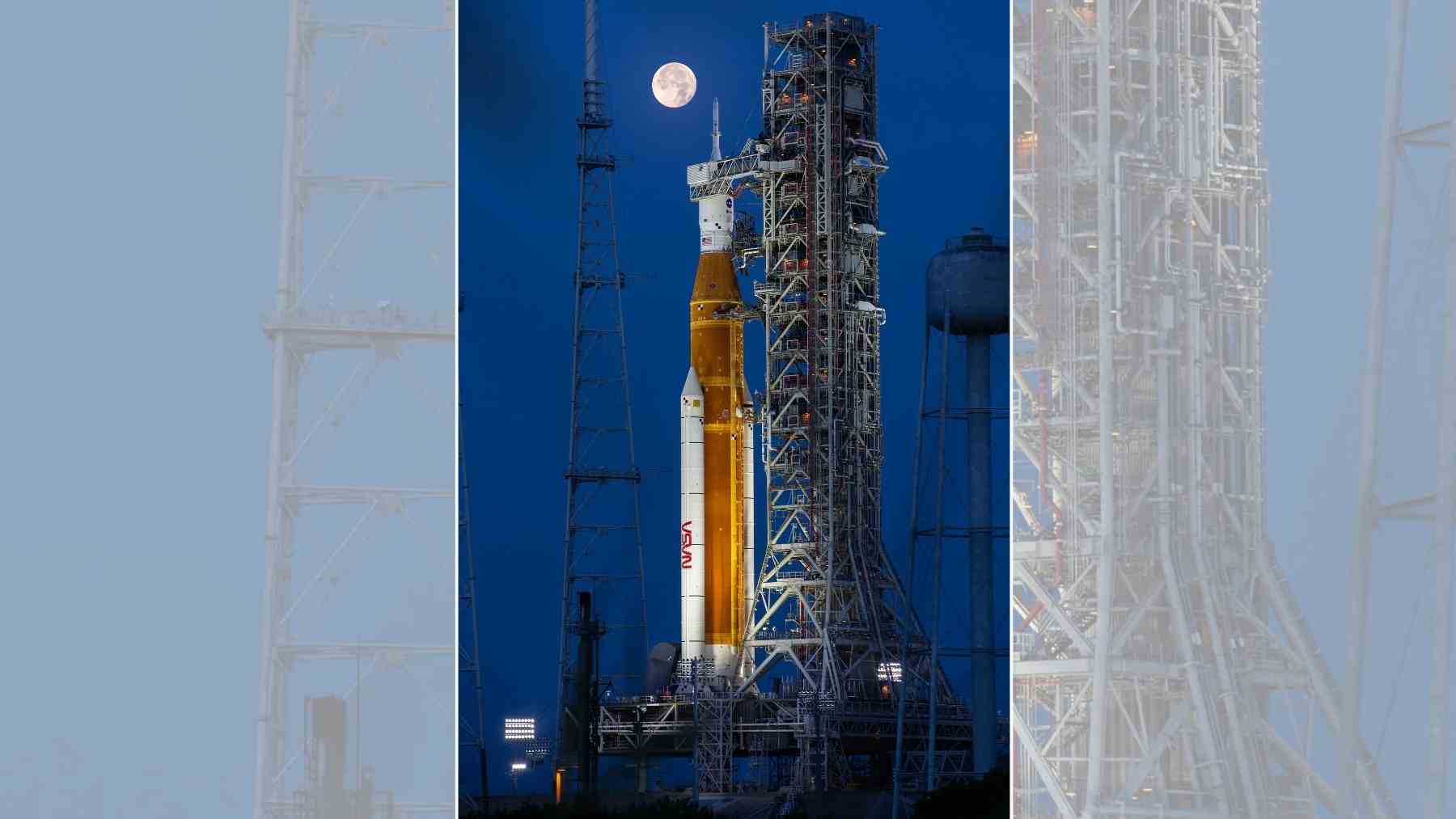
They will launch from Kennedy Space Center in Florida after the integrated Space Launch System rocket and Orion spacecraft roll out to the pad several weeks before liftoff. Media accredited for the launch will also be approved to cover that rollout.
NASA has already shown a similar scene with images of the Artemis I rocket and Orion on the pad with a full Moon in the background from June 2022.
How can journalists apply for accreditation to watch the Artemis II launch?
NASA is inviting both U.S. and international journalists to apply for accreditation to cover the launch. Media accreditation is the official registration process that grants journalists access to NASA facilities and events, subject to security checks.
Because interest in Artemis II is high and space at Kennedy Space Center is limited, not every request can be approved. Deadlines differ by nationality: international media who do not have U.S. citizenship must apply no later than Sunday, Nov. 30, while U.S. media must submit requests by Monday, Dec. 8, and even holders of annual Kennedy badges must apply separately for this mission. Here is how NASA’s instructions break down into simple steps:
- Confirm whether you are applying as international media without U.S. citizenship or as U.S. media to know which deadline applies.
- Go to NASA’s Kennedy media portal at media.ksc.nasa.gov and fill out the accreditation request form.
- Submit the request by Sunday, Nov. 30 if you are international media without U.S. citizenship, or by Monday, Dec. 8 if you are U.S. media.
- If you have questions, email ksc-media-accreditat@mail.nasa.gov for accreditation issues or call the NASA Kennedy newsroom at 321-867-2468.
Once a request is reviewed and approved, credentialed media receive a confirmation email with details about pre-launch and launch day activities, and the same badge covers major pre-launch events, including the rollout of the integrated rocket and spacecraft to the pad.
NASA’s media accreditation policy is available online for anyone who needs the fine print before applying.
The agency presents Artemis as part of a new era of innovation and exploration that will lead to new U.S. crewed missions on the lunar surface and help prepare for the first crewed mission to Mars, so this invitation is a practical starting point for telling that story.