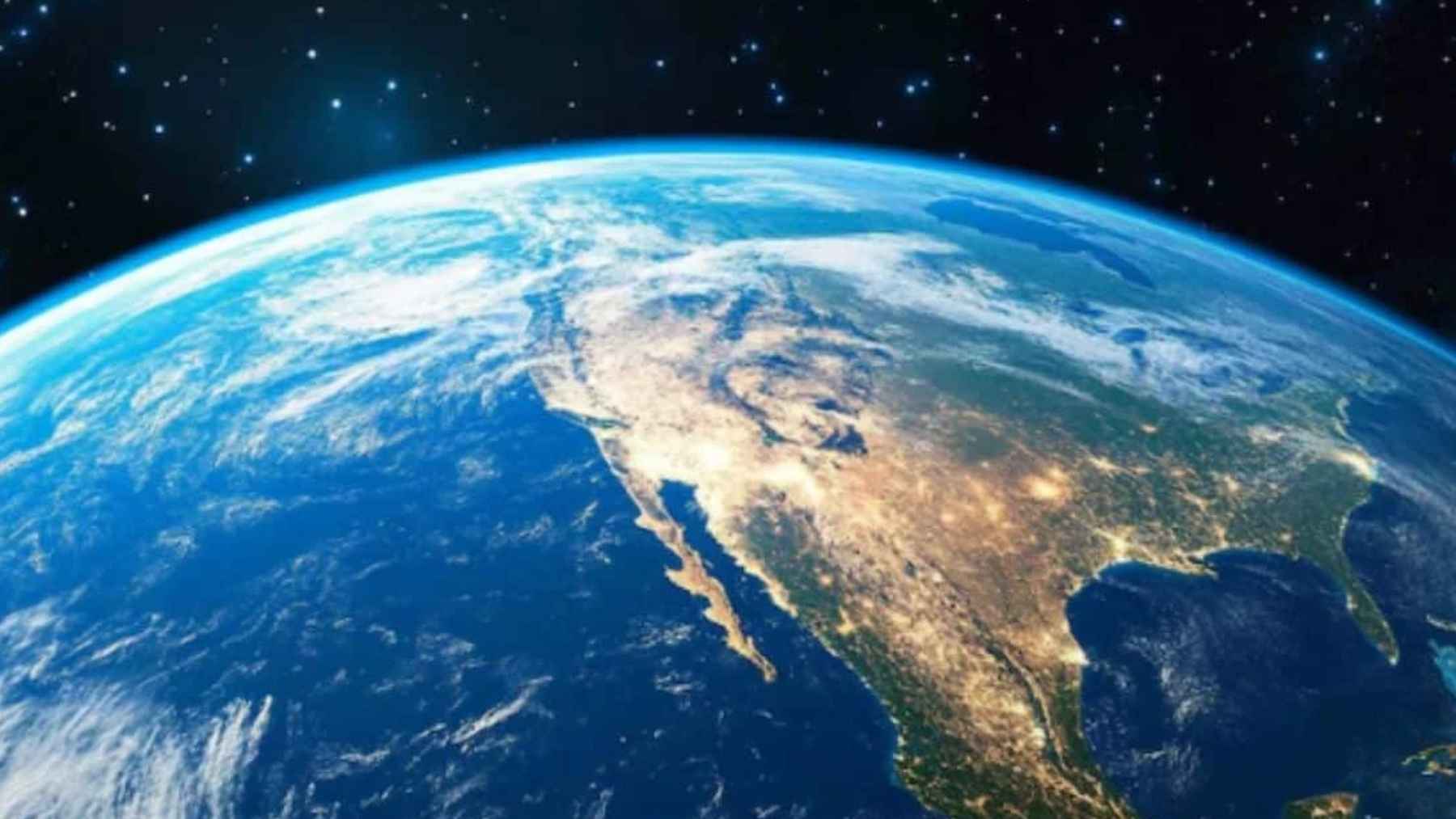
When people imagine the end of Earth, they usually picture an asteroid strike or the Sun swallowing the planet whole.
But the longer-term danger scientists keep returning to is quieter. Earth’s air may stop supporting complex life long before the planet itself is physically destroyed.
That does not mean Earth has suddenly crossed a dramatic cliff. What the research describes is a slow countdown in deep time, driven by a Sun that grows hotter as it ages.
It is not the kind of change anyone would notice from one summer to the next, but over vast stretches of time it adds up.
The slow change coming from the Sun
The Sun is a little less than halfway through its lifetime, and an official NASA science overview says Earth will become uninhabitable for complex forms of life in a little over 1 billion years.
The same long-range picture says the Sun will expand into a red giant in about 5 billion years, which is much later.
Why would trouble start so early? As the planet warms, more water evaporates, and that extra water vapor traps even more heat.
Over immense spans of time, that feedback can push Earth toward a runaway greenhouse, turning a once-blue world into a far hotter and drier one.
What 400,000 simulations revealed
In a Nature Geoscience study by Kazumi Ozaki of Toho University and Christopher Reinhard of the Georgia Institute of Technology, researchers tested Earth’s distant future with a model that combined climate, oceans, atmosphere, and the chemistry shaped by life.
After nearly 400,000 simulations, they estimated that the planet’s oxygen-rich atmosphere will likely last roughly another 1.1 billion years.
The striking part is the order of events. Their model suggests that the atmosphere could lose much of its oxygen before Earth enters the phase where water loss to space becomes severe.
In practical terms, the air could fail first.
Why scientists care now
This matters beyond pure curiosity. If oxygen is only a temporary clue that a world is alive, astronomers searching distant planets may need other signs too.
A 2024 research release on work led by Keming Zhang of UC San Diego echoed that broader picture, saying Earth may be habitable for only “around another billion years” before its oceans are vaporized by greenhouse heating.
One point is worth keeping straight. This is not a warning about the next century, or even the next million years.
Official climate guidance says the warming seen over recent decades is far too rapid to be explained by changes in solar activity, so deep time is one story, while modern warming has a different cause.
The main study was published in Nature Geoscience.