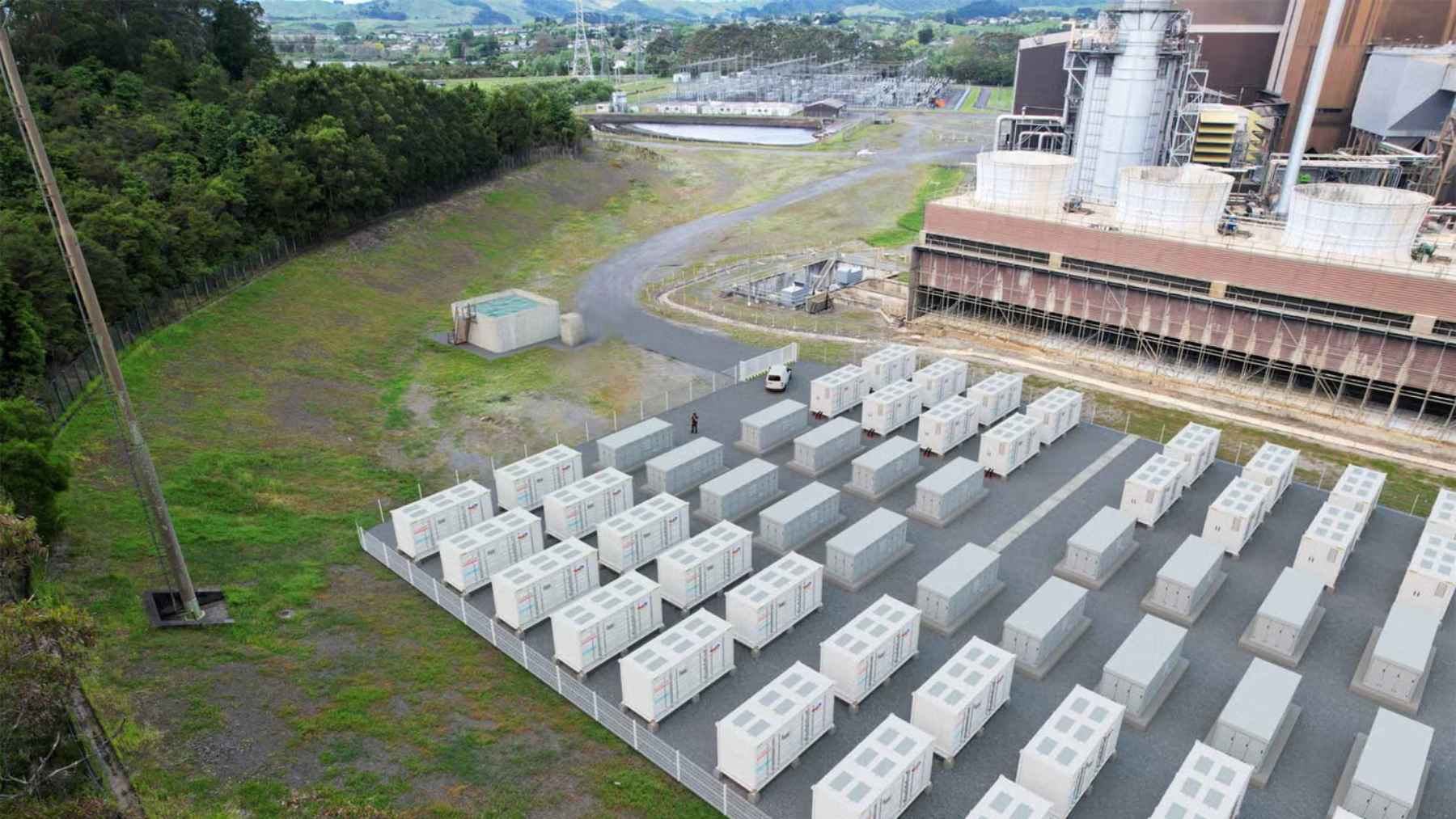
How does the clean energy transition look when it leaves the planning room and hits the highway? In New Zealand, it looked like a 379,000-pound transformer (about 172 metric tons) creeping through the night on a 17-axle trailer, helped by three trucks and a small fleet of pilot vehicles. The oversized delivery has now reached Huntly Power Station, where it will help connect a 100-megawatt grid battery to the national system.
Genesis Energy says the Huntly battery will store 200 megawatt-hours of electricity, roughly enough to supply about 60,000 households for two hours, and release energy when demand spikes on cold winter mornings and evenings. The project price tag is NZ$135 million, or about US$78 million at recent exchange rates, and the company says the first stage is due to begin operating later in 2026.
The big takeaway is simple even if the hardware is not: batteries are becoming the shock absorbers of weather-dependent power grids.
The transformer that turns storage into a grid resource
A grid battery can only help if it can “speak the same language” as the transmission network, and that is where the transformer comes in. Genesis says this unit will step up the battery’s voltage from 33 kilovolts to 220 kilovolts so electricity can flow to the national grid when it is needed. Without that step, the battery is basically a powerful device stuck in a corner with nowhere useful to send its energy.
In everyday terms, this is the part that makes a battery more than a big backup box. When demand ramps up and people flick on heaters, cook dinner, and keep the lights on, operators need fast, flexible tools to keep the system steady, and nobody wants the stress to show up later on the electric bill. A battery can respond in seconds or minutes, and in many grids that speed is exactly why storage is being treated as a reliability tool, not just a climate headline.
The night convoy that made the energy transition feel real
Moving a 379,000-pound transformer is not like ordering a new appliance and hoping it shows up before the weekend. The load came from Indonesia through the Port of Auckland, then traveled to Huntly between midnight and 6 a.m. to reduce disruption and avoid the worst of the traffic jams.
Genesis says the equipment rode on a 230-foot trailer (about 70 meters), escorted by three pilot vehicles and trucks at each end, with an extra truck added to handle the climb and descent over the Bombay Hills. The convoy also eased across the Tainui Bridge at Huntly, a reminder that the clean energy buildout still depends on old-fashioned infrastructure like roads, bridges, cranes, and careful planning.
What 100 megawatts and 200 megawatt-hours really mean
Numbers like 100 megawatts and 200 megawatt-hours can sound abstract, so it helps to picture them as “speed” and “fuel.” Megawatts describe how fast the battery can deliver electricity, while megawatt-hours describe how much it can deliver before it runs out, so at full power a 100-megawatt battery with 200 megawatt-hours of storage can run for about two hours.
The household comparison is also useful, with a caveat. Genesis has described the system as enough to power around 60,000 households for two hours, and it has also framed it as meeting the average demand of around 115,000 homes for two hours, depending on the comparison being used. That is the point.
Why New Zealand still needs firming power in a renewable grid
New Zealand’s electricity is already mostly renewable, but it is also exposed to the weather, especially when hydro inflows run low. Government energy data shows renewables supplied 85.5% of electricity generation in 2024, down from 88.1% the year before, and thermal “peaker” plants still fill gaps during dry periods or high demand.
When conditions line up, the system can look almost fully clean, at least for a while. The Ministry of Business, Innovation and Employment reported that renewables hit a record 96.4% share in the October to December 2025 quarter, and emissions from electricity generation fell to 284,000 metric tons of carbon dioxide equivalent (about 313,000 short tons) in that same quarter. But those highs are not guaranteed every season, and that is exactly where storage starts to earn its keep.
A bigger plan for Huntly and what comes after this delivery
The transformer delivery is one milestone inside a longer strategy. Genesis’ chief operating officer Tracey Hickman said the battery will help “smooth out fluctuations in supply” as electricity becomes more renewable and more dependent on weather, especially when “hydro lakes are low, the sun doesn’t shine, and the wind doesn’t blow.”
Genesis’ Gen35 strategy also points to a bigger buildout at Huntly over the next few years. In its 2024 integrated report, the company said the first stage is a 100-megawatt battery able to store 200 megawatt-hours, and it outlined a plan to install 400 megawatts of batteries at Huntly capable of storing 800 megawatt-hours.
The same report says Genesis aims to transition its generation fleet to 95% renewable by fiscal year 2035 and invest around NZ$1.1 billion (about US$630 million) in new renewables and grid-scale batteries by fiscal year 2030.
None of this removes the need to think about the full footprint of battery technology, including mining, manufacturing, and end-of-life handling. The cleaner grid is the goal, but the way we get there matters too, which is why recycling, safer chemistries, and transparent supply chains are becoming part of the same conversation.
The press release was published on Genesis Energy’s website.