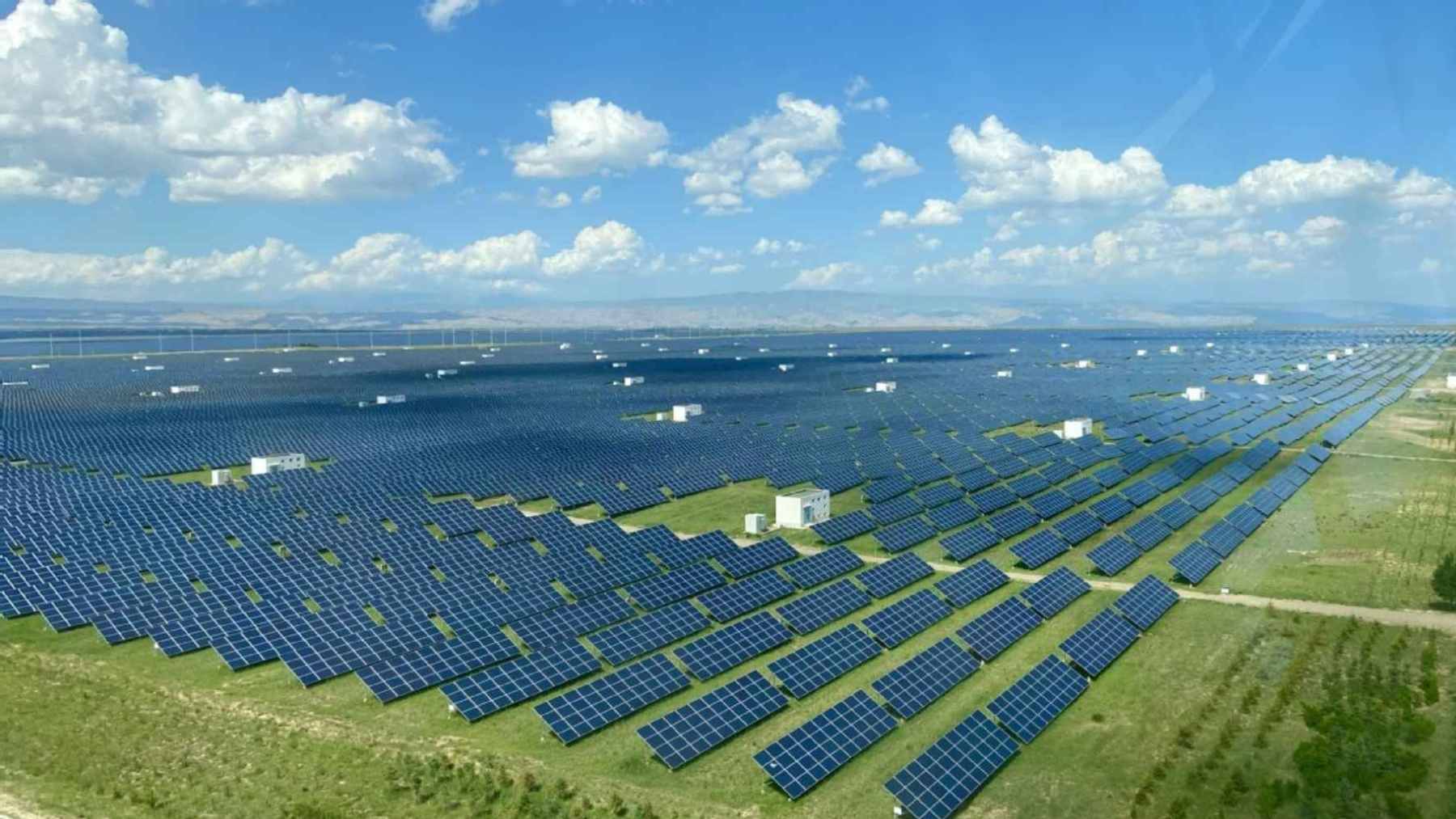
High on the Tibetan Plateau, a vast field of solar panels is not only feeding China’s power grid. According to new research, it is also gently reshaping a patch of desert into a slightly greener, cooler and more biologically active place.
The Talatan and Gonghe solar complex in Qinghai province is now one of the largest clusters of photovoltaic projects on Earth, with reports putting its total capacity in the range of about 16 to 17 gigawatts across multiple plants.
A core part of that complex, the 64 square kilometer Qinghai Gonghe Photovoltaic Park, has just been the focus of a detailed ecological study published in the Nature portfolio that looked at everything from soil chemistry and plant cover to microbes and local climate.
So what happens when millions of panels land on an alpine desert that was once hammered by sandstorms?
A desert solar farm that behaves like a tiny oasis
Scientists from several Chinese institutions used a framework called the Driving Pressure Status Impact Response model to compare conditions inside the solar park, in a transition zone around it and in nearby untreated land.
They built an index that combined 57 indicators including vegetation diversity, soil nutrients, air humidity and economic activity.
Their verdict was cautiously upbeat. Inside the operating area, the overall ecological score reached 0.439 on a scale where the study labels this as “general.”
Surrounding land scored around 0.28 and fell into the “poor” category. In practical terms, that means more plant species, richer bacterial and archaeal communities, higher soil moisture and slightly more humid air within the forest of panels than in the open desert beyond the fences.
For local residents, the changes are visible without any index. People who graze animals in Talatan recall that before construction began in 2012, the area was mostly bare and blasted by frequent sandstorms. Today, ground under the panels supports enough grass that herders now bring sheep into the park to keep vegetation from growing tall enough to shade the modules.
Officials report vegetation coverage around 15 percent, along with new jobs cleaning panels and guarding the site.
Why panels can wake up a desert
The mechanism is surprisingly simple. Photovoltaic panels intercept much of the intense plateau sunlight, so the soil beneath them does not heat up as much and loses less water through evaporation.
Sensors in the Gonghe park recorded higher soil moisture and finer soil particles inside the array than outside, both of which favor plant growth and carbon storage in the ground. Monthly washing of the panels adds extra water that seeps into the soil, further nudging the system toward life.
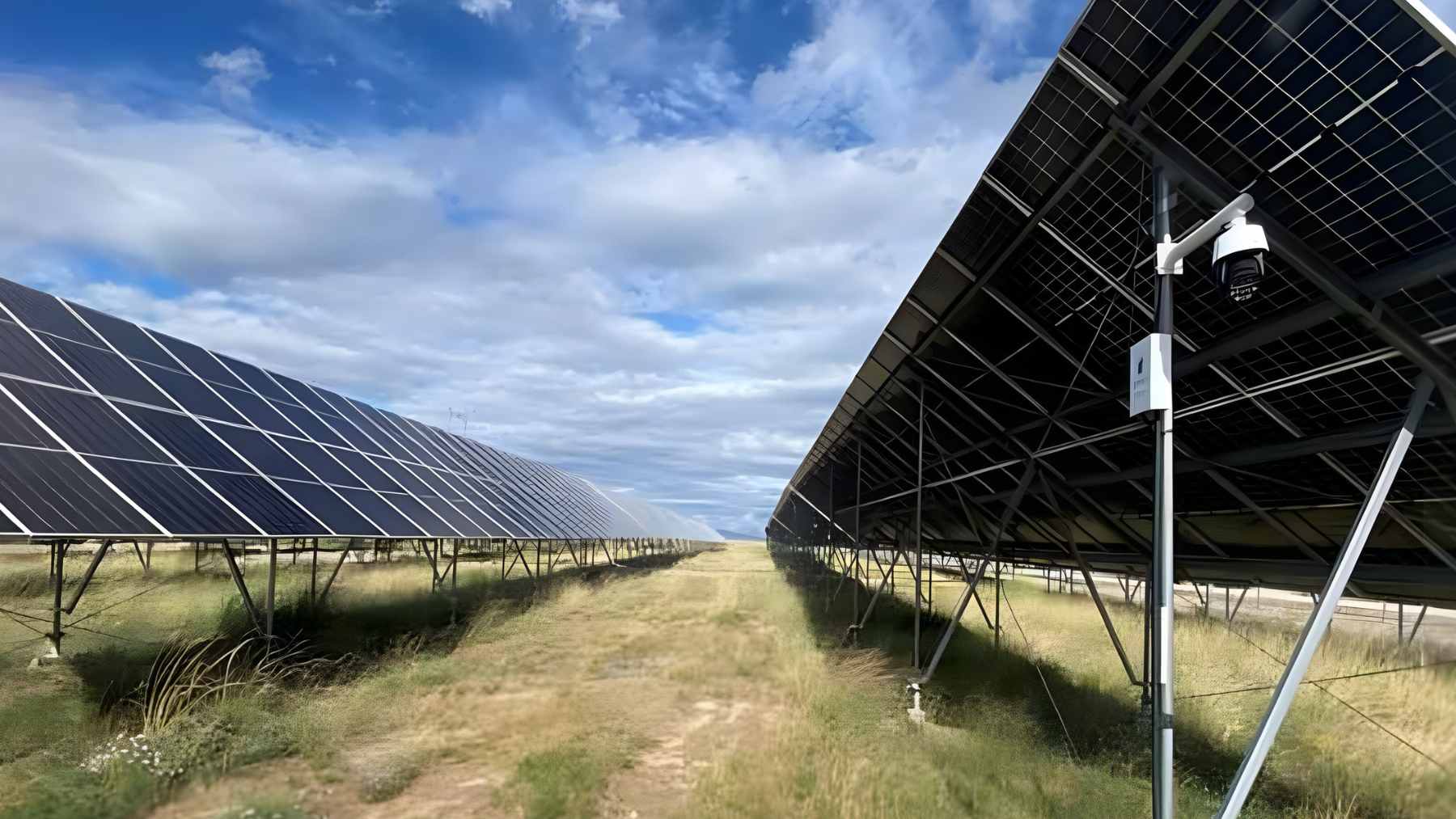
As plants and microbes respond, they trap more organic matter and nutrients. The Nature study reports higher values for above-ground biomass, available phosphorus and potassium, and soil carbon sequestration inside the park than in the control plots. Bacterial and archaeal diversity also tick upward, forming what is essentially a new community that has adapted to the patchy shade of panel rows.
For the climate, that matters. Soil is one of the largest carbon reservoirs on land. A modest boost in carbon stored in desert soils, multiplied across hundreds of square kilometers of solar parks, could help offset part of the emissions that panels are built to displace when they replace coal on the grid.
Not every solar field is an automatic eco win
It would be tempting to declare that giant solar farms always turn deserts into gardens. The broader evidence is more nuanced. A separate study on photovoltaic plants across the Qinghai Xizang Plateau found that about 56 percent of sites saw vegetation cover improve, while 44 percent actually lost vegetation cover compared with surrounding land. Soil moisture explained roughly 62 percent of that pattern, and more than half of the apparent restoration was linked to extra water used to wash the panels.
In other words, if managers cut back on cleaning water or if projects expand into even drier areas, the balance could shift. More plants mean more transpiration, so in very arid zones there is a risk that lush patches under panels could start to strain limited water resources.
Researchers warn that solar layouts and maintenance practices need to be designed carefully if countries want both clean power and healthy desert ecosystems.
What this means beyond Qinghai
For China, the stakes are high. Deserts cover about a quarter of its territory and desertification affects an estimated 400 million people, so any tool that can slow the advance of sand while producing cheap electricity and supporting local jobs will attract attention.
For the rest of the world, the Qinghai results hint at a future where some utility-scale solar parks behave less like industrial scars and more like controlled micro oases, provided water and land are managed with care.
Next time you glance at a rooftop array or think about your electric bill, it is worth remembering that the same technology, scaled up in the right places, might be quietly changing the feel of the wind and the color of the ground beneath it.
The study was published in Scientific Reports (Nature).