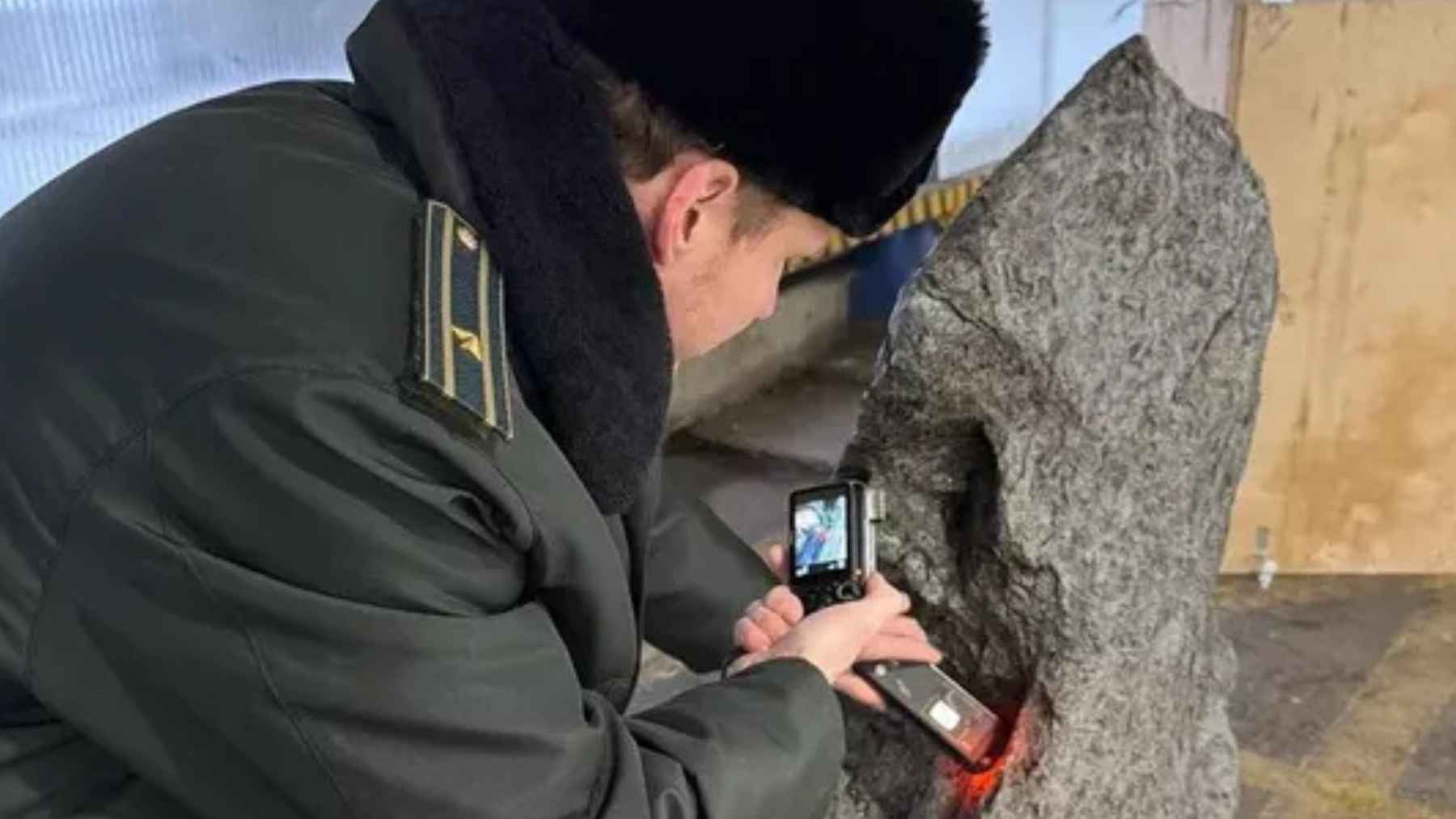
Customs officers in Russia say they stopped a 2.8 ton chunk of the Aletai meteorite from leaving the country after smugglers tried to ship it to the United Kingdom disguised as a simple garden ornament.
The rock, believed to be part of one of the largest iron meteorites ever found on Earth, was intercepted in a shipping container at the Baltic Sea port of Saint Petersburg on February 5, 2026.
Officials estimate the fragment could be worth around 323 million rubles, or roughly $4.2 million, because of its rarity and scientific value. Prosecutors have opened a criminal case, treating the shipment as an attempt to smuggle a strategic natural resource rather than a harmless piece of yard decor.
Customs officers spot a very unusual garden sculpture
According to the Federal Customs Service of Russia, the crate was declared as a garden sculpture bound for a buyer in Britain. During routine checks, inspectors noticed that the documents about the rock’s origin and value did not match what they saw on their scanners, which triggered a closer look.
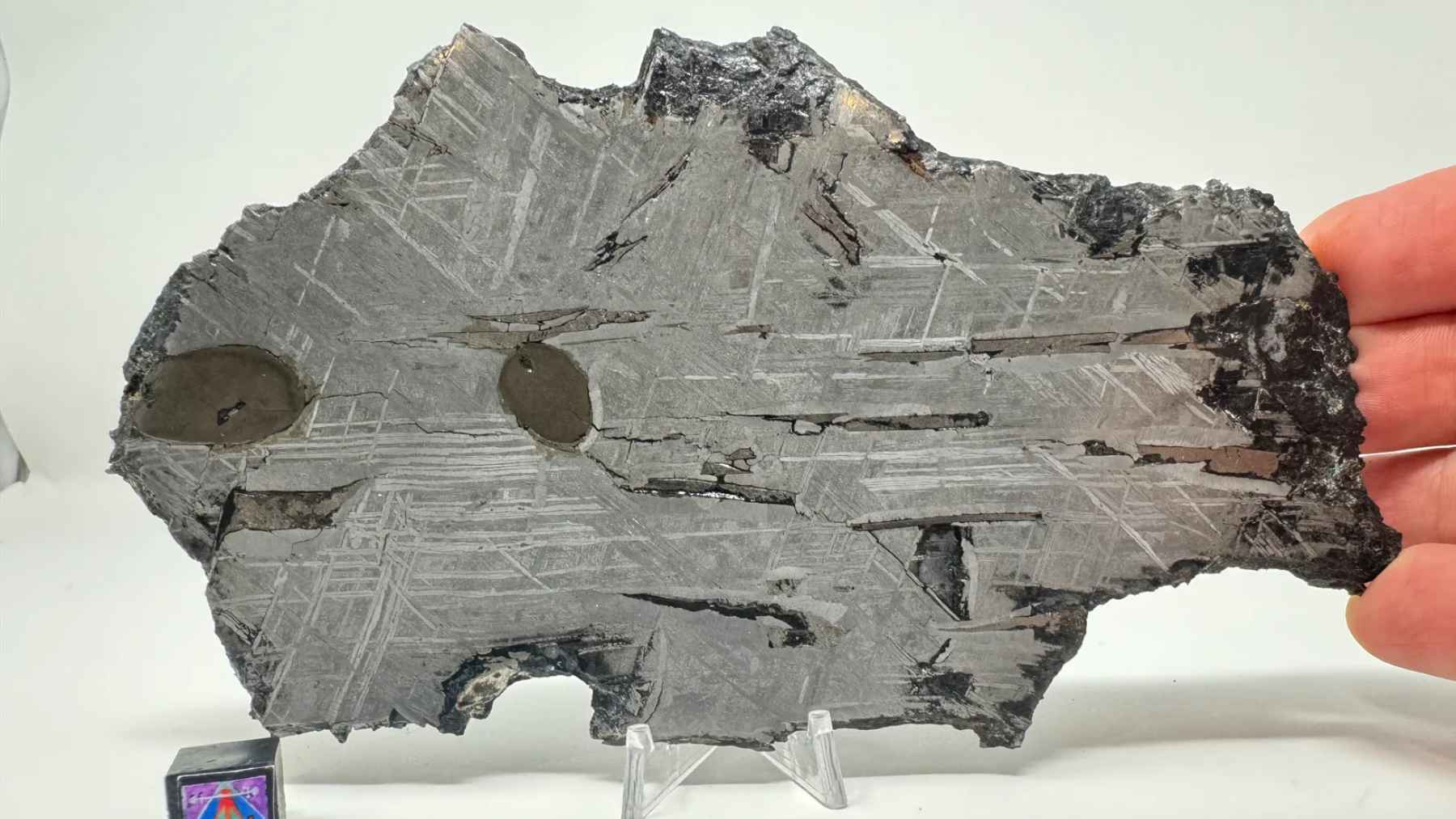
Video released by Russian media shows customs agents prying open a wooden box and revealing a large gray, jagged rock that looks more like a broken cliff than a sculpture. A later forensic examination confirmed it was a fragment of the Aletai meteorite, weighing about 2.8 metric tons.
Investigators have not named the people behind the shipment or the intended buyer, only stating that the cargo was headed for the United Kingdom. Because of its size, age, and price, the meteorite fragment is categorized as cargo of strategic and cultural importance under Russian law, which means attempts to export it without permission can carry criminal penalties.
What makes the Aletai meteorite so special
Meteorites are rocks from space that survive the fiery trip through Earth’s atmosphere and land on the ground. Aletai belongs to the iron meteorite group, made mostly of metal from the cores of ancient, shattered mini planets that formed very early in the history of the solar system.
The Aletai meteorite was first identified in what is now China’s Xinjiang region in 1898 and is believed to be at least four and a half billion years old, roughly the same age as the solar system itself. Scientists estimate that more than 70 metric tons of Aletai material have been recovered, making it one of the largest iron meteorites known on Earth.
For researchers, pieces like this act like time capsules. By studying the metal structure and tiny traces of other elements inside, they can learn how early planets formed, melted, and broke apart long before Earth had oceans, continents, or life. In practical terms, losing big fragments to private collections means fewer chances to probe that deep cosmic past in the lab.
From a Georgia rooftop to a Russian port
Experts point out that the age of the Aletai fragment is similar to a small meteorite that crashed through the roof of a house near Atlanta in the US state of Georgia in June 2025. That rock, later studied by scientists at the University of Georgia, was dated to about 4.56 billion years, slightly older than Earth itself, and was seen by many witnesses as a bright fireball in the daytime sky.
The Georgia case shows how cosmic material can suddenly drop into ordinary life, punching through a roof in one situation and quietly sitting in a shipping crate in another. In both cases, scientists see rare opportunities to learn more about how the solar system formed and how to track similar objects that might one day pose a risk to the planet.
The high price of space rocks and the ethics question
Because rare meteorites can fetch millions on the private market, scientists have long warned that a booming trade in space rocks may keep important samples out of public collections and research labs. The Aletai fragment, valued at more than four million dollars, highlights that tension between collectors’ demand and the wider scientific community’s need for open access.
Researchers argue that meteorites are not just luxury items or exotic garden pieces, even if they sometimes end up next to lawn chairs or stone fountains. They say each rock carries clues about the early solar system that could help us understand how planets like Earth came to be and how to protect our world from future impacts.
At the end of the day, the Saint Petersburg seizure shows how far some people may go to move rare space material across borders, and how carefully authorities now watch for such attempts. As the criminal investigation continues, scientists hope the seized fragment will stay available for study rather than vanish into a private yard far from any laboratory.
The official statement was published on the RIA Novosti Crimea.