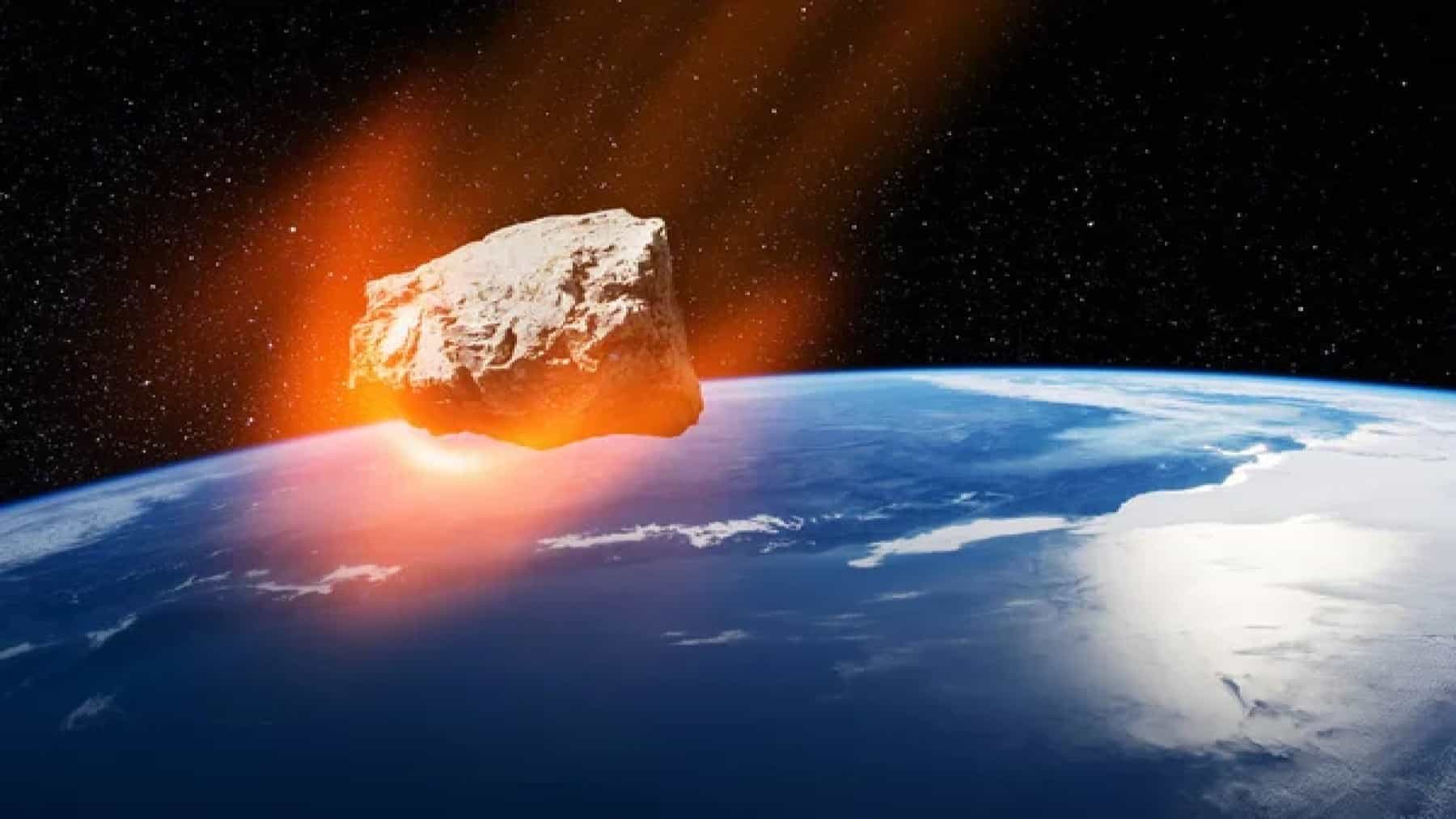
A new near-Earth asteroid, named 2024 YR4, has been detected by astronomers as it made a close approach to Earth recently. The asteroid, detected by a group of astronomers using sophisticated telescopes for sky-surveying, made a relatively close pass of Earth, so close that it raised interest and concern in the scientific community.
Astronomers discover new near-Earth asteroid 2024 YR4
Astronomers discovered 2024 YR4 in late December 2024 during a routine observation of the night sky. About 150 m wide, it is an Apollo group asteroid, a category of near-Earth asteroids that could hit our planet. Its composition is still being analyzed, but initial data indicate that the asteroid is a stony S-type asteroid consisting of predominantly silicate minerals and nickel-iron.
Because its surface reflects sunlight at a moderate range, it’s easier for optical telescopes to track. 2024 YR4 made its closest approach yet to Earth on January 3, 2025, passing by 1.2 million km, about three times the distance between Earth and the Moon. While that may sound far, in terms of the cosmos, it’s a close approach. NASA’s Center for Near-Earth Object Studies (CNEOS) kept close track of the asteroid’s trajectory with radar and optical observations.
Their calculations showed that 2024 YR4 did not present an immediate danger to Earth when it made this approach, but it needs to be tracked (like this Empire State Building-sized asteroid) regularly to refine its orbit to be able to predict future close approaches of this asteroid.
Tracking 2024 YR4 is important for future planetary defense
Due to its size as well as trajectory, 2024 YR4 was classified by astronomers as a Potentially Hazardous Asteroid (PHA), a term reserved for objects that could pose a threat to Earth in the future should its orbits change. Although 2024 YR4 did not pose a threat to Earth, its classification as a PHA demonstrates the importance of continued monitoring. Its orbit may be nudged by small gravitation interactions with planets or other bodies, which would cause it to oscillate, potentially bringing it closer in the future.
Although the asteroid 2024 YR4 would not have hit us, planetary defense specialists highlight the importance of tracking its path to know where it is going and when to predict any impact. NASA, ESA, and other space agencies have already invested in early detection programs such as the Near-Earth Object Wide-field Infrared Survey Explorer (NEOWISE) and the planned Near-Earth Object Surveyor mission.
The discovery and tracking of asteroid 2024 YR4 emphasizes the capabilities of advancing asteroid detection technology and the ongoing importance of such preparation strategies. Scientists are already working on impact mitigation methods, such as kinetic impactors, spacecraft intended to change an asteroid’s trajectory upon impact, and gravity tractors, which nudge an asteroid into a safer orbit by taking advantage of a spacecraft’s gravitational force.
Space agencies are also conducting missions to study and deflect asteroids. NASA’s Double Asteroid Redirection Test (DART) mission in 2022 successfully altered the orbit of an asteroid called Dimorphos, demonstrating that planetary defense techniques were becoming more achievable.
More than planetary defense: The untapped potential of near-Earth asteroids
Asteroids like 2024 YR4 attract public interest due to the possibility of impacts on Earth, and the knowledge they can give us about the early solar system. These objects are remnants from the planet-building process and they can be informative about the composition as well as history of our solar system.
Moreover, observation of near-Earth asteroids may also bring additional benefits apart from just planetary defense. These asteroids are rich in precious metals, water, as well as other resources that scientists contend could sustain industries and exploration throughout the solar system.
Asteroid 2024 YR4’s near pass is a reminder that our solar system is a dynamic place. While there was no imminent threat, the close approach highlighted the importance of ongoing tracking and enhancements to planetary defense, as a safeguard against potential future threats to Earth (just like this asteroid approaching at 30 000 km/h).