Anyone who has watched a phone die in the middle of a camping trip knows how quickly a fun weekend can turn stressful.
A new portable wind turbine called Shine 2.0 promises to keep small devices powered using nothing more than a modest breeze. Right now supporters are backing the water-bottle-sized gadget through an online crowdfunding campaign that targets both travelers and people who want emergency power at home.
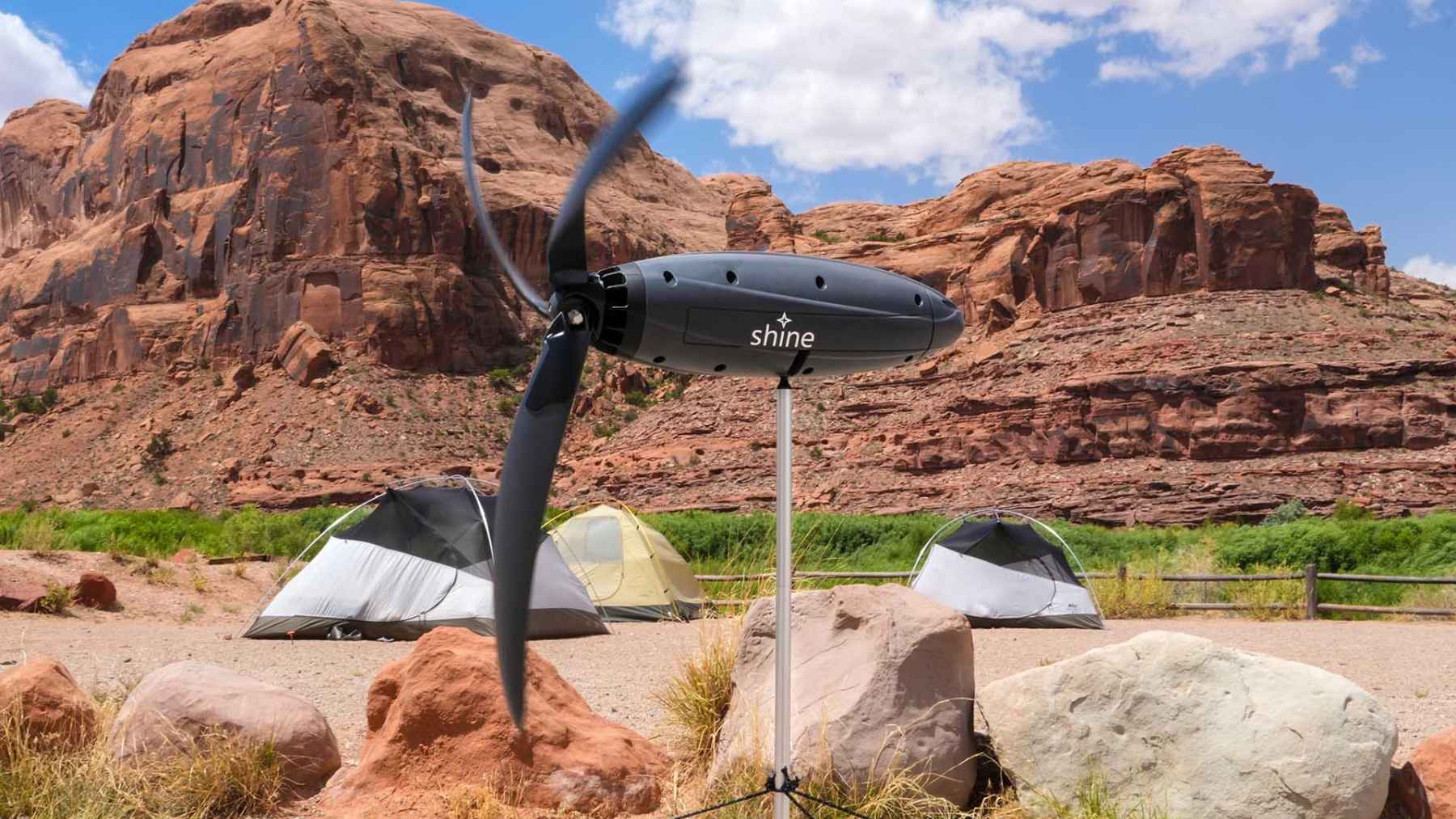
Canadian startup Aurea Technologies has designed Shine 2.0 as a 50 watt mini turbine with a built-in battery that can fit in a backpack and recharge phones, laptops, drones, and even small power stations when the wind cooperates.
Supporters and reviewers describe it as delivering a lot of power for its size compared with other portable renewable options. At the same time, the product still faces the familiar challenge of wind-based systems, since real world performance depends strongly on where and how often the breeze shows up.
How the tiny turbine turns wind into power
Shine 2.0 weighs about three pounds and packs down to roughly the size and shape of a reusable water bottle, with blades that fold out when it is deployed.
Once set on its included three-foot ground mount, the turbine spins up in wind speeds from about eight to twenty eight miles per hour. Inside, a small generator feeds both connected devices and an internal 12,000 milliamp hour battery that can be charged in advance at home or topped up in the field.
A built-in charge controller uses a technique known as maximum power point tracking, which constantly adjusts settings so the blades keep spinning efficiently when gusts or lulls hit.
The company says the turbine can reach up to fifty watts of output in strong winds and then deliver that energy through a fast-charging USB C port rated at 75 watts. That port also works in the other direction by letting users quickly refill the internal battery from a wall outlet before heading off grid.
An accompanying mobile app connects over Bluetooth and shows wind speed, power production, and battery status in real time on a phone screen. It may sound like a lot of tech for a camp site, but it helps users decide where to place the turbine or when to raise it higher on an optional six-foot pole.
Shine spokesperson Vanessa Ferguson told outdoor site GearJunkie that “Shine has one of the highest power to weight ratios of any comparable portable renewable energy product on the market,” especially in coastal, mountainous, and open landscapes where winds are more consistent.
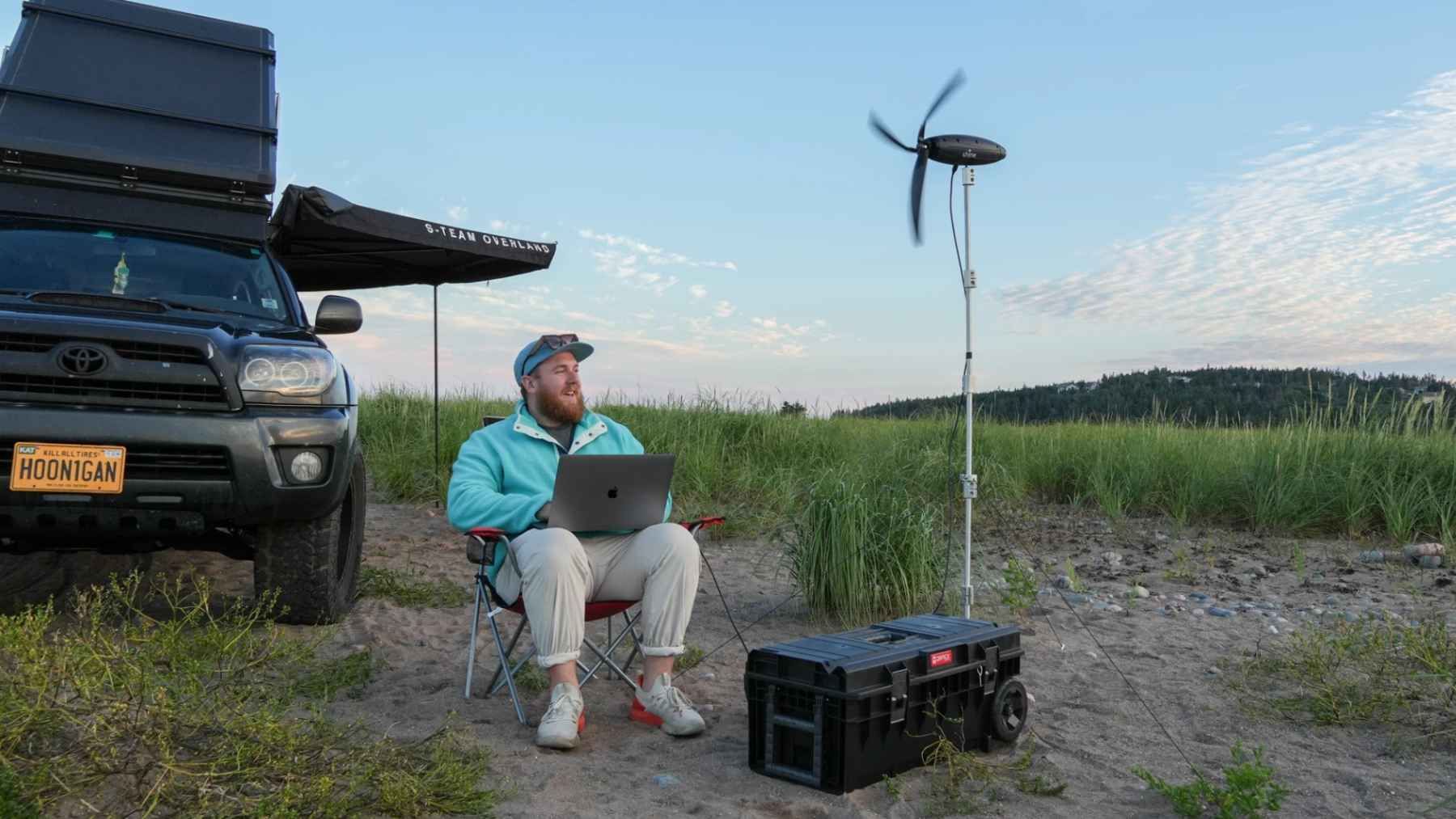
A portable wind turbine powers electronics during an off grid camping trip, generating electricity from a light breeze.
From first crowdfunding success to a new version
Shine 2.0 is not appearing out of nowhere. The original Shine 1.0 turbine was funded in 2021 through a campaign on crowdfunding platform Kickstarter, and about 2,300 customers in the United States, Canada, and Europe received that first version. Feedback from those early adopters shaped many of the upgrades now built into the second generation device.
Compared with the earlier 40 watt model that used a slower USB A port, Shine 2.0 bumps generator output to 50 watts and adds much faster USB C charging for modern phones and laptops.
The turbine can now send power to larger portable power stations through a dedicated adapter, which effectively lets the wind unit play the same role as a compact solar panel in many camping setups. That change is especially appealing for van dwellers and digital nomads who already rely on battery stations as their main outlet when they park for the night.
The latest model is being offered through a campaign on crowdfunding platform Indiegogo with an early-bird price of about $400, compared with a planned retail price around $571 dollars.
Coverage of the campaign reports that it has attracted nearly 1,500 backers and raised more than $772,000, a sizable figure for a niche energy gadget. Shipping to initial supporters was scheduled to begin around April 2025, although as with any crowdfunded product timelines can shift.
Who actually benefits from portable wind power?
Portable wind turbines have been around for years, from do-it-yourself projects shared online to inexpensive low-power models sold on marketplace sites.
Many campers came to see them as finicky or easy to break compared with simply unfolding a solar panel in a sunny spot. That reputation is one reason the Shine team describes its new turbine as small, light, and durable enough to give wind power another chance for off-grid users.
In practice, Shine 2.0 will make the most sense for people who regularly spend time in coastal areas, wide-open plains, or mountain ridges where the wind stays steady.
The turbine can generate at least a trickle charge in light breezes around thirteen kilometers per hour and then ramp up toward its peak output in stronger winds, according to technical documentation and independent coverage.
Reports from outlets such as The Verge and New Atlas also emphasize that it remains a complement to solar rather than a full replacement in places where gusts are weak or inconsistent.
The company says the device is aimed at overlanders, car campers, van lifers, surfers, field researchers, cottage owners, and anyone who wants backup power during outages at home.
For people in those groups, the ability to precharge the 12,000 milliamp hour battery from a wall socket before a trip means Shine 2.0 can double as a regular power bank on calm days. In other words, even if the wind dies down during a storm or a quiet night at camp, users still have at least a few phone charges stored away.
What comes after this pocket size turbine?
Shine’s creators are already talking about the next step. In comments to GearJunkie, spokesperson Vanessa Ferguson said the planned Shine 3.0 system is expected to be larger and more powerful, with a rated output around 100 watts and up to 200 watts available from its internal battery for bigger devices and vehicle charging.
The team also plans more mounting options, including systems that attach to parked vehicles in camp so users do not have to stake the turbine in the ground each time.
For the most part, these plans underline how portable wind power is slowly maturing into a small but useful niche within the wider clean energy market. Real-world performance will still depend on local weather and careful setup, and like any crowdfunded product there is always some risk that timelines slip or early units need tweaks.
Yet for people who are tired of watching the battery icon shrink during a blackout or on a long road trip, a pocket size turbine that hums quietly in the breeze could become one more tool to keep the lights on.
The main product information and campaign details have been published on the official Shine 2.0 page on crowdfunding platform Indiegogo.