Imagine a future where renewable energy is not confined to large wind turbines or solar panels. Groundbreaking research led by Dr. Duc H. Nguyen at the University of Bristol has made this vision a reality. With a newly awarded £375,000 grant from the Engineering and Physical Sciences Research Council (EPSRC), Dr. Nguyen wants to improve Airborne Wind Energy Systems (AWES) and push them toward commercialization.
Transforming wind power: How renewable energy is being altered by drones
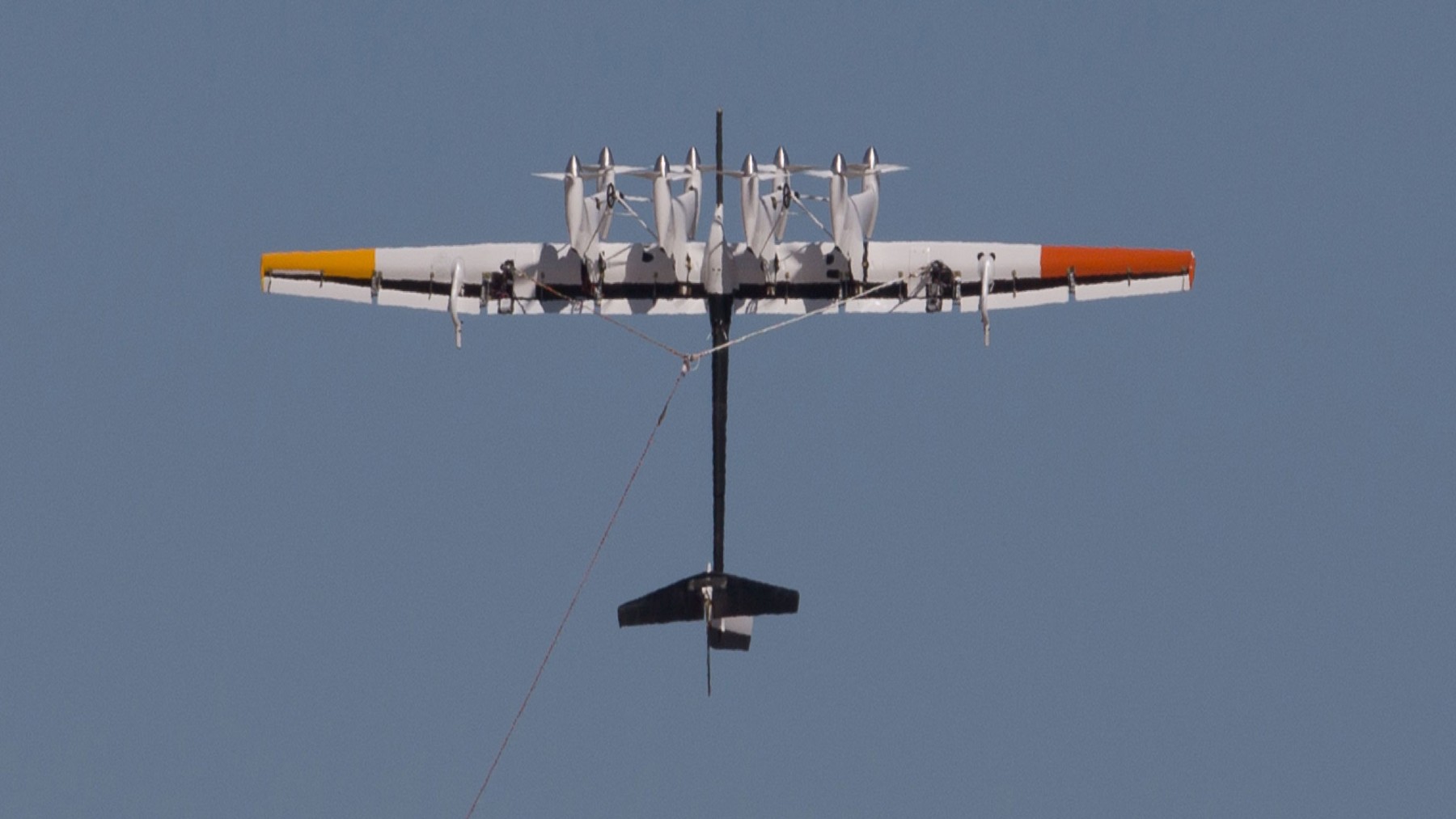
AWES, which stands for Airborne Wind Energy Systems, has an edge over conventional wind turbines as they are off the ground, utilizing drones tied to ground stations to harness wind power at higher elevations where gusts of wind are both stronger and steadier. When the wind yanks the drone from the ground station, it spins a generator, generating electricity. This system has multiple benefits such as:
- Increased Energy Yields: AWES function at higher altitudes than traditional turbines, capitalizing on stronger and steadier wind currents.
- Increased Flexibility: These systems can be sited offshore, onshore, or in remote locations with minimal infrastructure needs.
- Reduced Carbon Footprint: AWES suppress their reliance on massive wind factories, meaning less carbon emissions in the UK along with less land use, towards the net-zero target.
AWES is an emerging technology, despite its enormous potential. Many prototypes were hastily launched into testing without adequate knowledge of their flight dynamics, often leading to operational failures of the programs and their shutdowns. Using advanced numerical methods to predict and mitigate flight instability, Dr. Nguyen’s project addresses this problem.
Preventing crash landing with bifurcation and continuation approaches
Aerodynamic forces will have to be balanced carefully when increasing the scale of AWES to be commercially viable, whilst preserving stability. Even a small miscalculation could send the drone (like this drone that is bringing the crops of the future to life) off course and into the ground.
That’s where Dr. Nguyen’s high-flying expertise comes into play. His research focuses on deploying bifurcation and continuation approaches, which are mathematical methods widely applied in aircraft dynamics to predict instabilities before they manifest.
They have been shown to work when predicting unsafe modes of behavior, like pilot-induced oscillations, and aerodynamic flutter. Dr. Nguyen explains: “AWES can achieve a trans-formative cost advantage by replacing established methodologies with bifurcation methods so that the technology can ultimately transition to full-scale commercialization due to cost and performance improvements.” These advancements could make AWES even more efficient, safe, and cost-effective, leading to widespread acceptance.
From vision to reality: The worldwide effort behind the AWES innovation
This ambitious project is only possible because Dr. Nguyen is working with the right people in the field, like Norwegian startup Kitemill and the University Carlos III of Madrid. Reflecting upon the potential of AWES, Kitemill’s CEO Thomas Hårklau once stated: “AWES technology has the potential to be a flagship in the energy industry due to its superb material efficiency, leading to higher energy yields.”
This partnership aims to solve current challenges through the optimization of drone designs, energy conversion efficiency, and the smooth introduction of AWES into the energy market. AWES is being supported by industries worldwide and further research is being carried out to make it a reliable alternative to traditional renewable energy sources.
The use of drones to harvest energy from the wind (just like this beehive that produces wind energy) may sound like a science fiction idea, but it is slowly becoming a reality. With ongoing research and development, these airborne energy systems may soon be available for personal and commercial use. Dr Nguyen’s unique research is a major move towards AWES being vital to the UK’s energy solution. As this technology continues to develop, it may change the way we think about renewable energy.