Innovations in wind energy are constantly being updated, looking for new formats that can coexist in urban spaces. It would be unthinkable to implement a wind tower in the backyard of our house to self-generate electricity. However, a Scottish startup has created a wind turbine in the shape of a honeycomb capable of producing up to 10 KV.
What does the honeycomb that produces 10KV of wind energy look like?
The need to generate energy for self-consumption has promoted this brilliant idea that replaces the three-bladed giants we see inside large plots of land to introduce a smaller, but no less powerful model that can be installed on rooftops and small spaces.
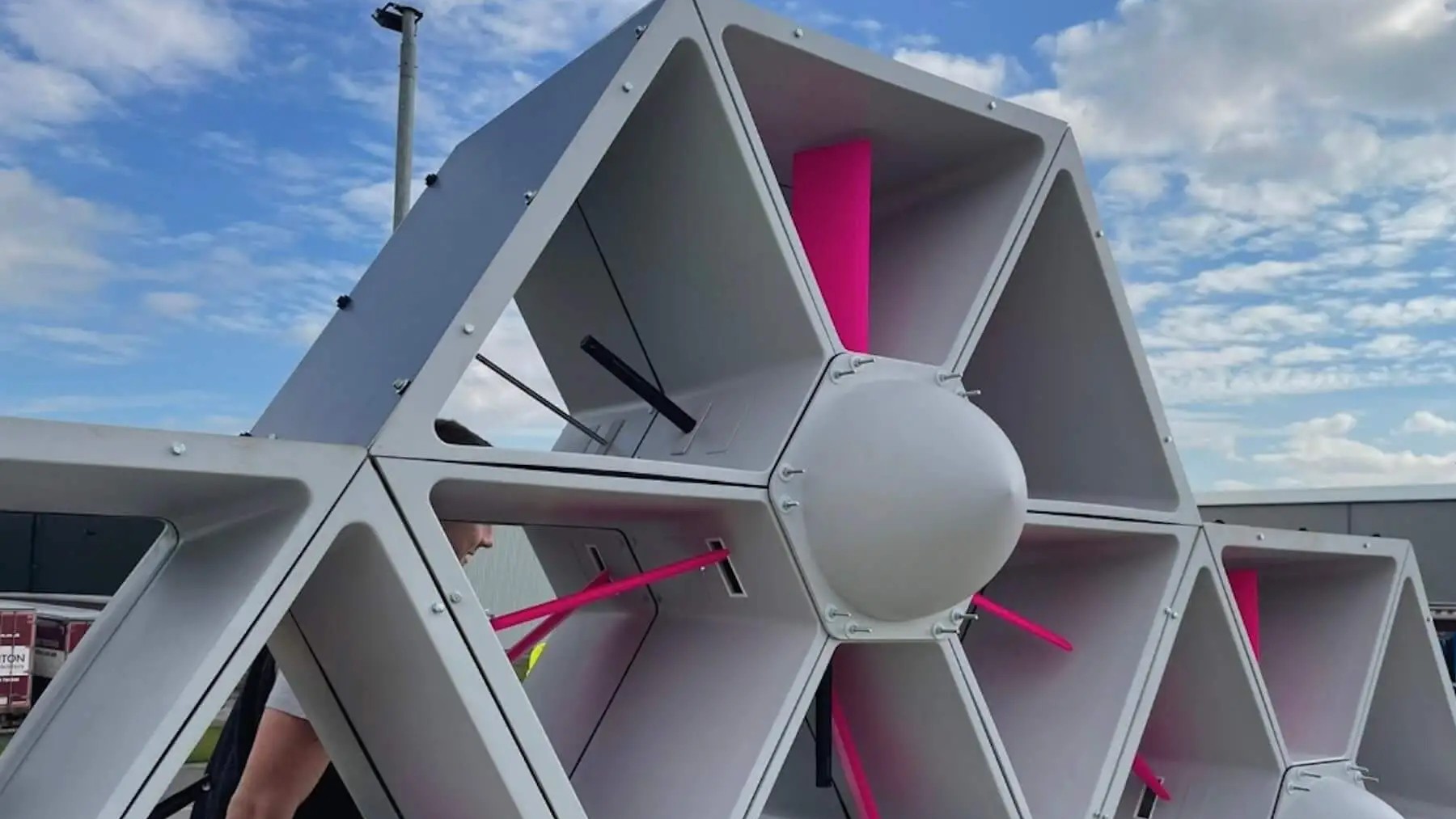
The new modular honeycomb turbine created by Katrick Technologies replaces the large wings of windmills with small blades made up of compact hexagonal-shaped structures that capture wind energy at lower ground levels.
Each module is stacked one on top of the other according to the amount of energy needed and the space where it is installed, although each one works independently, collecting the wind energy in pockets through a particular form of capture.
The results of the first tests indicate that each kilometer of wind panels can supply energy to 760 homes each year or charge 80,000 cars with 90 KW Tesla batteries.
How do wind panels work? Goodbye to solar panels with this new invention for home
The aerodynamic structure of wind energy panels allows them to capture different wind speeds and frequencies at lower installation levels, something that conventional towers cannot do.
Its particular format allows channeling wind energy through aerodynamic profiles similar to fish fins that convert kinetic energy into mechanical oscillations. The change from blades to fins means greater capacity to capture weak breezes and strong gusts.
The air entering the six cavities exerts a force that moves the pairs of fins in each compartment, accelerating the wind speed by 1.5 times, generating greater pressure and wind energy capture density.
Benefits of wind panels: new type of energy at home to get almost free electricity
One of the greatest advantages of this wind energy generation system is the flexibility given by its size and scalable structure, which allows it to be installed on rooftops, on the side of the road and adapted to urban spaces.
On the other hand, it reduces the installation and maintenance costs of large towers, offering the possibility of self-generation of electricity to homes and businesses independently.
It allows to reduce more than 5.5 tons of carbon per year, making it a very good domestic option for wind energy generation and is compatible with the protection of the biodiversity of aerial fauna, since its design prevents the spontaneous capture of birds.
The honeycomb design had already been presented at the 2010 Yokohama International Renewable Energy Exhibition in Yokohama by Professor Yuji Ohya of Kyushu University, through a set of hoops placed on floating structures in the middle of the sea.
Each hoop measured 112 meters in diameter and could increase wind power through a turbine that rotated with the passage of offshore winds. On a smaller scale, Katrick Technologies’ wind panels can be applied in urban spaces with a more aesthetic approach.
During the latest efficiency tests conducted at the University of Strathclydeh, the wind panels have achieved an average efficiency of 6.85%, which augurs well for an early mass production and subsequent market launch. Wind energy will now be within everyone’s reach.