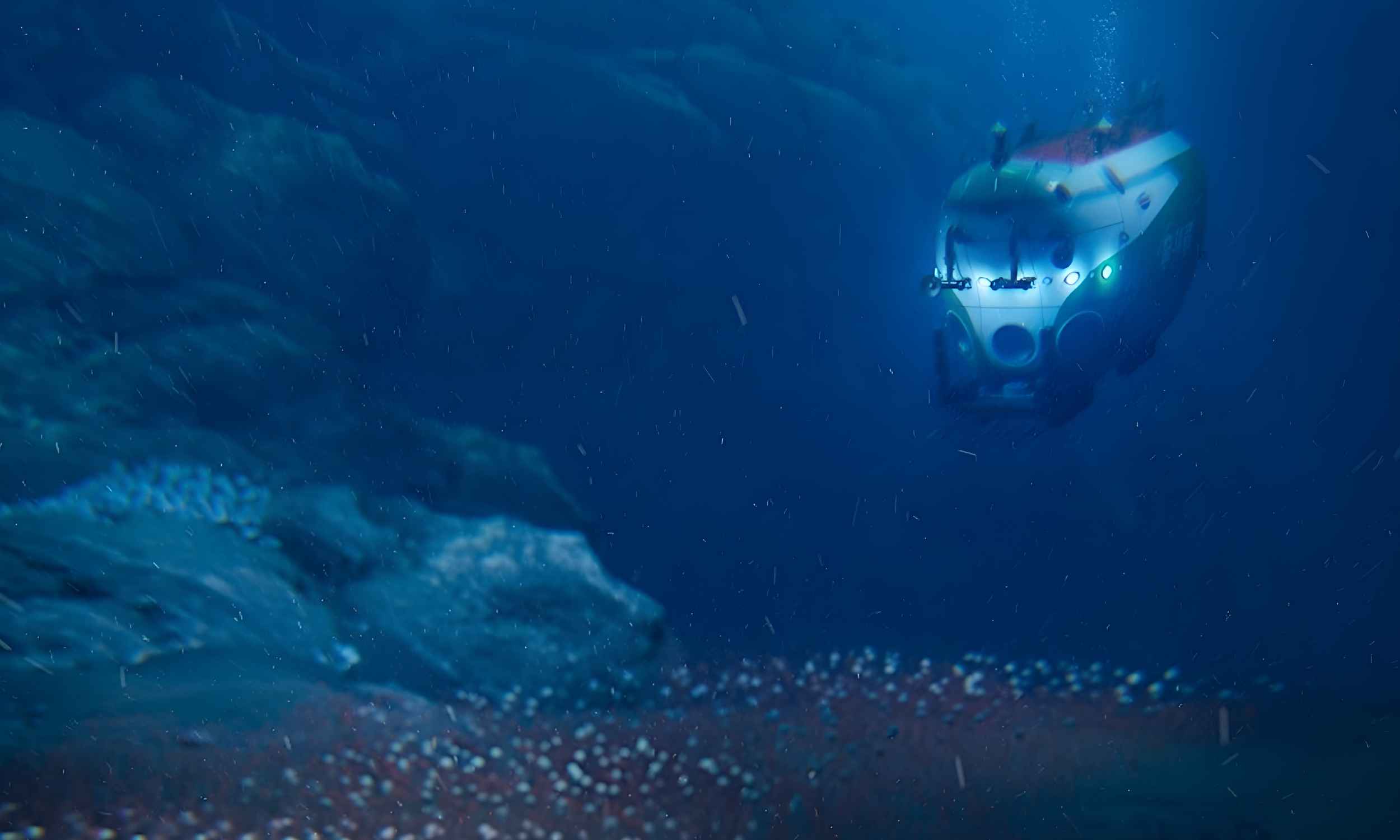
A last-minute detour nearly six miles down has led scientists to what they call the deepest known ecosystem on Earth, a long stretch of seafloor communities that don’t depend on sunlight at all. Instead, clams and tube worms appear to survive on chemical energy from methane and other gases leaking out of cracks in the ocean floor.
The discovery, described in a new Nature study, comes from dives in two remote trenches in the northwest Pacific, including areas between Russia and Alaska. It also adds a fresh twist to a big question in ocean science: how far down can life really go, and what keeps it going when there’s no light, little food, and crushing pressure?
A “one-more-look” moment in the hadal zone
The hadal zone is the deepest part of the ocean, starting around 6,000 meters down and running to the bottom of the deepest trenches. Think of it as Earth’s underwater canyons, where pressure is so extreme that ordinary submarines cannot go.
During a 2024 expedition that ran from July 8 to August 17, researchers used the deep-diving submersible Fendouzhe to explore the Kuril-Kamchatka Trench and the western Aleutian Trench. Geochemist Mengran Du, working with Xiaotong Peng, reported seeing dense groups of animals at depths from about 5,800 to 9,533 meters, spanning roughly 2,500 kilometers.
How methane replaces sunlight
Most life on Earth ultimately runs on sunlight, because plants and algae use it to make food. In these trenches, there’s no light at all, so the system runs on chemosynthesis, which is basically “making food from chemicals” instead of from sunlight.
Here’s the simple version. Cold seeps are cracks in the seafloor that leak chemicals like methane and hydrogen sulfide, and NOAA’s cold seep overview explains how bacteria can use those chemicals for energy. Some of these bacteria live inside animals like clams and tube worms, feeding their hosts in a kind of built-in food factory.
A new clue about carbon cycling in the deepest ocean
What surprised the team wasn’t just the animals, but the chemistry under them. The researchers reported unusually high methane in trench sediments, and they suggest microbes may be producing methane locally by processing buried organic material and recycling carbon on site.
In practical terms, that means the trenches may act less like a dead-end storage pit and more like a “recycling center” for carbon in the deep ocean.
That matters because methane and carbon dioxide are powerful greenhouse gases in the atmosphere, and understanding where carbon ends up, and how long it stays there, helps scientists build better climate and ocean models.
Why this matters beyond the trenches
Experts who were not part of the work say the size and depth of the communities stand out. Johanna Weston of Woods Hole Oceanographic Institution has pointed out that deep trenches are remote, but they’re still connected to the surface, including through food pulses and pollution that sinks.
That connection keeps showing up in other research. Weston’s team recently described a deep-sea scavenger that feeds on sinking seaweed in the Atlantic in a Woods Hole press release, and earlier work linked trench life to plastic pollution through an Eurythenes plasticus report.
Meanwhile, methane-based partnerships aren’t limited to trenches, as shown by a methane-powered sea spiders study that found deep-sea spiders hosting methane-eating microbes on their bodies.
What comes next for exploring the deepest ocean
The big takeaway is that these chemical-powered communities may be more widespread than scientists once thought. If similar cold seep conditions exist in other trenches, there may be more “dark ecosystems” waiting, and some species may be new to science.
That’s one reason international efforts are ramping up, including the Global Hadal Exploration Programme, which aims to coordinate deep-ocean research across countries and disciplines. It fits a broader surge in species discovery, highlighted by the Ocean Census announcement that reported hundreds of newly documented marine species.
The main study has been published in Nature.