Scientists finally drilled more than a kilometer into Earth’s mantle under the Atlantic Ocean and the rocks they pulled up tell a story about life, climate, and even future energy that starts far below the waves.
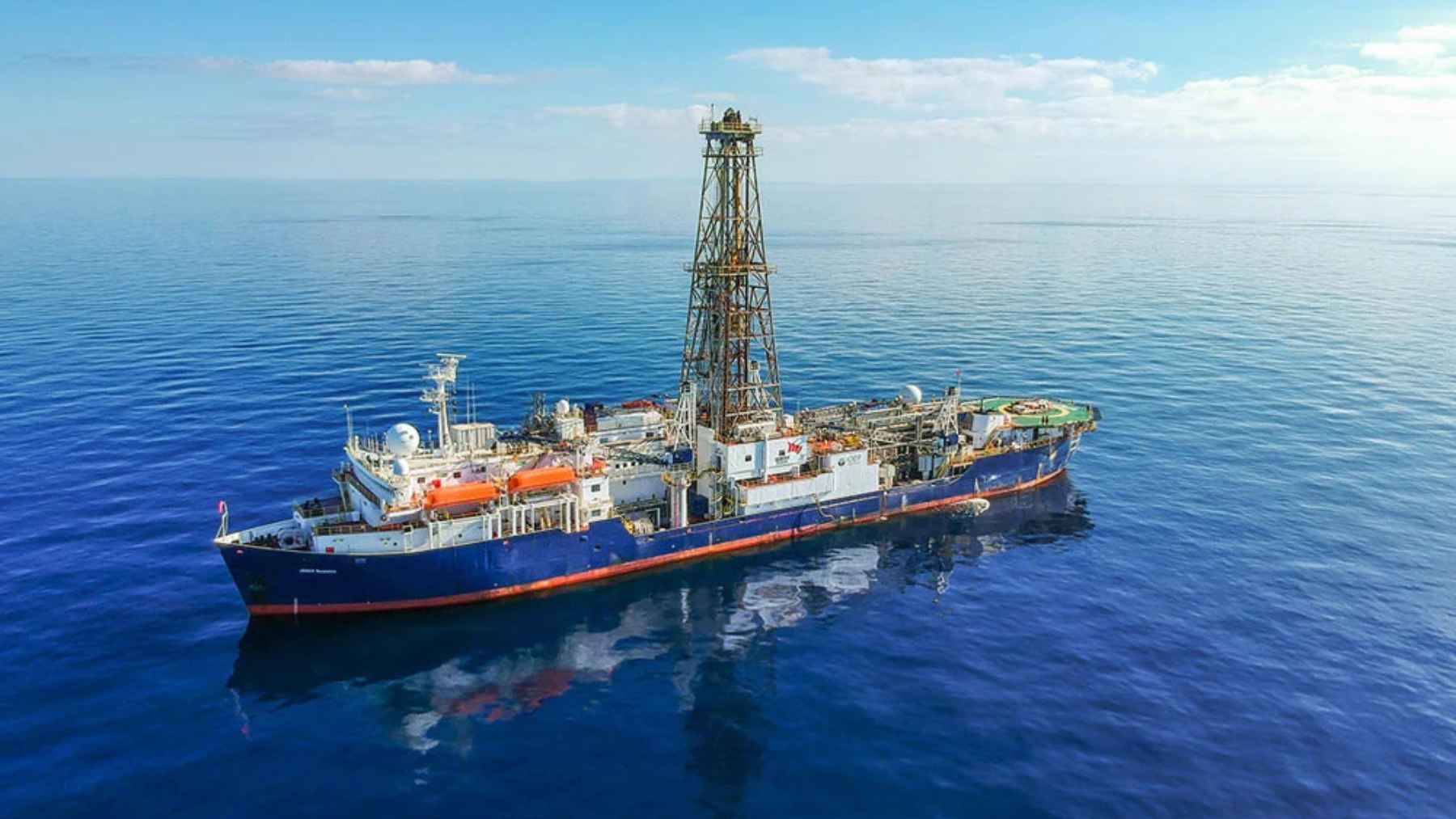
Working from the research vessel JOIDES Resolution, an international team recovered a continuous 1,268-meter-long core of mantle rock from beneath the seafloor at the Atlantis Massif, near the Mid Atlantic Ridge. It is the deepest section of upper mantle ever sampled directly, and the first that lets scientists see how this hidden layer changes with depth instead of guessing from scattered rock fragments.
Why the mantle matters for life on the surface
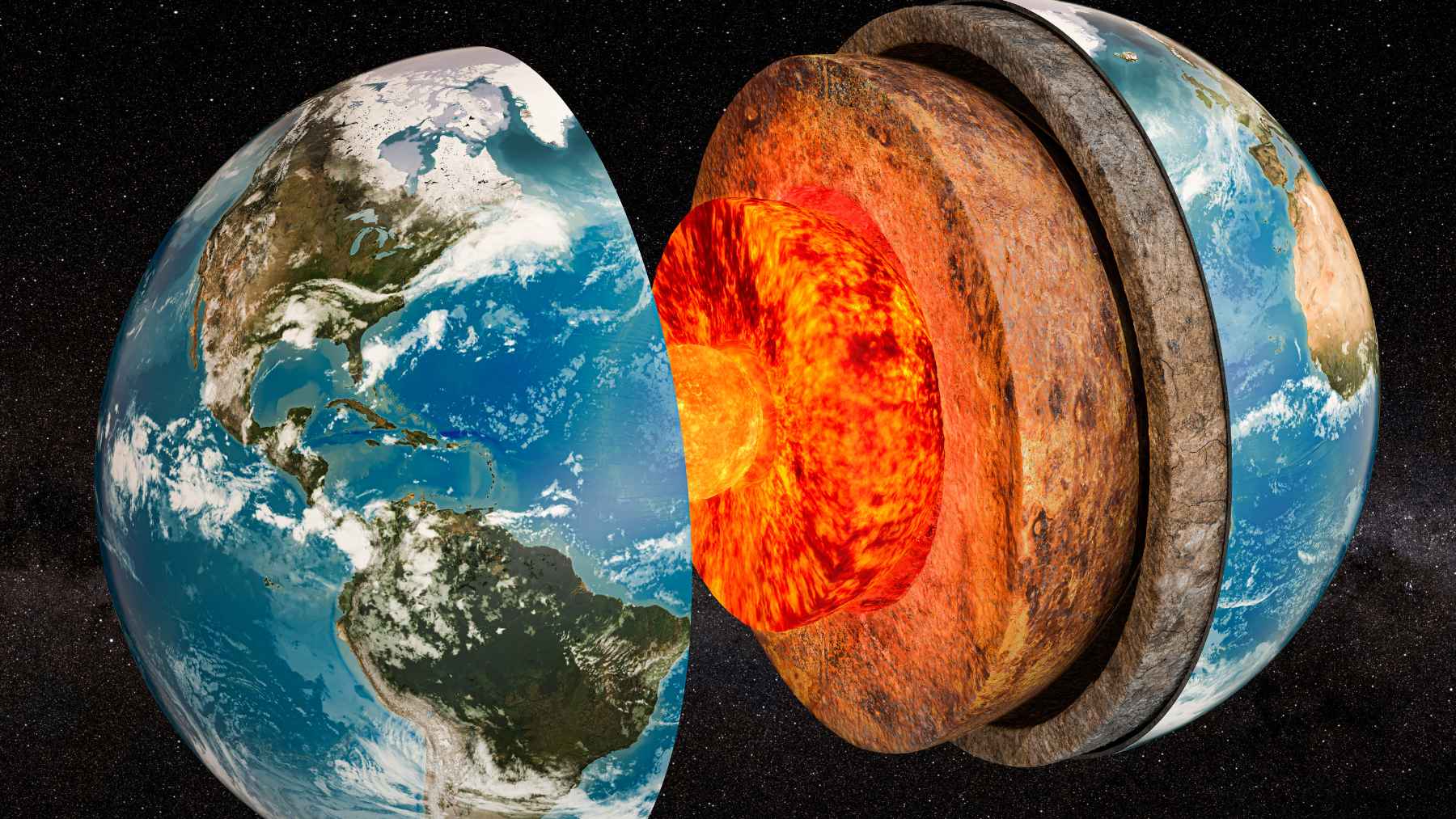
Most of us only think about the mantle when an earthquake rattles dishes or a volcano makes the news. Yet this layer of hot rock, sandwiched between crust and core, holds roughly two thirds of Earth’s mass and more than 80% of its volume.
For decades, mantle composition had to be inferred from ophiolites (ancient mantle slabs pushed up on land), bits of rock brought up in magmas, or dredged from fracture zones. Those samples are valuable but disconnected.
Earlier attempts to drill into oceanic mantle barely passed 200 meters below the seafloor and recovered less than half of the rock they cut, which made it hard to reconstruct the bigger picture.
The new core from Site U1601 changes that. It shows a long, mostly intact section of serpentinized peridotite (the dominant rock of the upper mantle) interlayered with thinner gabbro intrusions.
The rocks are highly “depleted,” meaning they have already lost many meltable elements to magmas that built new ocean crust above. Their mineral makeup varies strongly over centimeters to hundreds of meters, which tells researchers that melts did not rise straight up but migrated along oblique pathways toward the ridge axis.
In practical terms, this is like swapping a handful of puzzle pieces for a nearly complete column that runs from the mantle melting zone right up into the base of the oceanic crust.
Rocks that make hydrogen and feed deep sea ecosystems
One of the most striking findings is how thoroughly seawater has reacted with these mantle rocks. Across most of the core, original olivine and pyroxene crystals have been transformed into serpentine minerals, magnetite, and related phases. That transformation, known as serpentinization, splits water molecules and releases molecular hydrogen.
That hydrogen is not just a chemical curiosity. At the nearby Lost City hydrothermal field, less than a kilometer from the drill site, warm alkaline fluids rich in hydrogen, methane, and small organic molecules vent out of tall white carbonate chimneys and support dense microbial communities in the dark.
Lost City has long been viewed as a modern analog for the kind of environment where life might have started on early Earth and perhaps on ocean worlds like Europa or Enceladus. The new core shows that the full depth of mantle beneath this field is heavily serpentinized and cut by multiple generations of veins.
That pattern strongly supports the idea that “rock powered” ecosystems can draw on a persistent supply of hydrogen and carbon-bearing fluids generated as seawater slowly reacts with ultramafic rocks.
If seawater can keep percolating through such rocks for hundreds of thousands of years, then so can the energy source that sustains these unusual ecosystems.
Clues for carbon cycles and future energy
The core also reveals abundant carbonate veins threading through the serpentinized peridotite and the gabbro bodies, especially where the two rock types meet. Those veins record carbon dioxide that has been locked away in solid minerals rather than left in seawater or the atmosphere.
Laboratory and field studies suggest that similar reactions in ultramafic rocks can both generate hydrogen and trap CO₂, which is why peridotite-rich regions are being studied as natural models for long-term carbon storage.
At the same time, geologists are looking at hydrogen from serpentinization as a possible clean energy source. Natural “gold hydrogen” accumulations have been documented in several settings, and reviews of geologic hydrogen systems point to serpentinized ultramafic rocks as one of the main generators.
Will this particular mantle core lead directly to new hydrogen wells or carbon storage projects? Not by itself. But it does give researchers a rare, ground truth picture of how water, rock, and heat interact in a real natural system that has been producing hydrogen, methane, and carbonates for a very long time.
That kind of understanding is essential before anyone can safely scale up similar reactions for climate solutions or energy production.
A unique core from a ship that has already retired
There is another twist. The record breaking hole at Atlantis Massif was drilled in 2023 during International Ocean Discovery Program Expedition 399, near the end of JOIDES Resolution’s long career. In 2024 the US National Science Foundation confirmed that funding for the aging drillship would not be renewed and the vessel has now ended operations, with no direct replacement yet in the water.
So this mantle core is not just a scientific milestone. It is also a snapshot from the final years of a ship that helped build much of what we know about plate tectonics, past climate, and deep biospheres.
For the foreseeable future, researchers will be squeezing every possible clue out of these 1,268 meters of rock, from the tiny magnetic grains that record hydrogen production to the carbonate veins that track CO₂ moving into solid form.
In a world worried about warming oceans, rising seas, and the hunt for cleaner energy, it is easy to forget that many of the answers start deep below our feet. This new window into Earth’s mantle reminds us that the planet’s interior is not a passive backdrop but an active player in the long story of water, carbon, and life.
The study was published in Science.