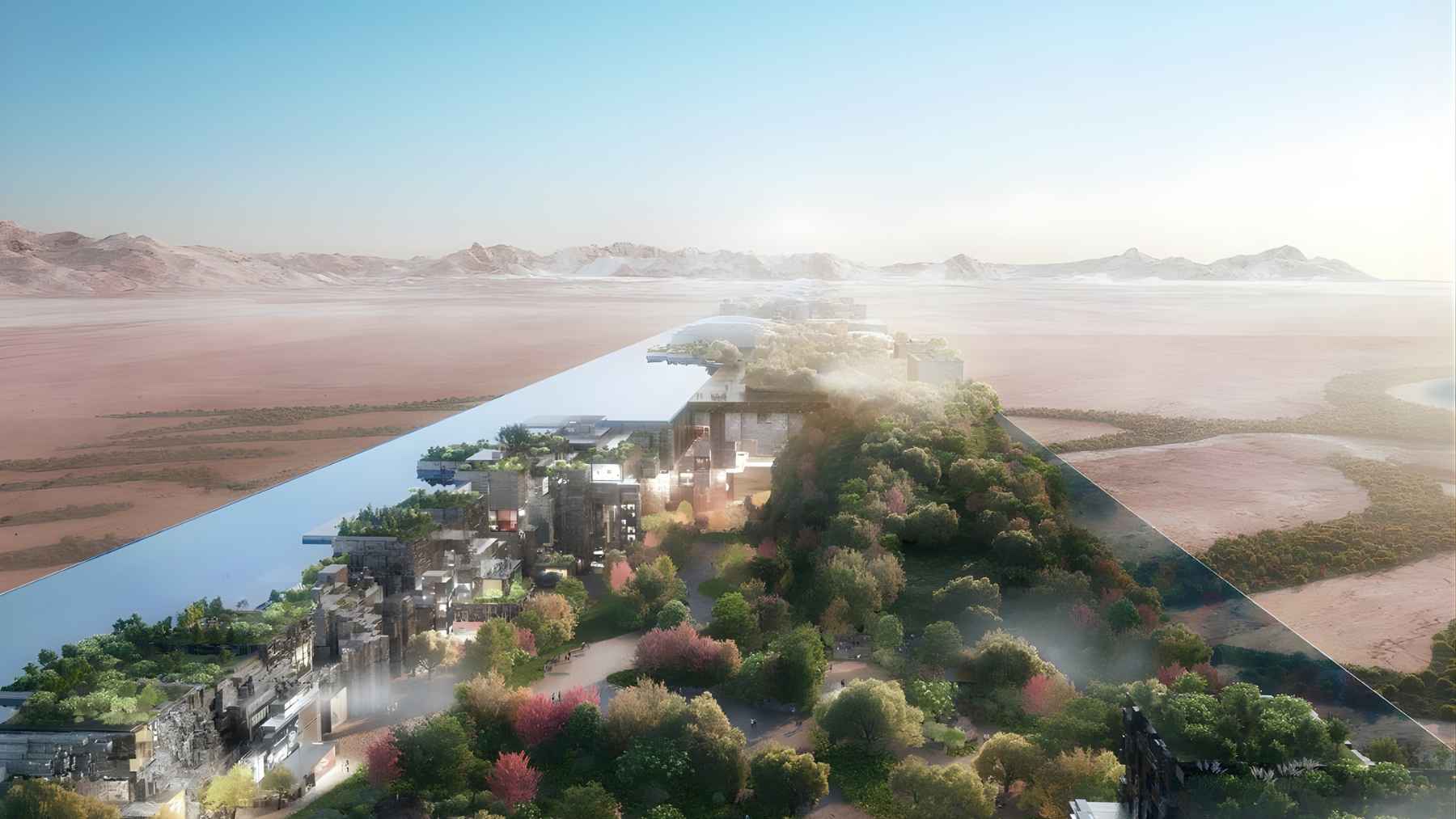
In a major reset, Saudi Arabia is quietly shrinking its desert city of the future. Neom and its signature linear city The Line are being redesigned as a much smaller project built around data centers instead of a 170 kilometer strip of housing.
Launched in 2017 as the showpiece of Crown Prince Mohammed bin Salman’s Vision 2030 plan, the project promised a car-free city for about nine million residents on the Red Sea coast. Now, with oil revenues under pressure and costs looming for Expo 2030 and the planned 2034 FIFA World Cup, planners are being pushed to back projects that earn money and keep the lights on.
From mirror city to server racks
In its original form, The Line was marketed as a single mirrored structure that would run roughly 170 kilometers through the desert, with no private cars and services stacked vertically. Promotional videos showed a wall of glass, high-speed trains, and parks suspended between towers.
According to reports, that idea is now being cut down to a fraction of its length and refocused on digital infrastructure that supports artificial intelligence. Instead of millions of residents, much of the excavated land could host data centers, giant warehouses of computers that store information and run online services, cooled by seawater from the nearby Red Sea.
Cost overruns, audits, and construction delays
Behind the redesign is a simple question; do the numbers still add up? An internal audit reported by The Wall Street Journal found that Neom’s projected price tag had ballooned from an initial $500 billion to as much as $8.8 trillion by 2080, more than 25 times Saudi Arabia’s annual budget.
Auditors also flagged “evidence of deliberate manipulation” in financial models, saying managers pumped up expected hotel rates and other revenues to justify higher costs.
At the same time, satellite images and earlier reporting showed that only a short section of The Line was likely to be finished by 2030, and a new review led by chief executive Aiman al-Mudaifer is reshaping what will actually be built.
Sports dreams, tourism plans, and human impact
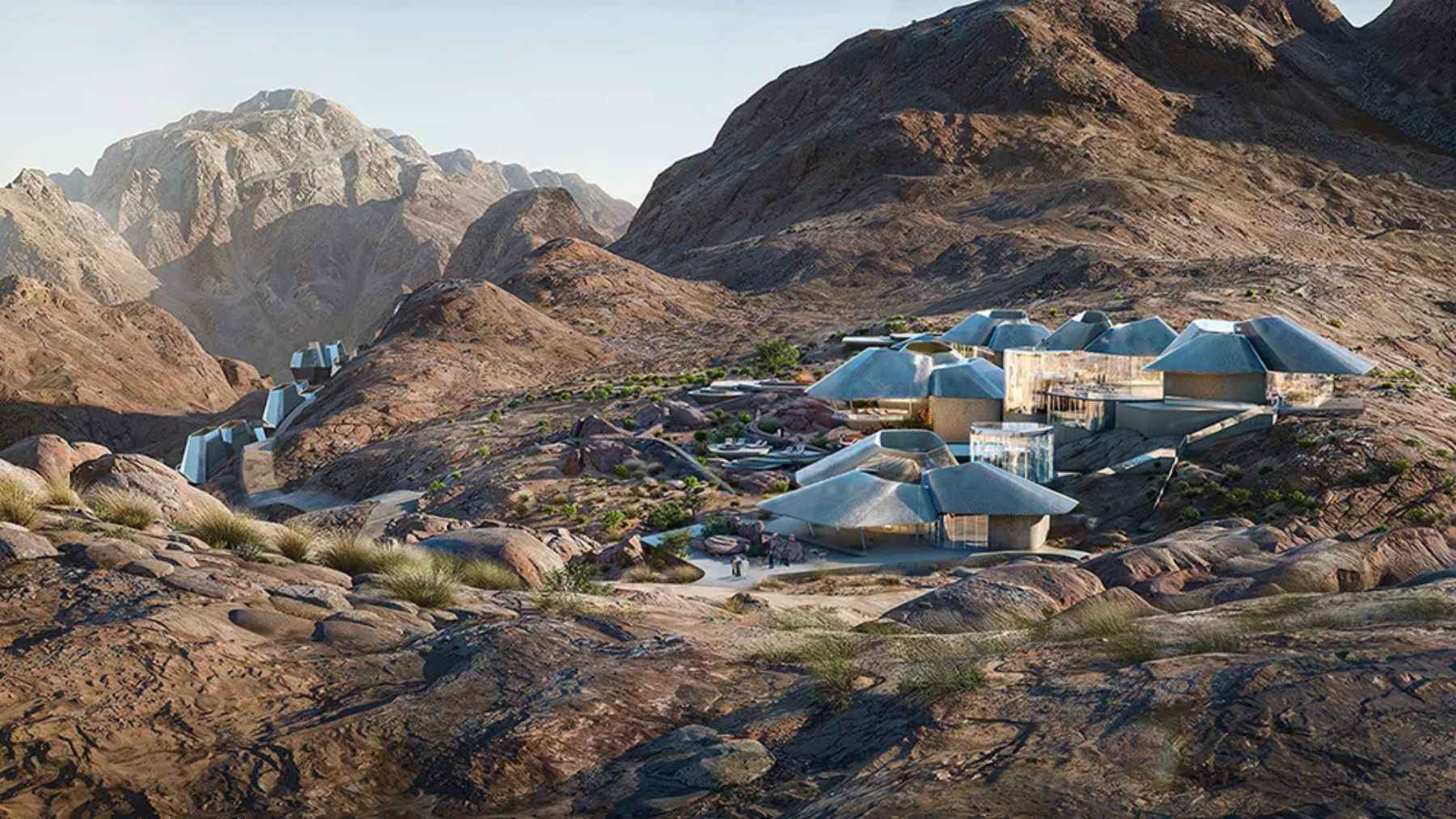
The rethink stretches beyond The Line. The Trojena mountain resort, once chosen to host the 2029 Asian Winter Games, will not stage the event after organizers postponed the games and later awarded them to Almaty in Kazakhstan, while the Sindalah luxury island has faced delays and is being handed to another state-backed developer.
The human cost has also drawn scrutiny. A recent ITV documentary reported that about 21,000 migrant workers from India, Bangladesh, and Nepal have died in Saudi Arabia since Vision 2030 began, a figure authorities reject but that has alarmed labor advocates.
To many observers, the Neom story now looks like a test of whether megaprojects can balance budgets, worker protections, and climate concerns.
The main report on this redesign was published by the Financial Times.