Most people remember that movie where a crew flies out to blow up a Texas-sized asteroid and save Earth. For years, scientists treated that idea more as popcorn entertainment than a practical defense plan.
Now a new experiment at CERN has shown that metal-rich asteroids can survive extreme energy blasts far better than expected. The results suggest that, in a true last-minute emergency, a nuclear-style deflection might be safer and more effective than older models predicted, especially for big iron-heavy space rocks.
From disaster movie plot to real-world physics
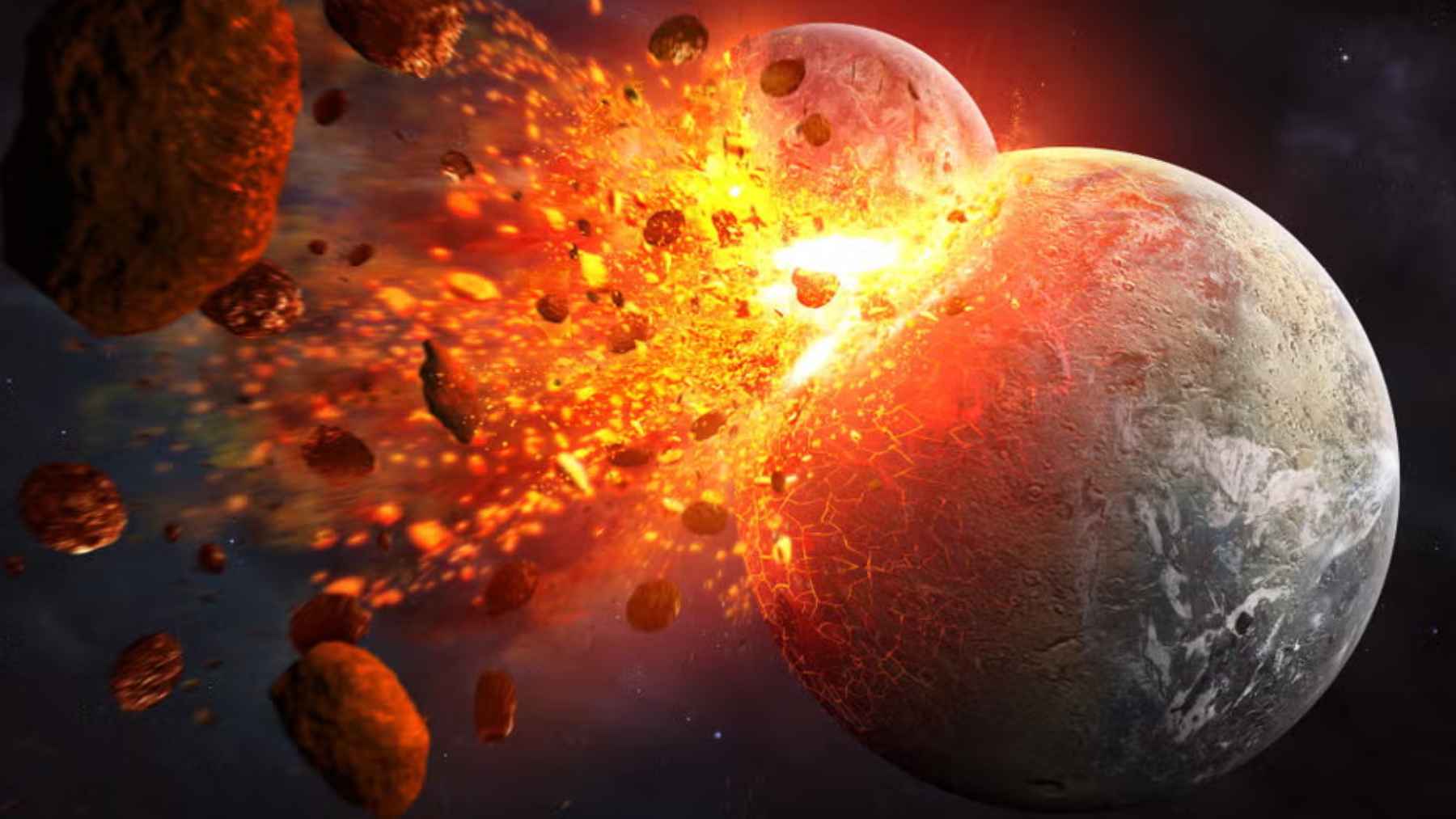
In the film, the heroes try to blow the asteroid into pieces before it hits Earth. In real planetary defense work, that approach has long worried experts, who feared turning one dangerous rock into a shotgun blast of smaller fragments headed our way.
The new peer-reviewed research in Nature Communications tackles a simpler but crucial question instead, which is how real asteroid material behaves when you dump huge amounts of energy into it in a fraction of a second. The team, led by physicist Melanie Bochmann and theorist Karl-Georg Schlesinger, wanted hard data rather than computer guesses.
“Planetary defense represents a scientific challenge,” Schlesinger says, noting that the world has to be able to carry out a nuclear deflection mission with high confidence even though nobody can test one on a real asteroid first. That lack of live testing “places extraordinary demands on material and physics data,” so every solid experiment helps shrink the uncertainty.
How CERN blasted a meteorite to mimic a nuclear blast
Instead of setting off a warhead in space, the team went to CERN’s HiRadMat facility and used a beam of protons from the Super Proton Synchrotron.
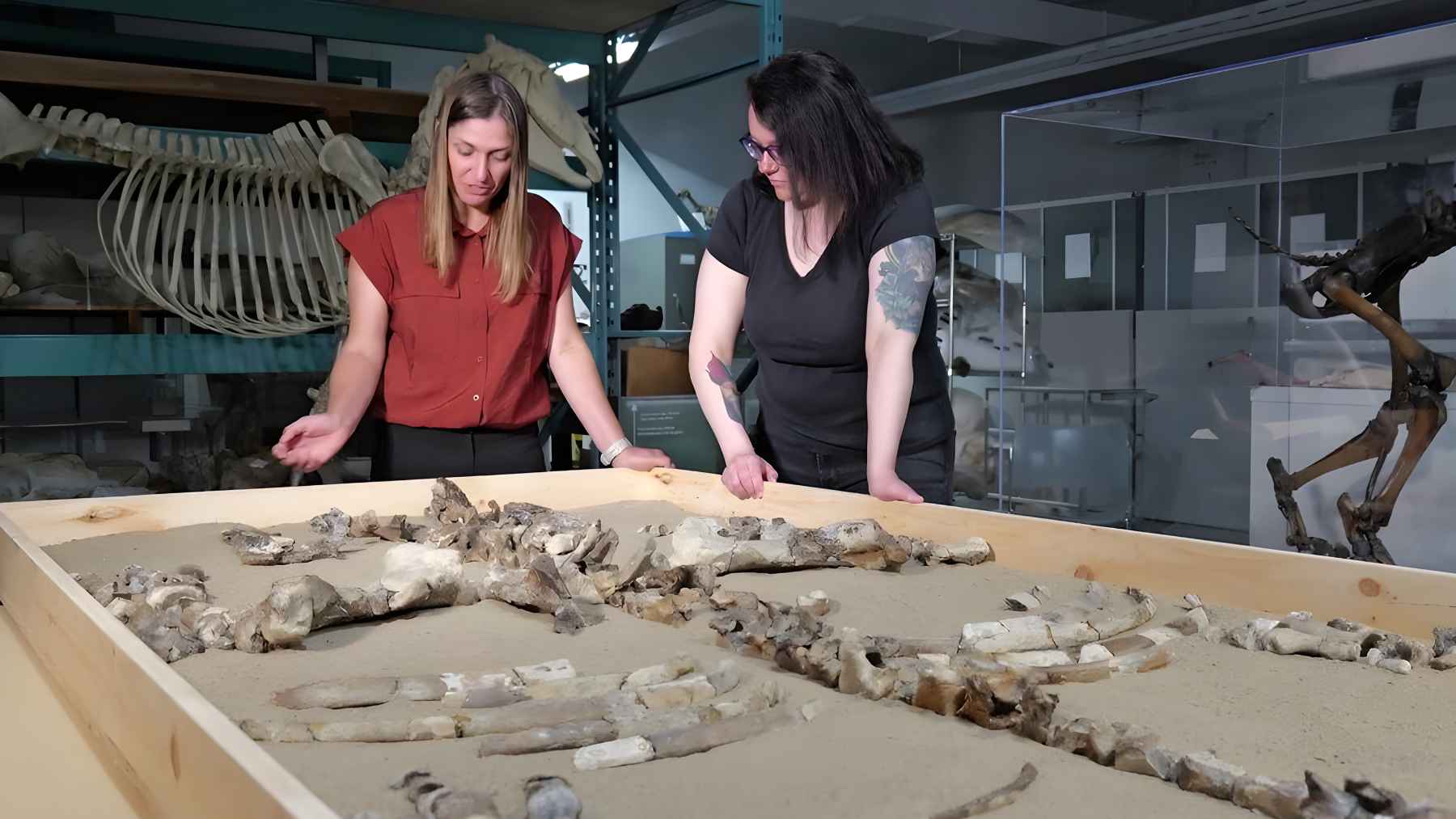
They cut a slender cylinder from the iron nickel Campo del Cielo meteorite and hit it with 27 short, intense pulses of a 440 gigaelectronvolt proton beam, recreating pressures similar to those in a nuclear stand off explosion near an asteroid.
High-speed laser sensors tracked how the metal rang like a bell after each hit, measuring tiny vibrations across the surface in real time. That gave the researchers a movie-style, slow-motion view of how stress waves raced through the sample, how it flexed, and whether cracks started to form.
The surprise was that the meteorite did not fly apart. It softened, bent, then recovered and actually hardened. Bochmann explains that the material “became stronger” and showed what she calls self-stabilizing damping behavior, meaning it learned to absorb those violent shakes instead of breaking.
The team estimates the yield strength, a measure of how much stress the metal can take, increased by roughly a factor of two and a half after irradiation.
What this means for nuclear deflection plans
In most scenarios, agencies prefer gentle methods such as ramming an asteroid with a spacecraft. Double Asteroid Redirection Test showed that approach works in 2022 when it slammed a probe into the small moon Dimorphos and shortened its orbit by 32 minutes, proving that a kinetic impactor can nudge a real asteroid off course.
Nuclear deflection is supposed to sit at the bottom of the toolbox, reserved for very large objects or very short warning times. The new experiment hints that for metal-rich asteroids, planners could use a more powerful device than previous models allowed without shattering the target, because the material can absorb more energy while remaining in one piece.
That does not mean every threatening object is a good candidate. Rubble pile asteroids made of loose rock or ice may respond very differently, and even this work is based on a single well-studied meteorite.
Experts warn that more tests on rocky and mixed materials, combined with missions like Hera mission that will survey the DART impact site in detail, are needed before anyone treats nuclear devices as a comfortable option.
Asteroid 2024 YR4 shows why timing matters
While all this lab work is going on, one real space rock keeps drawing attention. 2024 YR4 is a near-Earth asteroid discovered in late 2024 by the Asteroid Terrestrial-impact Last Alert System network, estimated to be roughly 50 to 70 meters across.
Early calculations briefly gave it one of the highest recorded chances of hitting Earth in 2032, around three percent, before new data drove that risk effectively to zero.
The story did not end there. Observations with major telescopes, including the James Webb Space Telescope, showed that while Earth is safe, there remains a small but real chance, currently a bit over four percent, that 2024 YR4 could strike the Moon on December 22, 2032.
A hit of that size would blast a fresh crater and eject tens or even hundreds of millions of pounds of lunar debris into space, some of which might intersect the orbits where navigation, weather, and communication satellites quietly keep modern life running.
Astronomers now face an uncomfortable fact. The asteroid has moved out of easy view and will not be tracked well again until around 2028, which means several years of uncertainty about its exact path.
That is exactly the kind of situation where planners might need to decide whether a DART-style kinetic impact is enough or whether a nuclear-style backup, informed by the new CERN data, should at least be modeled on paper.
Planetary defense moves from fiction to planning
Behind the scenes, agencies such as NASA and the European Space Agency are building a layered planetary defense system.
That includes early warning telescopes, missions like DART and Hera, and policy work in offices such as NASA’s Planetary Defense Coordination Office that quietly think about worst case scenarios while the rest of us check maps on our phones.
Popular stories like Don’t Look Up capture the chaos of politics around an incoming rock, but the real work looks more like this CERN study.
Researchers spend years squeezing better numbers out of meteorites, so that if something big does appear on a collision course, leaders know which tools are safe to use and which would make things worse.
At the end of the day, the goal is not to copy a movie but to give humanity options. First choice is always to find hazardous objects early and nudge them gently, long before anyone worries about warheads.
Still, experiments like this one show that if all else fails, even the loudest tools in the box might be more controlled and predictable than we once feared.
The main study has been published in Nature Communications.