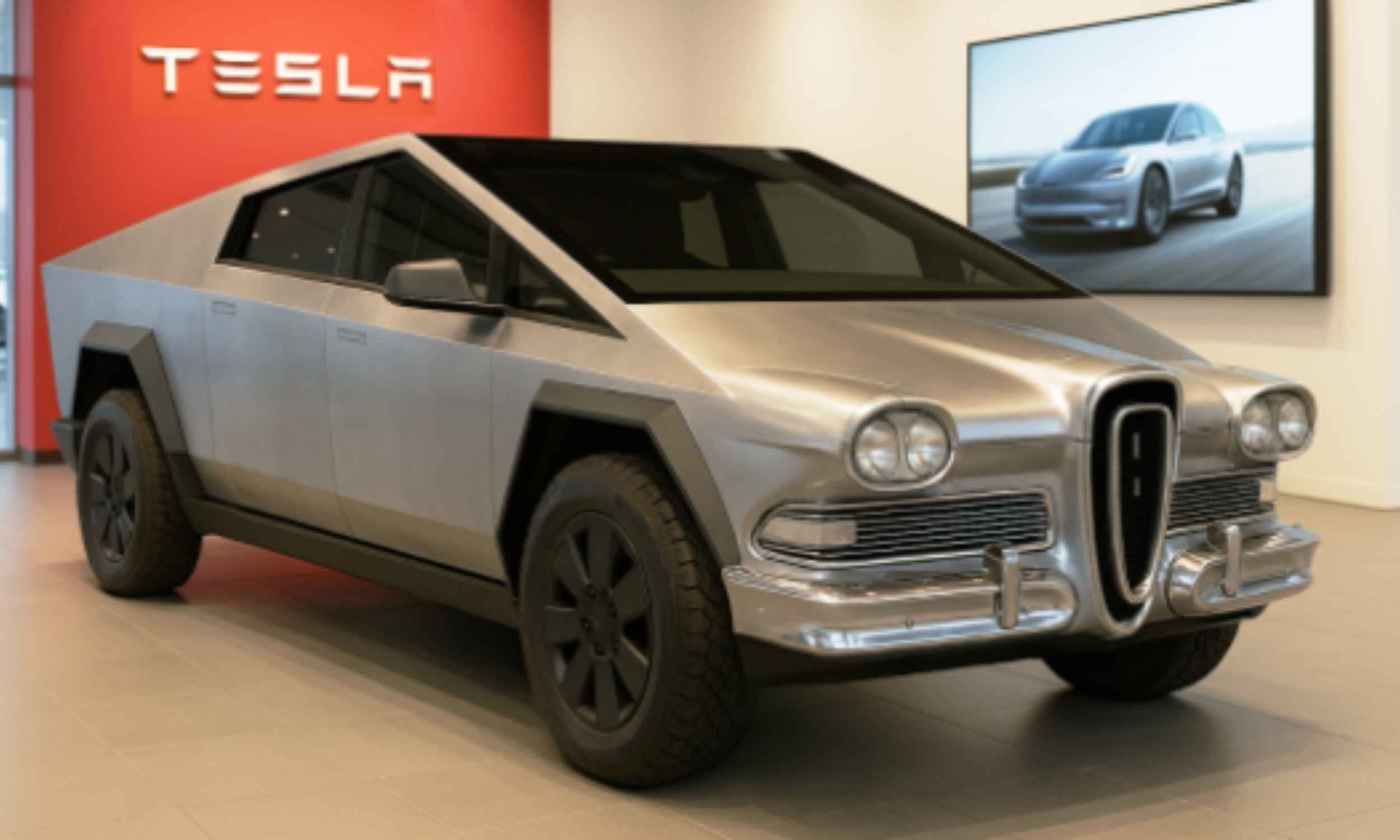
In 2025, the stainless steel Cybertruck went from viral star to cautionary tale. Instead of the quarter million trucks per year that Elon Musk once floated, sales landed in the tens of thousands and then slipped, while rivals quietly outsold it and regulators logged wave after wave of safety recalls. Forbes has even described the model as “the auto industry’s biggest flop in decades.”
Behind the memes sits a more serious issue. What does a very public failure like this do to public trust in electric vehicles at a time when cutting transport emissions is urgent?
A sales slump that broke the hype
According to EV Magazine, which draws on data from Cox Automotive, the Cybertruck’s first full year looked promising on paper, with close to 39,000 trucks sold in 2024 in the United States. In 2025 that figure fell to about 20,000, a drop of roughly 19,000 vehicles and the steepest unit decline of any electric model in the country.
InsideEVs estimates 20,237 Cybertrucks sold in 2025, which it calculates as a 48.1% fall compared with 2024. Other outlets see a smaller slide. Car and Driver, using industry estimates, suggests roughly 29,000 Cybertrucks for the year and a low single-digit percentage decline.
The exact number depends on which data set you pick. Yet every estimate has one thing in common. All of them sit far below the 250,000 annual sales Musk once said were realistic for the truck, and even further from the 500,000 figure he mentioned as a stretch goal.
The Cybertruck also lost a quiet race at the dealership. Ford’s battery electric F 150 Lightning sold 27,307 units in 2025, enough to remain the best-selling electric pickup in the country, even though the company then chose to end production of that version and rework the name as a plug-in hybrid model.
So the story is not that drivers suddenly abandoned electric trucks. It is that a niche, expensive design struggled to match lofty expectations while more conventional options still outperformed it in a small but real segment.
Recalls turned a “bulletproof” truck into a safety headache
Sales trouble would be one thing. Safety trouble is another. New analysis by Finbold, reported by Aftermarket Matters, found that recall campaigns during 2025 covered 115,912 Cybertrucks, based on filings to the National Highway Traffic Safety Administration (NHTSA).
That works out to roughly 318 trucks per day being swept into recall actions and more than double the model’s estimated recall footprint in 2024.
The largest of those campaigns is detailed in official recall report 25V 170. NHTSA documents how 46,096 trucks left the factory with a stainless steel cant rail trim piece that could delaminate from its adhesive and potentially detach while the vehicle was in motion. Regulators warned that a flying panel could become a road hazard for other drivers.
Two additional recalls in 2025 covered an overly bright front parking light setting that violated federal rules and an optional off-road light bar that could detach because the wrong primer was used. Separate reports have tracked earlier problems such as accelerator pedals that could get stuck at full throttle and a giant windshield wiper that failed in heavy rain.
For people who were drawn to the idea of a tough, zero tailpipe pickup that could handle bad weather and long road trips, repeated safety notices and viral videos of body panels popping loose feel unsettling. No one wants to think about flying trim pieces while they are already stuck in traffic.
Electric pickups still cut emissions
It might be tempting to read the Cybertruck saga as a verdict on electric trucks in general. The climate math tells a different story.
Work by the Union of Concerned Scientists finds that a typical battery electric pickup emits about 57% less climate warming pollution over its lifetime than an average gasoline pickup, even after accounting for the extra emissions from building its large battery pack.
A recent peer-reviewed study in PLOS Climate, summarized by the Associated Press, reached a similar conclusion for electric cars more broadly. Manufacturing an EV creates roughly 30% more emissions than building a comparable gasoline vehicle, largely because of the battery.
Yet within about two years of driving, the cleaner operation of the electric vehicle more than makes up the difference, leaving at least 50% less overall environmental damage over its life.
So the core idea behind electric pickups still holds. The question is what kind of electric pickups we put on the road and how they fit into real world use.
Design lessons for a cleaner transition
Big stainless steel trucks with very large battery packs, like the Cybertruck, use a lot of material and add significant weight. Public documents suggest a capacity well above 120 kilowatt hours for some versions, which is far more than many family cars carry. That means more mining, more manufacturing emissions, and potentially more tire and road wear, even when the tailpipe is clean.
Climate researchers and engineers increasingly point out that smaller, more efficient EVs with modest battery packs can deliver similar daily range and lower operating costs while using fewer raw materials. In the market, that pattern is already visible.
One compact electric SUV from a mainstream automaker nearly doubled its sales in 2025 to almost 58,000 units, even as many premium trucks struggled and incentives disappeared.
At the same time, Tesla is reportedly exploring a smaller pickup design after senior engineers acknowledged that the Cybertruck is selling at only a fraction of the factory’s capacity. Electrek reports that the company has been “churning in the design studio” on what a more practical truck could look like.
In everyday terms, this points to a simple truth. Most drivers care more about their monthly payment, how far they can go between charges, and whether the vehicle feels safe than about sharp angles and sci-fi styling. When an EV fits into daily life and trims the electric bill by replacing fuel stops, people tend to keep it.
The Cybertruck’s rough year does not erase the climate benefits of electrifying pickups. It does show what happens when hype, experimental design, and quality problems collide in a single very visible product.
If automakers and regulators want the public to embrace cleaner trucks, the path forward looks less like a polarizing stainless steel wedge and more like reliable, efficient workhorses that happen to run on electrons.