Walk along a quiet canal or past a city bridge and the water can look peaceful. Yet in many European rivers, one small stowaway from East Asia is quietly chewing through banks, clogging pipes, and pushing native wildlife aside.
The Chinese mitten crab (Eriocheir sinensis) is now so widespread that scientists rank it among the world’s most damaging invasive species, with Europe’s urban waterways right on the front line.
A crab built for life in concrete rivers
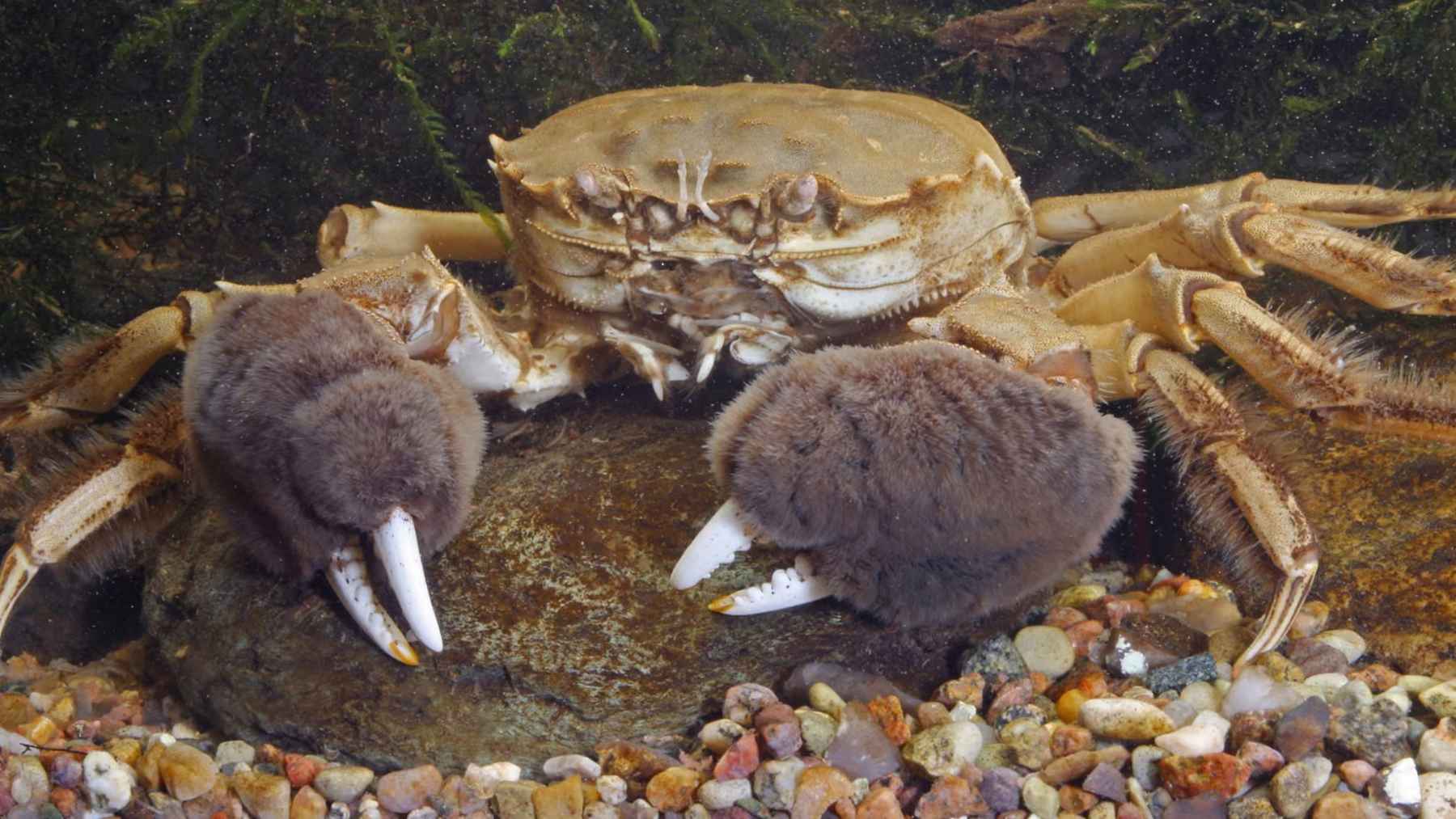
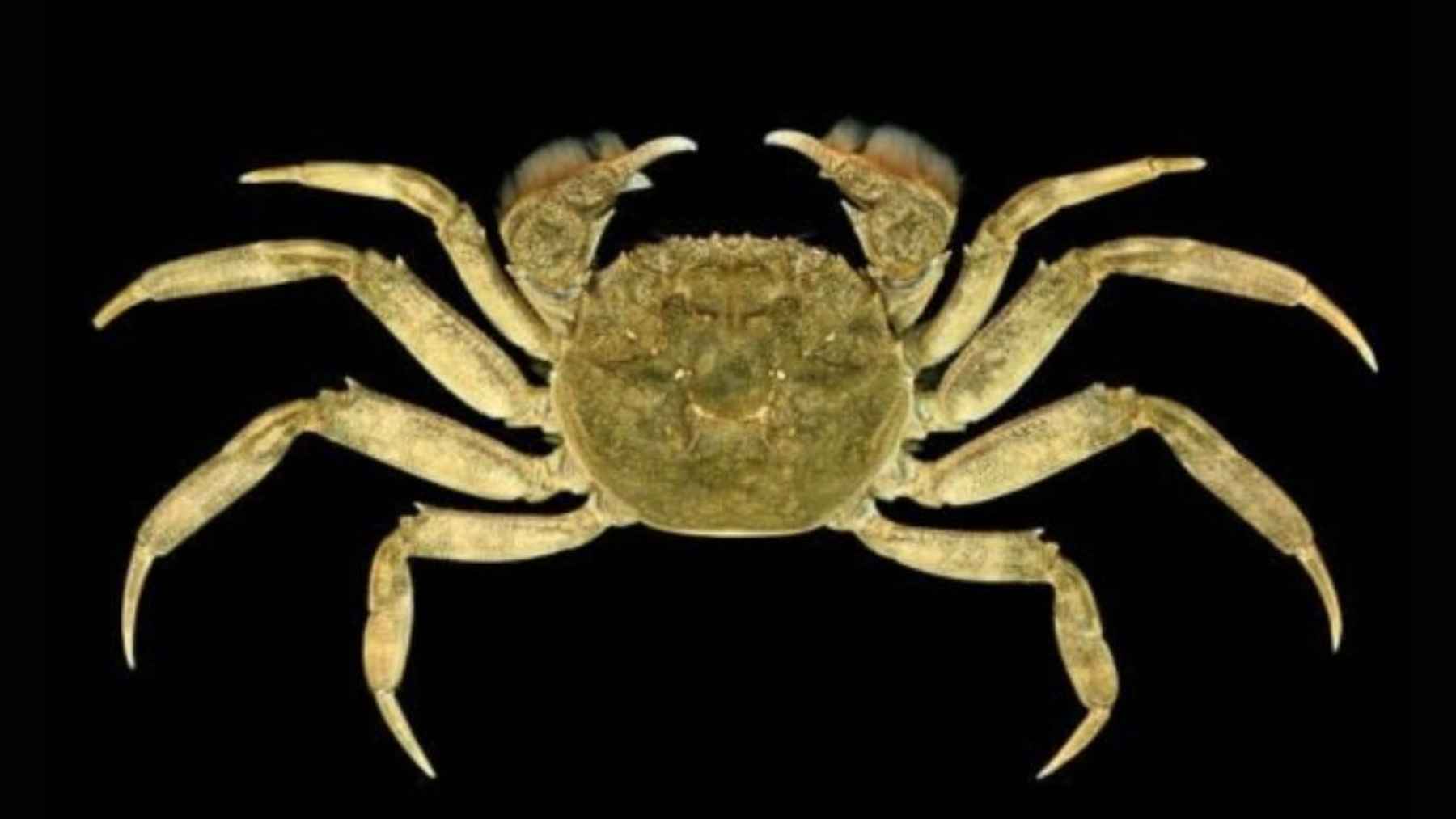
The crab is easy to recognize. Its claws are padded with dense brown “fur,” like a pair of wool mittens. Native to estuaries around the Yellow Sea, it spends most of its life in freshwater rivers, then marches downstream to brackish water to reproduce. That catadromous lifestyle lets it occupy everything from city canals to estuaries busy with shipping.
How did it get so far from home? Researchers point above all to long-distance trade. Larvae and juveniles can ride across oceans in ballast water, while adults have been moved for food markets and even aquaria. Once established, the species spreads quickly through river networks and canals and can even walk over land when obstacles such as dams block its way.
Adult mitten crabs tolerate polluted water, a wide range of temperatures, and different salt levels, something detailed in the latest ecological risk screening summary. In practical terms, that means the same hardy animal can live beneath an industrial quay, a suburban drainage ditch, or a pastoral floodplain without much trouble.
When burrows meet bridges and pipes
The real headaches start with the way these crabs dig. They tunnel into soft banks, carving burrows that can reach about half a meter in length. Over time, many small holes can weaken levees and canal walls, a bit like termites in a wooden house.
Risk assessments in countries such as the Netherlands warn that burrowing can trigger erosion and, in sensitive spots, even bank failure that threatens flood defenses and nearby farmland.
Engineers are noticing the crab in pipes as well as in mud. In the lower reaches of the River Thames mitten crabs have shown up in huge numbers on intake screens at power stations and other facilities, something that also appears in monitoring projects such as Mitten Crab Watch.
In the Netherlands they have clogged equipment at wastewater treatment plants, forcing operators to flush systems more often and driving up maintenance costs that eventually show up in water bills.
Ecologically, the species behaves like a small, aggressive opportunist. It eats algae, aquatic plants, invertebrates and fish eggs, then competes with native crabs and crayfish for shelter and food.
One egg carrying female from the Thames was photographed with roughly a million eggs attached to her underside. Multiply that by a growing population and it becomes clear why local species struggle to keep up.
Over the past century the invader has spread from early records in Germany to rivers and coasts across northern and western Europe, with some German estimates putting cumulative economic impacts around €80 million. That figure includes damaged gear, lost fish, and extra work to keep intakes clear.
Can eating the invader help?
With eradication now considered unrealistic in many basins, scientists have begun to look at the crab’s one big weakness. People like to eat it. In China the species is a seasonal delicacy, and in Europe fishers already land mitten crabs for export and for diaspora communities.
Zoologists at the Natural History Museum and other experts have floated a pragmatic idea. If populations in rivers such as the Thames are now large enough, carefully regulated artisanal fisheries could help hold numbers down while creating income for local fleets. At the end of the day, what they are trying to do is turn a costly invader into a managed resource.
Health agencies urge caution though. The mitten crab can act as an intermediate host for the oriental lung fluke in its native range, which means that eating raw or undercooked animals can be risky, an issue also noted by public health authorities such as Fisheries and Oceans Canada.
It also tends to accumulate pollutants such as dioxins and dioxin like PCBs in its tissues, especially in the brown meat inside the body. A detailed risk assessment by the Netherlands Food and Consumer Product Safety Authority (NVWA) found levels high enough in some Dutch waters that long-term heavy consumption could not be ruled out as a health concern.
For that reason, regulators stress that only fully-cooked crabs from approved areas should reach the table and some catch zones have been closed entirely. Turning the invader into dinner is not a silver bullet. It is one tool, and a tool that only works safely under strict food rules and careful monitoring.
Keeping the mitten crab in check
Most experts agree that prevention still matters more than clever recipes. International rules on ballast water treatment and tighter controls on live seafood imports aim to stop new introductions in places that are not yet affected.
In regions where the crab is already established, authorities are combining targeted trapping near dams and weirs with public reporting schemes that invite people to send photographs instead of quietly throwing the crabs back.
It may not be as visible as a smoggy skyline or a summer heat wave, but the slow work of this hairy clawed crab is reshaping city rivers all the same.
Managing it will require something humans are not always good at: patience, coordination, and the willingness to think about what lives below the surface when we build the next embankment or power intake, or when we rely on flood defenses to protect nearby communities.
The official species profile was published by the Global Invasive Species Database (GISD).