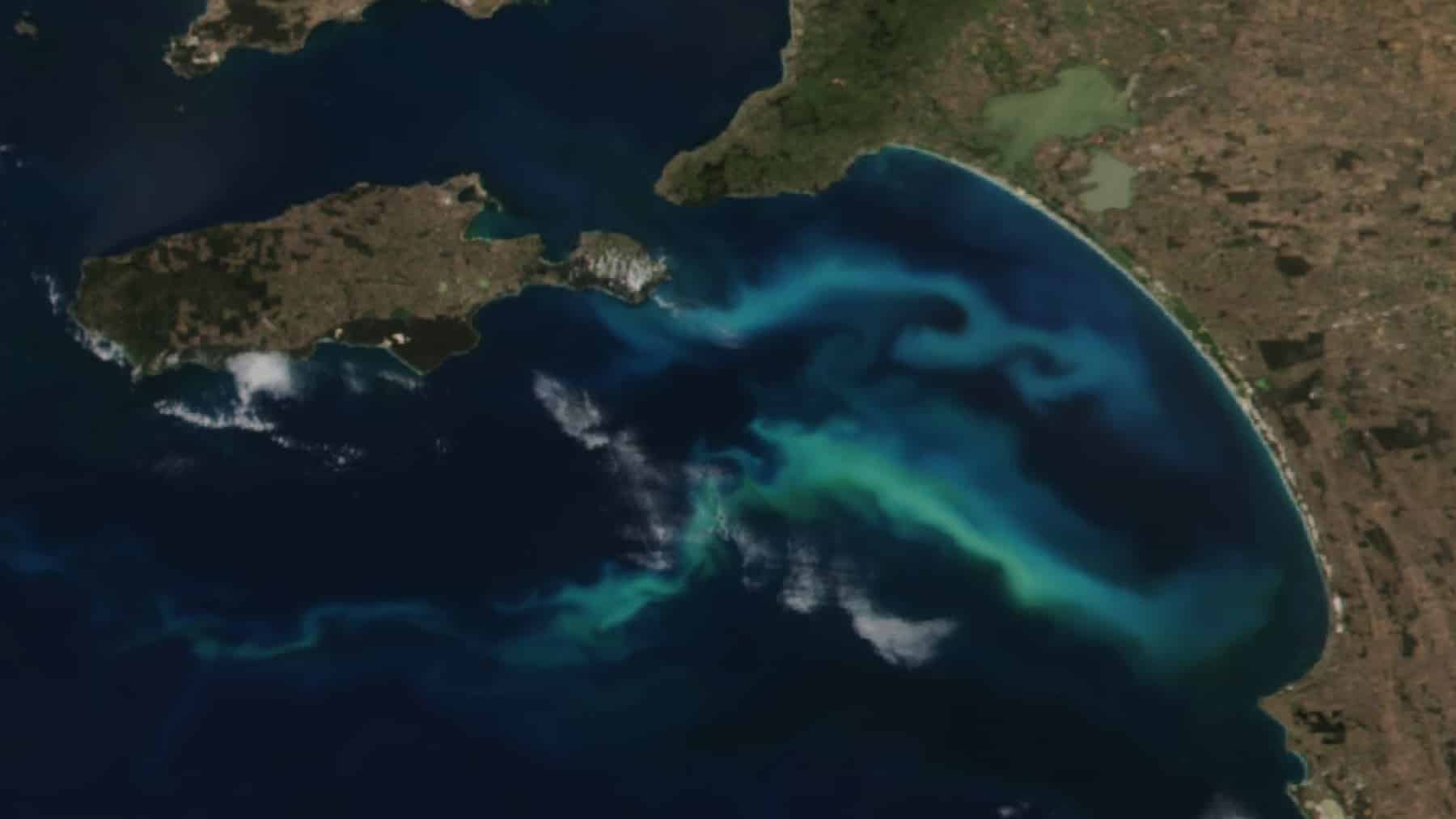
NASA scientists observed an unidentified water-based glowing organism that could be seen from space. Probe images from outer space sources captured worldwide attention after this scientist’s discovery. Modern space observation technology reveals massive phytoplankton blooms in the Great Australian Bight, creating the glowing effects scientists observed.
The discovery of glowing phytoplankton
Through space-based observations the Earth Observatory at NASA tracks marine conditions to showcase bright phytoplankton patterns observed in the Great Australian Bight region. Through microscopic examination of space-based data scientists detect bioluminescence from phytoplankton using the scientific name phytoplankton.
Scientists refer to marine algae as phytoplankton which maintain the fundamental position at the base of ocean food systems. The fundamental operation of aquatic ecosystems depends on phytoplankton which function through photosynthesis to produce ocean oxygen and supply vital food for marine organisms. Light-emitting chemicals from bioluminescent phytoplankton generate luminescence throughout the water.
The Great Australian Bight bloom
NASA satellite imaging shows an exceptional phytoplankton bloom development in the Great Australian Bight region. Marine blooms, which researchers have already documented, show sensitivity to several key operational elements that affect nutrient supply while learning about how ocean temperatures, along with ambient lighting, affect the outcome. NASA satellite images show the oceanic bloom created extraordinary glowing filaments in this stunning display.
The role of satellite imagery
Earth observation through satellite technology has dramatically improved our capability to track natural occurrences across the planet. Scientists obtain vital marine ecosystem information by using NASA’s satellites to document and evaluate phytoplankton blooms through high-definition imagery in real time.
NASA’s satellite instruments have developed sensors to measure bioluminescent phytoplankton emission signatures. Scientific sensors detect the minimal light that organisms produce despite operating in enormous spatial environments. These space-based images uncover complex patterns and bloom movements.
Analyzing the data
Satellite-derived information is an essential dataset for researchers seeking to identify the causes of phytoplankton blooms. Through image examination, scientists learn how phytoplankton blooms are distributed, how thick they are, and what their composition depends on. Through collected information, researchers gain the capacity to make predictions about future blooms while evaluating how these blooms affect marine ecosystems and the climate.
The ecological significance: Benefits and risks
Phytoplankton blooms create significant ecological changes throughout ocean systems. Marine phytoplankton exist naturally in ocean settings, but intense blooms produce unwanted outcomes, including reducing ocean oxygen levels and creating toxic compounds. Knowledge regarding these blooms’ movement patterns remains vital for regulating their effects on ocean wildlife and sea-related human work.
Marine food systems depend on planktonic algae because these microscopic organisms serve as food for numerous aquatic species. Phytoplankton establish fundamental control over the carbon cycle by capturing atmospheric carbon dioxide, thereby fighting climate change effects. The exceptional natural glow exhibited by specific phytoplankton makes oceans more beautiful while offering light-producing qualities.
The beneficial roles of phytoplankton include specific species that produce harmful algal blooms (HABs) that generate toxic substances causing harmful pollution to ocean environments. Toxic chemicals produced by these phytoplankton destroy underwater marine life while making population health vulnerable to hazardous consequences.
Future research, monitoring, and advancements in technology
The need for continuous observation of marine ecosystems becomes more urgent because space-based detection of glowing phytoplankton demands sustained activities. By utilizing satellite programs NASA enables scientists to investigate these phenomena because such systems provide essential information about underwater activities.
Enhanced satellite development will enhance the capability to monitor and study marine ecosystems. Accurate marine and sensor technology advancements will provide scientists with precise marine data to support informed conservation and management decisions.
Modern space-based observations through satellite imagery helped NASA observe fluorescent phytoplankton in the Great Australian Bight, transforming our scientific understanding of ocean ecosystems. This finding reveals complex marine ecosystem patterns yet strengthens our need for ongoing research surveillance programs.